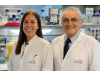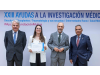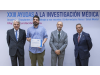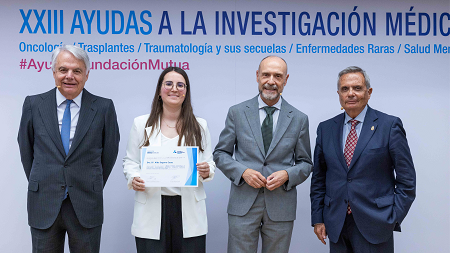
The Sant Pau Research Institute (IR Sant Pau) has received one of the 23rd Fundación Mutua Madrileña Medical Research Grants to support a project aimed at improving the genetic diagnosis of children and adolescents with rare neuromuscular diseases. The research will be led by Dr. Alba Segarra Casas, a postdoctoral researcher in the Genetic Diseases group at IR Sant Pau, and will be carried out over two years.
The project, titled “New Diagnostic Frontiers in Pediatric Neuromuscular Diseases: Multi-Omics Integration Through Long-Read Sequencing,” proposes combining long-read DNA sequencing with muscle RNA analysis to identify genetic alterations that may go undetected with conventional diagnostic techniques.
Genetic neuromuscular diseases are rare conditions that affect the muscles and, in numerous instances, cause progressive muscle weakness and atrophy from an early age. Although the incorporation of gene panels, clinical exomes, and other massive sequencing techniques has significantly improved diagnostic capacity, approximately half of patients still do not receive a molecular diagnosis after the tests carried out in routine clinical practice.
“When a child with a neuromuscular disease does not receive a genetic diagnosis, families can spend years in a state of uncertainty. Our goal is to reduce this diagnostic odyssey and move toward more precise answers for each patient,” explains Dr. Alba Segarra.
A Technology to Detect Hidden Alterations
Long-read sequencing makes it possible to analyze much longer DNA fragments than standard sequencing technologies. This facilitates the identification of complex structural variants, expansions, genomic rearrangements, insertions, and alterations in regions of the genome that are especially difficult to study.
“Long-read sequencing is not yet part of routine practice. This study will make it possible to identify which patients benefit most from this approach and will help facilitate its future incorporation into the diagnostic workflow for hereditary diseases in our country,” says Dr. Segarra.
The study will focus on pediatric patients with neuromuscular diseases who have not received a genetic diagnosis after conventional studies and muscle RNA analysis. The team expects to study a cohort of around 30 patients, including cases that remain undiagnosed after previous studies and patients with alterations in especially complex genes, such as TTN, NEB, or SMN1.
The Genetic Diseases group at IR Sant Pau has extensive experience in applying new genomic technologies to the study of neuromuscular diseases. In previous studies, the integration of exome and muscle transcriptome data increased the diagnostic rate in undiagnosed patients, but a significant proportion of pediatric cases still lack a definitive genetic answer.
“We know there are alterations that are not detected well with short-read techniques. Reading longer DNA fragments gives us a more complete view of the genome and can help us find the cause of the disease in cases that have not been resolved so far,” adds the researcher.
Clinical Impact for Patients and Families
Obtaining an accurate molecular diagnosis can have a direct impact on the management of patients and their families. It makes it possible to establish a more accurate prognosis, guide clinical follow-up, anticipate possible complications, avoid unnecessary tests, and offer genetic and reproductive counseling. In some cases, it may also facilitate access to specific treatments or clinical trials, especially in a field in which gene therapies are gaining relevance.
“Molecular diagnosis is not just about putting a name to a disease. It can change clinical follow-up, help families make informed decisions, and, in certain cases, open the door to therapeutic options or clinical studies,” Dr. Segarra highlights.
Beyond the patients included in the study, the project seeks to develop and validate a cost-effective diagnostic algorithm that can be transferred to clinical practice and also applied to the study of other rare diseases. The research will integrate genomic and transcriptomic data to prioritize the alterations most likely to cause the disease and functionally validate the findings.
The project will involve professionals from the Genetics Department of Sant Pau Hospital, the Genetic Diseases group, and the Neuromuscular Diseases laboratory at IR Sant Pau, as well as collaboration with the Neuromuscular Pathology Unit at Sant Joan de Déu Hospital and the Universitat Autònoma de Barcelona.
“We want this technology not to remain only in the research setting but to help define when and how it can be efficiently incorporated into the diagnosis of genetic diseases,” concludes Dr. Segarra.
The 23rd Fundación Mutua Madrileña Medical Research Grants Call is endowed with 2.3 million euros and will fund 21 new scientific projects in hospitals across Spain. The grants support clinical research in areas such as childhood rare diseases, oncology, transplants, traumatology, and child and adolescent mental health.

La mejor actitud que podemos adoptar es la de trat...

The research team observed changes in head circumf...
AtCDF3 gene induced greater production of sugars a...
En nuestro post hablamos sobre este interesante tipo de célula del...
It has been identified MARCO receptor as a new therapeutic target in i...