Montserrat is 70 years old and has just suffered a heart attack. Within minutes, the Emergency Medical System (SEM) is activated, she is transferred to the hemodynamics laboratory, admitted to the cardíac intenseive care unit and later begins cardiac rehabilitation. Montserrat, however, does not exist. She is a fictional patient created with artificial intelligence that allows future healthcare professionals to follow the complete journey of a person with cardiovascular disease. In doing so, they gain first-hand insight into how a highly specialised university hospital operates and how it works in close connection with a research institute that seeks answers to the questions arising from patient care.
This is the foundation of Heart Science 360º, a new programme launched by the Heart Area of the Bellvitge University Hospital, IDIBELL and the University of Barcelona-Bellvitge Hospital Chair of Cardiovascular Simulation (CardioSimHUB) within the Barcelona International Youth Science Challenge (BIYSC), an initiative of the Catalonia La Pedrera Foundation that brings together scientifically talented high school students from all over the world.
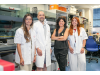
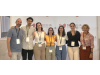
From 8 to 16 July, twelve students aged 15 to 17 from Europe, Asia and New Zealand have experienced an immersive introduction to cardiology through an educational model designed to show how modern cardiovascular medicine is built. Participants were selected for their excellent academic record and interest in biomedical sciences.
The Catalunya La Pedrera Foundation program brings together 173 students from 40 countries this summer who participate in 16 research projects developed jointly with hospitals, universities and leading research centers in Catalonia.
A patient as the common thread throughout the learning experience
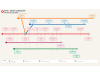
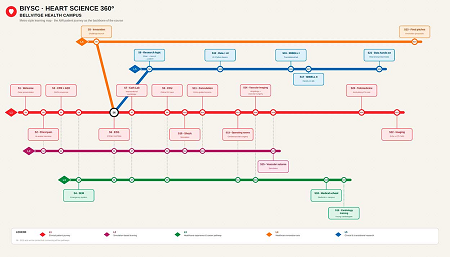
The programme is structured around a patient’s complete care pathway. Through this case, students follow every stage of the process, from SEM activation and electrocardiography, to the hemodynamics lab, intensive care units, cardiac and vascular surgery operating rooms, cardiovascular imaging, rehabilitation, and telemedicine follow-up.
This journey not only introduces them to clinical care. Is also show them how questions arising from patient care become basic and translational research projects, new technologies and innovation initiatives aimed at optimizing clinical outcomes and transforming clinical practice to improve patient health.
Presented as a metro-style network, this care pathway connects all the disciplines involved in cardiovascular care. In this way, students understand that medicine is a continuous process in which different specialties work in a coordinated manner around the needs of a single patient.
How 21st-century medicine is built
Heart Science 360º shows students that modern medicine does not separate clinical care, research, data science and innovation. Throughout the programme, they visit different departments within a highly specialised university hospital and a biomedical research center, observe how multidisciplinary teams work and gain insight into how decisions are made at every stage of the process. Without taking part in the clinical activity, they can witness first-hand how contemporary cardiovascular care is delivered.
This experience is complemented by advanced clinical simulation activities led by the CardioSimHUB Chair, allowing students to experience realistic healthcare scenarios in a safe environment with no risk to patients. The programme also introduces them to the BioHeart research laboratories at IDIBELL, where they discover how translational research connects clinical needs with the development of new diagnostic and therapeutic strategies. Direct interaction with researchers enables them to learn about every stage of a scientific project, from generating hypotheses to validating results and eventually applying findings to patient care, while also experiencing the day-to-day reality of biomedical research teams. They also work with anonymised clinical data and data science and artificial intelligence tools, and develop a biomedical innovation challenge that they present at the end of the programme. Thus, beyond awakening scientific vocations, the initiative also seeks to bring students closer to research careers and demonstrate the essential role of biomedical sciences in transforming modern medicine.
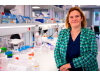
“The professionals who will face the major cardiovascular challenges of the coming decades will need much more than clinical knowledge. They must understand that medicine is no longer practised only in the clinic or operating room. It is also built in the laboratory, in the simulator, through data and by working in multidisciplinary teams. This is the medicine we want to teach,” explains Dr. Josep Comín, Director of Innovation, Research and Universities of the Bellvitge-Viladecans Hospital Management, Director of the Heart Area of the Bellvitge University Hospital and of the IDIBELL BioHeart group, and head of the program.
The value of an integrated campus
Heart Science 360º brings together professionals from across the Bellvitge Health Campus ecosystem: clinical teams, research staff, data scientists, biomedical engineers and innovation specialists. Faculty members, University of Barcelona medical students and cardiology residents also participate, mentoring the students throughout the programme.
The coexistence of a university hospital, a biomedical research center and a faculty of medicine on the same campus makes the Bellvitge Health Campus a unique environment for demonstrating how healthcare, research, education and innovation are integrated. With Heart Science 360º, this model becomes an immersive experience for future healthcare professionals and exemplifies the real modus operandi of the campus, where all healthcare and research professionals collaborate to transform scientific knowledge into tangible benefits for patients.
What is the BIYSC?
The Barcelona International Youth Science Challenge (BIYSC) is an international programme promoted by the Catalonia La Pedrera Foundation that brings together nearly 150 high-achieving secondary school students from all over the world every summer to participate in real research projects developed in hospitals, universities and leading research centres. The tenth edition of the programme includes 16 projects in different fields of science and technology, including Heart Science 360º.

La mejor actitud que podemos adoptar es la de trat...

The research team observed changes in head circumf...
AtCDF3 gene induced greater production of sugars a...
En nuestro post hablamos sobre este interesante tipo de célula del...
El proyecto MamoRisk validará en España un nuevo modelo estadístico...