An international research team led by CIC bioGUNE, member of BRTA, has developed an innovative nuclear magnetic resonance (NMR)-based approach that enables scientists to observe, with unprecedented molecular detail, how proteins responsible for interpreting the information encoded in cell-surface sugars recognize and selectively bind their targets in living cells.
The study, published in the Journal of the American Chemical Society (JACS), overcomes one of the major technical challenges in studying these interactions in their native biological environment and opens new opportunities to better understand mechanisms of molecular recognition involved in cancer, immune regulation, and other diseases.
Cells are coated with a dense layer of sugars known as the glycocalyx, whose composition regulates essential biological processes such as cell adhesion, communication, and signaling. Galectins are proteins responsible for interpreting this molecular information. Although all galectins recognize the same highly abundant sugar motif, known as N-acetyllactosamine (LacNAc), each performs distinct biological functions. Understanding how they achieve this apparent selectivity has long been one of the central challenges in glycoscience.
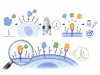
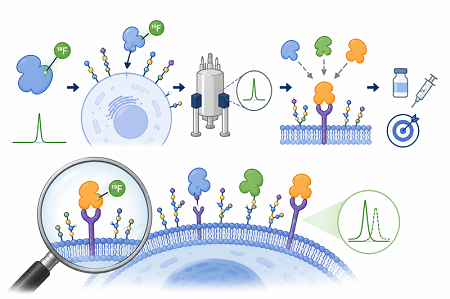
To address this question, the research team, led by Ana Ardá and Jesús Jiménez-Barbero, developed a strategy based on incorporating fluorine (19F) atoms at a specific position within galectins. Because fluorine is virtually absent from natural biomolecules, the technique generates a clean, background-free signal that eliminates the "noise" of the complex cellular environment, allowing researchers to monitor only the behavior of the tagged proteins.
The approach functions as a true "molecular magnifying glass," enabling multiple galectins to be monitored simultaneously, even when they compete for the same targets on the surface of living cells.
Using this technology, researchers demonstrated that galectins are not simply generic detectors of a common sugar motif but rather context-dependent readers whose specificity depends on how sugars are presented and on competition with other proteins within the cellular environment.
Among the study's most significant findings is the identification of Galectin-9 as the primary galectin that recognizes the immune checkpoint receptor TIM-3, a key target in cancer immunotherapy. The experiments show that Galectin-9 preferentially binds TIM-3 even in the presence of other galectins capable of recognizing the same sugar motif.
The researchers also directly visualized, for the first time, how different galectins, including Galectin-1 and Galectin-3, compete for access to glycans on the surface of living cells, a process known to influence tumor growth and immune regulation.
Beyond galectins, the methodology provides a versatile platform for studying how many other glycan-binding proteins recognize their targets under biologically relevant conditions. The ability to monitor these interactions directly in living cells, with molecular resolution and without background interference, has the potential to accelerate the development of more selective drugs, vaccines, and therapeutic strategies.
This research was supported by the Mizutani Foundation for Glycoscience, the European Union through the Horizon Europe Marie Skłodowska-Curie Actions program, the Spanish State Research Agency (Agencia Estatal de Investigación), the Basque Government, and CIBERES, among other funding organizations.
Reference: Bartoloni, M., del Balzo, D., Florencio-Zabaleta, M., Mercogliano, M., Bertuzzi, S., Delgado, S., Hernández, I., Oiarbide, M., Landa, A., Diercks, T., Unione, L., Jiménez-Barbero, J., & Ardá, A. Decoding galectin–glycan recognition with 19F-tagged lectins: From simple glycans to the cellular glycocalyx. Journal of the American Chemical Society. DOI: 10.1021/jacs.6c09813.
About CIC bioGUNE
The Centre for Cooperative Research in Biosciences (CIC bioGUNE), member of the Basque Research & Technology Alliance (BRTA), located in the Bizkaia Technology Park, is a biomedical research organisation conducting cutting-edge research at the interface between structural, molecular and cell biology, with a particular focus on generating knowledge on the molecular bases of disease, for use in the development of new diagnostic methods and advanced therapies.
About BRTA
BRTA is an alliance of 4 collaborative research centres (CIC bioGUNE, CIC nanoGUNE, CIC biomaGUNE y CIC energiGUNE) and 13 technology centres (Azterlan, Azti, Ceit, Cidetec, Gaiker, Ideko, Ikerlan, Leartiker, Lortek, Neiker, Tecnalia, Tekniker y Vicomtech) with the main objective of developing advanced technological solutions for the Basque corporate fabric.
With the support of the Basque Government, the SPRI Group and the Provincial Councils of the three territories, the alliance seeks to promote collaboration between the research centres, strengthen the conditions to generate and transfer knowledge to companies, contributing to their competitiveness and outspreading the Basque scientific-technological capacity abroad.
BRTA has a workforce of 3,500 professionals, executes 22 % of the Basque Country's R&D investment, registers an annual turnover of more than 300 million euros and generates 100 European and international patents per year.

La mejor actitud que podemos adoptar es la de trat...

The research team observed changes in head circumf...
AtCDF3 gene induced greater production of sugars a...
En nuestro post hablamos sobre este interesante tipo de célula del...
Peroxisome proliferator-activated receptors are emerging as a potentia...