One of the major hurdles in treating metastatic colorectal cancer is the ability of tumour cells to change state and adapt to therapies. Known as cellular plasticity, this phenomenon drives the emergence of resistance and limits the effectiveness of many available treatments.
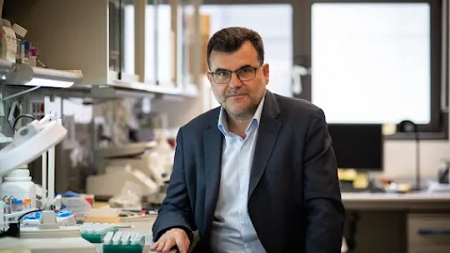
To understand and block this process, Dr. Eduard Batlle, ICREA researcher, CIBERONC researcher, and head of the Colorectal Cancer Laboratory at IRB Barcelona, has been awarded an ERC Advanced Grant by the European Research Council (ERC) for the project Plastic_CRC: Targeting tumour cell plasticity in colorectal cancer. Funded with €2.5 M, the project will explore novel strategies to make tumours less diverse and, consequently, more vulnerable to treatment.
The project builds on recent discoveries by Dr. Batlle’s laboratory, which identified cellular plasticity as a key resistance mechanism in metastatic colorectal cancer. In a study published in Cancer Discovery, the team demonstrated that blocking the activity of the KRAS oncogene causes some tumour cells to change identity and acquire features similar to cancer stem cells, enabling them to survive treatment.
Leveraging these findings, the new ERC Advanced Grant Plastic_CRC will study the alternative cell states that tumours can adopt, as well as the molecular mechanisms that enable cellular plasticity. The ultimate goal is to develop combination therapies able to restrict the adaptive capacity of tumour cells and enhance treatment efficacy.
Very diverse cell populations can coexist within a single tumour. While some respond to treatment, others survive, evolve, and drive disease relapse. This cellular diversity, known as tumour heterogeneity, is one of the primary challenges in metastatic cancer.
The new project proposes a shift from conventional approaches. Rather than directly attacking a highly heterogeneous tumour, the researchers aim to first reduce this cellular diversity, subsequently applying targeted therapies to a more uniform and vulnerable tumour state.
"We know that it is extremely difficult for a single drug to completely eradicate a metastatic tumour," explains Dr. Eduard Batlle. "That is why we want to understand how tumour cells change when treated, and use that information to design combination therapies that can limit their ability to adapt. Our goal is to reduce tumour heterogeneity and increase the effectiveness of treatments."
To carry out the project, the team will use patient-derived organoids—three-dimensional models that replicate many features of human tumours. These models will be used to study the molecular mechanisms driving plasticity, with the aim of developing new treatments to control tumour cell states and reduce heterogeneity. Based on this data, the researchers will validate new combination therapies in experimental models of metastatic colon cancer. Additionally, the project will leverage single-cell analysis technologies, which will allow the team to track with high precision how distinct cell populations evolve following each treatment.
The ERC Advanced Grant will enable the recruitment of highly qualified new research personnel, including postdoctoral researchers, and cover the costs of the technologies required to develop the project.
The Plastic_CRC project will launch in September 2026 and run for five years.
This marks the fourth core ERC grant awarded to Dr. Batlle throughout his scientific career, following an ERC Starting Grant and two previous ERC Advanced Grants. This represents an exceptional and rare milestone in the European research system, recognizing his laboratory's outstanding contribution to the study of colorectal cancer biology and progression, while reinforcing IRB Barcelona's leadership in biomedicine and cancer research.
About IRB Barcelona
The Institute for Research in Biomedicine (IRB Barcelona) pursues a society free of disease. To this end, it conducts multidisciplinary research of excellence to cure cancer and other diseases linked to ageing. It establishes technology transfer agreements with the pharmaceutical industry and major hospitals to bring research results closer to society, and organises a range of science outreach activities to engage the public in an open dialogue. IRB Barcelona is an international centre that hosts 400 researchers and more than 30 nationalities. Recognised as a Severo Ochoa Centre of Excellence since 2011, IRB Barcelona is a CERCA centre and member of the Barcelona Institute of Science and Technology (BIST).

La mejor actitud que podemos adoptar es la de trat...

The research team observed changes in head circumf...

AtCDF3 gene induced greater production of sugars a...

En nuestro post hablamos sobre este interesante tipo de célula del...
Los resultados del estudio refuerzan la importancia de considerar el s...