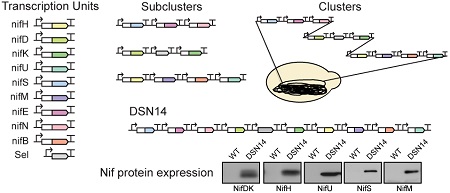
Development of N2 fixing cereal crops would revolutionize agricultural systems worldwide. To achieve this goal, the genes encoding the prokaryotic enzyme nitrogenase must be transferred into the plant, and the assembled enzyme must be functional inside the eukaryotic host. Here we report the transfer of 9 nitrogen fixation genes (nifHDKUSMBEN) from the model bacterium Azotobacter vinelandii to the yeast Saccharomyces cerevisiae, which is used as model eukaryote.
A synthetic biology approach was used to create factorial and designed libraries of yeast strains with the aim of optimizing protein expression, stoichiometry, and mitochondria targeting. Partial assembly of the MoFe protein (the most complex component of nitrogenase) was achieved.
Original Paper:
Burén, S; Young, EM; Sweeny, EA; Lopez-Torrejón, G; Veldhuizen, M; Voigt, CA; Rubio, LM. 2017. "Formation of nitrogenase NifDK tetramers in the mitochondria of Saccharomyces cerevisiae". ACS synthetic biology. DOI: 10.1021/acssynbio.6b00371".

La mejor actitud que podemos adoptar es la de trat...
The research team observed changes in head circumf...
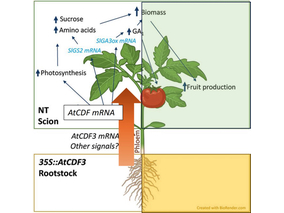
AtCDF3 gene induced greater production of sugars a...
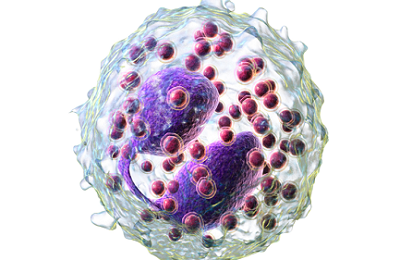
En nuestro post hablamos sobre este interesante tipo de célula del...

Telum Therapeutics, a biotechnology company leveraging proprietary met...