Patients harboring germline Breast Cancer susceptibility genes 1 and 2 (BRCA1/2) mutations are predisposed to developing breast, pancreatic, and ovarian cancers. BRCA2 plays a critical role in homologous recombination DNA repair and deleterious mutations in BRCA2 confer sensitivity to poly(ADP-ribose) polymerase (PARP) inhibition. Recently, the PARP inhibitors olaparib and rucaparib were FDA approved for the treatment of metastatic breast cancer and recurrent ovarian cancer patients with mutations in BRCA1/2. Despite their initial anti-tumor activity, the development of resistance limits the clinical utility of PARP inhibitor therapy. Multiple resistance mechanisms have been described, including reversion mutations that restore the reading frame of the BRCA2 gene. In this study, we generated olaparib and rucaparib resistant BRCA2 mutant Capan1 cell lines. We did not detect secondary reversion mutations in the olaparib or rucaparib resistant clones. Several of the resistant clones had gene duplication and amplification of the mutant BRCA2 allele, with a corresponding increase in expression of a truncated BRCA2 protein. In addition, homologous recombination (HR)-mediated DNA repair was rescued, as evidenced by the restoration of RAD51 foci formation. Using mass spectrometry, we identified Disruptor Of Telomeric silencing 1-Like (DOT1L), as an interacting partner of truncated BRCA2. RNA-interference-mediated knockdown of BRCA2 or DOT1L was sufficient to re-sensitize cells to olaparib. The results demonstrate that independent of a BRCA2 reversion mutation amplification of a mutant-carrying BRCA2 contributes to PARP inhibitor resistance.
https://mct.aacrjournals.org/content/early/2019/10/01/1535-7163.MCT-17-0256

La mejor actitud que podemos adoptar es la de trat...

El equipo de investigadores observó cambios en el...
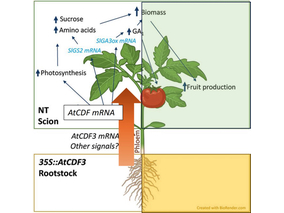
El gen AtCDF3 promueve una mayor producción de az...
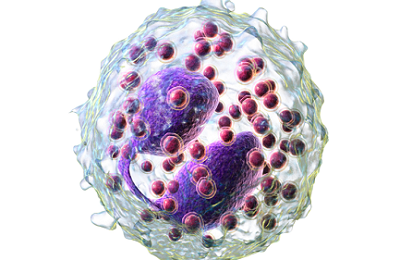
En nuestro post hablamos sobre este interesante tipo de célula del si...

Un nuevo estudio relaciona las temperaturas elevadas en la primera inf...