A recent study evaluated screening strategies to identify inhibitors of the SARS-CoV-2 RdRp complex, the enzyme responsible for viral replication.
Using both fluorometric and electrophoretic assays, the researchers revealed that fluorescence-based methods (with SYBR Green) can yield false positives due to compound interference with fluorophore binding—an effect intensified in the presence of 6 mM MgCl₂. Although several compounds appeared to inhibit RdRp in the fluorometric assay, only suramin, corilagin, and simeprevir showed marked inhibition in independent electrophoretic tests.
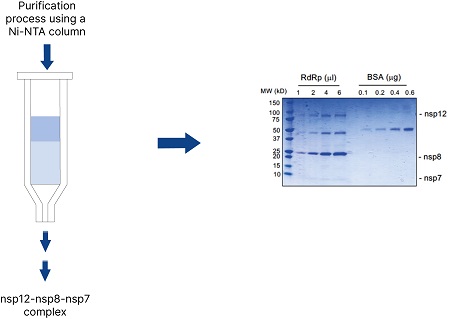
The study used a SARS-CoV-2 RdRp complex purified via affinity chromatography with nickel-coupled agarose bead resins, ensuring the isolation of high-quality, functional proteins. This purification step was essential for accurate enzymatic activity assessment and for eliminating misleading readouts caused by fluorometric interference.
The findings also show that while suramin is the most potent inhibitor, it affects multiple nucleic acid-binding enzymes, suggesting its action is not specific to SARS-CoV-2 RdRp. This underscores the importance of biochemically validating virtual screening results to identify true antiviral candidates. In this regard, the study is crucial for discovering new antiviral compounds, paving the way toward more precise and effective therapies against COVID-19 and potentially other viral infections.
In summary, the success of identifying and validating effective inhibitors relies not only on compound selection but also on the robustness of enzyme purification processes. The use of agarose bead resins — such as those offered by ABT — makes the difference by providing gentle and scalable conditions essential for obtaining intact, functional proteins in critical antiviral development studies.
Agarose Bead Technologies (ABT) positions itself as a strategic partner in these workflows. Their agarose resins — such as Nickel NTA Rapid Run — efficiently purify His-tag proteins, maintaining their stability and delivering consistently high performance under diverse conditions and pressures, from laboratory to industrial scale.
Image: Schematic of the purification procedure of the nsp12-nsp8-nsp7 complex and electrophoresis separation of the purified RdRp complex.

La mejor actitud que podemos adoptar es la de trat...

El equipo de investigadores observó cambios en el...
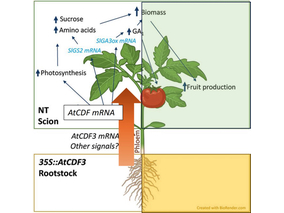
El gen AtCDF3 promueve una mayor producción de az...
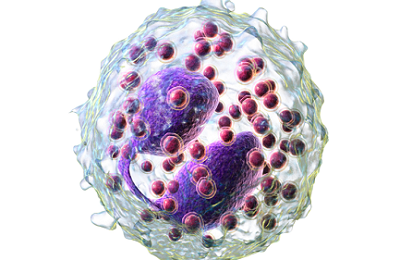
En nuestro post hablamos sobre este interesante tipo de célula del si...
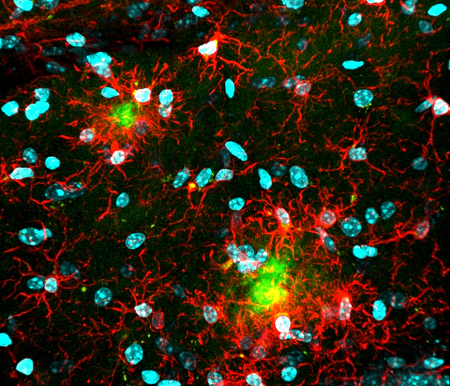
Los resultados del estudio refuerzan la importancia de considerar el s...