Authors: Marcella Pesce, Luisa Seguella, Sara Cassarano, Laura Aurino, Walter Sanseverino, Jie Lu, Chiara Corpetti, Alessandro Del Re, Martina Vincenzi, Giovanni Sarnelli, Giuseppe Esposito
Institutions:
Publication: Phytotherapy Research
Date: December 2020
Full paper: https://onlinelibrary.wiley.com/doi/10.1002/ptr.6978
Abstract:
At present, googling the search terms “COVID‐19” and “Functional foods” yields nearly 500,000,000 hits, witnessing the growing interest of the scientific community and the general public in the role of nutrition and nutraceuticals during the COVID‐19 pandemic. Many compounds have been proposed as phytotherapics in the prevention and/or treatment of COVID‐19. The extensive interest of the general public and the enormous social media coverage on this topic urges the scientific community to address the question of whether which nutraceuticals can actually be employed in preventing and treating this newly described coronavirus‐related disease. Recently, the Canadian biotech pharma company “FSD Pharma” received the green light from the Food and Drug Administration to design a proof‐of‐concept study evaluating the effects of ultramicronized palmitoylethanolamide (PEA) in COVID‐19 patients. The story of PEA as a nutraceutical to prevent and treat infectious diseases dates back to the 1970s where the molecule was branded under the name Impulsin and was used for its immunomodulatory properties in influenza virus infection. The present paper aims at analyzing the potential of PEA as a nutraceutical and the previous evidence suggesting its anti‐inflammatory and immunomodulatory properties in infectious and respiratory diseases and how these could translate to COVID‐19 care.

La mejor actitud que podemos adoptar es la de trat...

El equipo de investigadores observó cambios en el...
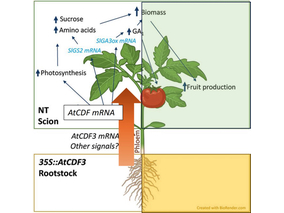
El gen AtCDF3 promueve una mayor producción de az...
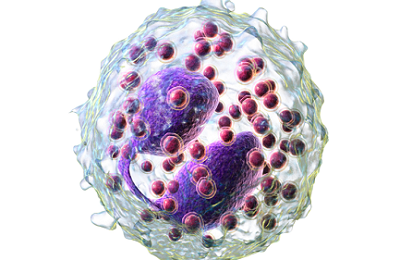
En nuestro post hablamos sobre este interesante tipo de célula del si...

Un nuevo estudio relaciona las temperaturas elevadas en la primera inf...