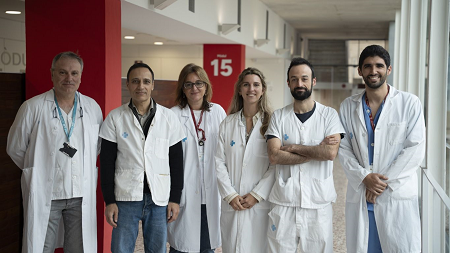
When atogepant, one of the newest preventive treatments against migraine, arrived in hospitals in 2024, clinical trials had already proven its effectiveness in preventing migraine. What was not yet known was whether it would also work for people who had already exhausted all other available preventative options. Now, a study led by the Bellvitge Hospital and the Bellvitge Biomedical Research Institute (IDIBELL) provides the first answer: yes, some of these patients also benefit.
Migraine is one of the leading causes of disability in the world and affects nearly 900,000 people in Catalonia. Despite the advances of recent years, there are people who, despite having tried all the preventive treatments available, continue to suffer from migraines almost every day. This study provides a new option precisely for this group of people.
The results, published in The Journal of Headache and Pain, show that about 30% of patients with more refractory migraine reduce migraine days by half after three months of treatment with atogepan.
Coordinated from the Headache Unit of the Bellvitge Hospital, the study has had the participation of 17 hospitals throughout Spain. It is the first multicenter study to evaluate the effectiveness of this treatment in people who had no longer responded to monoclonal antibodies directed against CGRP, one of the main preventive options available.
A new alternative for the most difficult cases to treat
The study included 252 people with migraine of high clinical complexity. More than 80% had chronic migraine, nearly half had daily headaches, and all had failed previous preventive treatments, including anti-CGRP monoclonal antibodies.
Despite this particularly complex profile, the results show that about 30% of patients reduce migraine days by at least 50%; 44% experience significant clinical improvement; and that they reduce both the intensity of pain and the need for medication to treat crises.
“When this treatment appeared, we all asked ourselves the same question: would it also work when the other drugs had already failed? This study is the first that allows us to answer it,” explains Dr. Albert Muñoz-Vendrell, neurologist at Bellvitge Hospital, clinical researcher in the Neurological Diseases and Neurogenetics group at IDIBELL and principal investigator of the work.
Evidence in real clinical practice
Unlike clinical trials, this study reflects what happens in routine care practice, with patients who accumulate years of disease evolution and multiple therapeutic failures.
The analysis also shows that the more preventive treatments that have previously failed, the lower the likelihood of response, a fact that can help to better guide therapeutic decisions and reinforces the importance of a personalized approach.
This study reinforces the role of Bellvitge Hospital as a reference centre in migraine research and is part of a line of research aimed at generating evidence in real clinical practice to improve the approach to patients. Along the same lines, a study by the same team, published in Headache, points out that current criteria may underestimate the benefits of biological treatments, as they do not always reflect improvements in quality of life.
Migraine is much more than a headache
Migraine is one of the leading causes of disability in the world. In the State, it is estimated that it affects about 12% of the population. In Catalonia, it is estimated that about 900,000 people live with this disease. This impact reinforces the need to move towards more personalized models that allow the real benefits of treatments to be better assessed.
Bellvitge Hospital also promotes outreach initiatives such as the podcast “Voces de Bellvitge”, with Dr. Albert Muñoz-Vendrell, where migraine is addressed from a clinical and experiential perspective.

La mejor actitud que podemos adoptar es la de trat...

The research team observed changes in head circumf...

AtCDF3 gene induced greater production of sugars a...

En nuestro post hablamos sobre este interesante tipo de célula del...
An international study by scientists at the Centro Nacional de Investi...