At Viva in Vitro Diagnostics, through an article by our CEO, Toni Vilaplana, we have published an opinion piece in AseBio’s La Voz Biotech on one of the major shifts shaping the future of biomedicine: the transition from medicine focused exclusively on treating disease to medicine capable of better interpreting the biological information of each patient. This is the great challenge of personalised medicine.
The reflection is based on an idea that is becoming increasingly relevant for the biomedical, pharmaceutical and healthcare sectors:
Immunology is no longer merely a therapeutic area; it is becoming a strategic infrastructure for knowledge.
Understanding how the immune system responds, how it is activated, when it deteriorates, or which signals anticipate an unfavourable clinical evolution may be key to advancing towards more precise, preventive and personalised medicine.
In this context, functional biomarkers are playing an increasingly important role. It is no longer only about detecting the presence of a disease, but about understanding what is happening in the body, which patients may respond better to a treatment, how to monitor clinical evolution, or how to anticipate complications before deterioration becomes evident.
From visible disease to biological information
For years, much of clinical diagnosis has been based on identifying signs, symptoms or indirect markers associated with a disease. However, many complex conditions, especially those with a significant inflammatory or immunological component, can present similar clinical manifestations despite responding to very different biological states.
This difference is particularly important in areas such as sepsis, autoimmune diseases and certain chronic inflammatory processes. In these cases, knowing the patient’s immunological status can provide decisive information to improve stratification, guide clinical decisions and move towards more personalised treatments.
As Toni Vilaplana points out in his article, the true value of immunology does not lie only in intervening once the disease is already visible, but in detecting early signals, identifying biological patterns and dynamically monitoring the patient’s evolution.
Functional biomarkers: a new layer of value for personalised medicine
Personalised medicine needs tools capable of providing useful, actionable information connected to clinical practice. In this scenario, functional biomarkers may become a critical layer for the development of new therapies, patient selection, clinical trial design and medical decision-making.
Their value lies not only in diagnosis, but also in anticipation. They can help identify which patients are at greater risk, which profiles may benefit from a specific intervention, whether a drug is acting on the intended target, or whether a therapeutic strategy should be adapted before it is too late.
This vision is particularly relevant for the pharmaceutical and biotechnology industries, at a time when immunology, inflammation and targeted therapies are gaining weight in innovation, investment and clinical development strategies.
The connection with Viva in Vitro Diagnostics
At Viva in Vitro Diagnostics, we are working precisely in this direction: developing diagnostic tools based on functional immunological information that can help improve patient stratification, prognosis and monitoring.
Our work around the NLRP3 inflammasome and the detection of ASC-Specks reflects this conviction: the next generation of diagnostic solutions must provide more precise information on the patient’s immunological status and help transform that information into better clinical decisions.
This approach has a particularly relevant application in sepsis, a condition in which time, early stratification and understanding the immune response can make a critical difference. But it also opens up new possibilities in other complex inflammatory diseases in which the immune system plays a central role.
Biomedical innovation: science, clinical practice, regulation and market access
The article published in AseBio also underlines an essential idea for the development of biomedical companies: healthcare innovation cannot be built in silos.
A technology may originate from excellent science, but much more is needed for it to reach patients. It requires clinical validation, regulatory strategy, an understanding of the healthcare system, a business model, market access, collaboration with hospitals, specialised funding and rigorous execution.
In the case of Viva in Vitro Diagnostics, this vision translates into a roadmap that combines translational science, clinical collaboration, technological development, regulatory strategy and dialogue with the biomedical, investor and institutional ecosystem.
Personalised medicine will not advance solely through the emergence of new treatments. It will also advance through the ability to generate, interpret and apply useful biological information for each patient.
A reflection from AseBio on the future of the sector
The publication of this article in AseBio reinforces an increasingly necessary conversation: how to turn scientific knowledge into clinical solutions, how to connect Spanish biotechnology with major international challenges, and how to place immunological information at the centre of the next stage of personalised medicine.
At Viva in Vitro Diagnostics, we are grateful to AseBio for the opportunity to open up this space for reflection and to contribute to a key debate on the future of biomedicine.
Publish as: Viva in Vitro Diagnostics

La mejor actitud que podemos adoptar es la de trat...

The research team observed changes in head circumf...
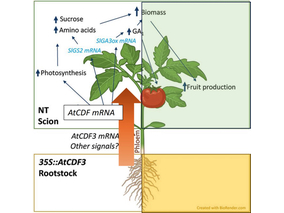
AtCDF3 gene induced greater production of sugars a...
En nuestro post hablamos sobre este interesante tipo de célula del...
An international study by scientists at the Centro Nacional de Investi...