It has been known for years that mutations in the two copies of the HERC2 gene are associated with a neurodevelopmental disorder that causes global developmental delay, intellectual disability, autism spectrum traits and movement disorders. These characteristics are very similar to Angelman syndrome, better known but also rare. However, it was not clear what the exact function of the affected gene (HERC2) is and what molecules it interacts with. Without knowing the biology behind the syndrome, it was difficult to understand how it works and propose therapeutic strategies to treat it.
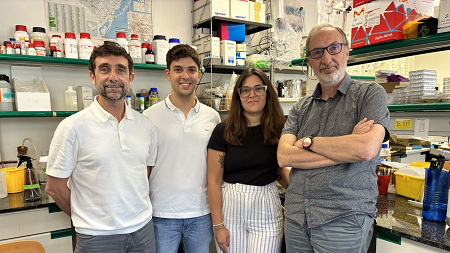
Now, a scientific study led by researchers from the Bellvitge Biomedical Research Institute (IDIBELL) and the University of Barcelona, on the Bellvitge Health Campus, has delved into the role of the HERC2 gene in neurodevelopmental disorders of this type and has identified its key role in the selective degradation of proteins —the “quality control” of proteins inside the cell, which is carried out through the proteasome system. The work, published in the journal Cell Death Discovery, has been directed by José Luis Rosa and has Joan Sala-Gaston and Laura Costa-Sastre as first authors, and represents the first steps to decipher the biology of disorders caused by this gene.
A family of genes linked to different neurodevelopmental disorders
Pathogenic variants in the HERC1 and HERC2 genes, which encode ubiquitin E3 ligase-like enzymes, have been associated with different neurodevelopmental diseases. In the case of HERC1, genetic alterations in both copies of the gene cause a rare syndrome characterized by macrocephaly, dysmorphic facial features, and psychomotor retardation. In the case of HERC2, variants in both copies of the gene that reduce its function are associated with a neurodevelopmental disorder with features similar to Angelman syndrome, including global developmental delay, intellectual disability, autism spectrum traits, and movement disturbances. Despite this relationship with various pathologies, however, until now little was known about which proteins HERC2 regulates, and therefore, how these alterations contribute to the disease.
To solve this question, the researchers have used advanced quantitative proteomics techniques to identify ubiquitin-tagged proteins – a signal that in many cases directs proteins towards degradation. Through this approach, numerous proteins of HERC2-regulated protein complexes important for cell functioning have been identified, such as the proteasome and the machinery for tRNA synthesis, initiation of translation, vesicular transport, formation of centrosomes and cytoskeleton, among others.
Error identified: protein quality control fails
Among all these systems, the correct functioning of the proteasome stands out as the main functional objective of HERC2. The results show that the HERC2 protein recognizes protein subunits that have not yet been properly assembled and marks them for elimination, a process that depends on interaction with chaperone-like proteins. “Basically, the function of HERC2 is to detect defective proteins and mark them with a tag (ubiquitin) that indicates that they are not well assembled, and therefore, they have to be degraded,” explains Dr. Jose Luís Rosa, principal investigator of the Cell Signaling and Bone Biology group of IDIBELL and the UB. This mechanism is essential to ensure proper assembly of the proteasome and, above all, to maintain the protein balance within the cell. “Therefore, when HERC2 does not work properly, this balance is altered, accumulating proteins that should be degraded, and the activity of the proteasome is affected,” he adds.
These conclusions have been reinforced by experiments conducted on cells derived from patients carrying a common pathogenic variant of the HERC2 gene. “The patient samples showed exactly the same problems in the protein degradation system, and abnormal proteasome activity,” says Joan Sala-Gaston, postdoctoral researcher and first author of the study.
Overall, the study establishes a direct link between alterations in the HERC2 gene and the functioning of the protein degradation system, providing new insights into the molecular mechanisms that can cause neurodevelopmental disorders seen in patients. In this sense, the work is part of IDIBELL’s commitment to strengthening research into rare pathologies through the REMMA Bellvitge program (Transversal Research Programme in Adult Rare Diseases). Although there is still a long way to go, “Understanding the biological basis of this rare syndrome is the necessary step to be able to design, in the future, therapeutic strategies capable of restoring protein balance and improving the lives of patients,” concludes Laura Costa, predoctoral researcher and first author of the study.

La mejor actitud que podemos adoptar es la de trat...

The research team observed changes in head circumf...
AtCDF3 gene induced greater production of sugars a...
En nuestro post hablamos sobre este interesante tipo de célula del...
The research helps understand the biological basis of a rare neurodeve...