Oryzon Genomics, S.A. (ISIN Code: ES0167733015, ORY), a clinical-stage biopharmaceutical company and a global leader in epigenetics, today presented updated positive clinical data from two clinical trials of its selective LSD1 inhibitor iadademstat in acute myeloid leukemia (AML) at the 2026 European Hematology Association (EHA) Annual Congress.
“We are encouraged by the sustained strength and consistency of the data from both the ALICE-2 and FRIDA trials,” said Carlos Buesa, Chief Executive Officer of Oryzon Genomics. “With over 80% of patients now enrolled in ALICE-2, the favorable safety profile and strong efficacy signals of iadademstat in newly diagnosed, unfit AML patients reinforce our confidence in this combination approach, including within genomically defined adverse-risk populations such as TP53-mutated and RAS pathway–mutated AML. These results are consistent with prior findings in TP53-mutated patients in our ALICE trial, where the combination of iadademstat and azacitidine doubled median overall survival compared with historical rates. As enrollment continues, we anticipate reporting final data by year-end and advancing toward a potential registrational study in first-line AML by 2027, with a focus on adverse-risk populations”
Ana Limón, Senior Vice President of Clinical Development and Global Medical Affairs at Oryzon, added: “Historically, with azacitidine plus venetoclax, one third of first line AML patients do not respond, and the depth of response is variable, underscoring the need for novel triplet strategies, particularly for patients without targetable mutations. The maturing data from both trials continue to reinforce the strength of LSD1 inhibition as an add-on approach in AML. In addition to the high ORR and CR rates observed to date in the ALICE-2 trial, treatment with the iadademstat-azacitidine-venetoclax triplet has enabled a high proportion of patients to transition to allogeneic hematopoietic cell transplantation (HCT), potentially improving long-term survival. Overall, the safety and efficacy observed across both trials support further clinical development.”
Data Summary
ALICE-2 Phase Ib clinical trial (NCT06357182) investigating iadademstat in combination with azacitidine and venetoclax in newly diagnosed AML
FRIDA Phase Ib clinical trial (NCT05546580) investigating iadademstat in combination with gilteritinib in FLT3‑mutated relapsed/refractory AML
About ALICE-2
ALICE-2 (NCT06357182) is a Phase Ib investigator-initiated study sponsored by Oregon Health & Science University (OHSU) in newly diagnosed AML. It is evaluating treatment with iadademstat in combination with azacitidine and venetoclax, the standard of care, in newly diagnosed unfit patients. The study’s primary endpoint is the incidence of dose-limiting toxicities (DLTs). Secondary endpoints include efficacy measurements such as composite complete remission (CRc: complete remission [CR] + CR with partial hematologic recovery [CRh] + CR with incomplete recovery [CRi]), and overall response rate (ORR: CRc + morphologic leukemia free state [MLFS] + partial remission [PR]). The trial plans to enrol 24 patients to achieve 21 evaluable patients.
About FRIDA
FRIDA (NCT05546580) is a Phase Ib clinical study sponsored by Oryzon. It is evaluating iadademstat in combination with gilteritinib for the treatment of FLT3-mutant relapsed/refractory AML. The primary endpoints are incidence of treatment emergent adverse events (TEAEs) and determination of the recommended Phase II dose (RP2D). Secondary endpoints include response rates (CR, CRh, CRi, MLFS, CRc), event-free survival (EFS), and overall survival (OS).
About Oryzon
Founded in 2000 and headquartered in Barcelona, Spain, Oryzon (ISIN: ES0167733015) is a clinical-stage biopharmaceutical company and a European leader in epigenetics, with a strong focus on personalized medicine for central nervous system (CNS) disorders and oncology. Oryzon’s team comprises highly experienced pharmaceutical professionals based in Barcelona, Boston, and New Jersey. The Company has an advanced clinical portfolio built around two LSD1 inhibitors: iadademstat, its oncology/hematology program, with several ongoing Phase I and II studies and which has demonstrated strong preliminary clinical activity in acute myeloid leukemia, including a 100% overall response rate (ORR) in first-line AML; and vafidemstat, its lead CNS program, which is Phase III–ready in Borderline Personality Disorder (BPD). In addition, Oryzon is advancing a broader epigenetics pipeline targeting other mechanisms, including HDAC6, for which the Company has nominated ORY-4001 as a clinical candidate for potential development in Charcot–Marie–Tooth disease (CMT), amyotrophic lateral sclerosis (ALS), and other neurological disorders. The Company also operates a robust platform for biomarker identification and target validation across malignant and neurological diseases. For more information, visit www.oryzon.com
About Iadademstat
Iadademstat (ORY-1001) is an oral, highly selective inhibitor of the epigenetic enzyme LSD1, with potent differentiating effect in hematologic cancers. Iadademstat has shown encouraging safety and strong clinical activity in combination with azacitidine in a Phase IIa trial in elder 1L acute myeloid leukemia (AML) patients (ALICE trial). Iadademstat is currently being evaluated in combination with azacitidine and venetoclax in 1L AML in the ALICE-2 trial, an investigator-initiated study (IIS) led by OHSU, and in combination with gilteritinib in the company-sponsored Phase Ib FRIDA trial in relapsed/refractory FLT3-mutant AML, with highly encouraging preliminary safety and efficacy data in both trials reported at EHA-2026: 100% overall response rate (ORR) and 89% composite complete remission rate (CRc), with 78% strict CR in 1L AML, and 67% CRc in R/R Flt3-mut AML. Additional studies in hematologic malignancies include an IIS in myelodysplastic syndrome (MDS) and National Cancer Institute (NCI)-sponsored trials in myeloproliferative neoplasms and 1L AML conducted under the Cooperative Research and Development Agreement (CRADA) between Oryzon and the NCI. Beyond hematological cancers, iadademstat is being evaluated in extensive stage small cell lung cancer (ED-SCLC) in a Phase I/II randomized trial in 1L in combination with immune checkpoint inhibition (ICI) sponsored by NCI and led by the Memorial Sloan Kettering Cancer Center, and an IIS trial in combination with ICI and radiotherapy. Oryzon has also expanded iadademstat into non-oncological hematology indications, with ongoing trials in sickle cell disease and essential thrombocythemia. Iadademstat has orphan drug designation for AML in the US and EU and for SCLC in the US.

La mejor actitud que podemos adoptar es la de trat...

The research team observed changes in head circumf...
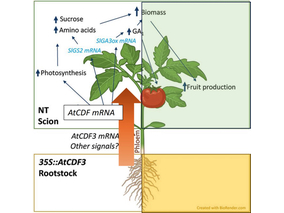
AtCDF3 gene induced greater production of sugars a...

En nuestro post hablamos sobre este interesante tipo de célula del...

New study finds an association between higher temperatures early in li...