
Anticipating rheumatoid arthritis before inflammation becomes persistent and causes joint damage remains one of the major challenges in rheumatology. Palindromic rheumatism, characterized by recurrent episodes of pain and swelling that disappear between attacks, may represent an early stage of the disease in some patients.
A multicenter clinical trial published in Nature Medicine evaluated whether intervention at this stage with abatacept can reduce progression to rheumatoid arthritis. The study, led by Hospital Clínic Barcelona and IDIBAPS, with Dr. Raimon Sanmartí as principal investigator, was conducted at 14 centers across Spain. Sant Pau participated through the Arthritis Unit of the Department of Rheumatology at Hospital de Sant Pau, and members of the Multiorgan Damage and Rheumatology research group at the Sant Pau Research Institute (IR Sant Pau), represented by Dr. Hèctor Corominas, head of the group, and Dr. Ana Milena Millan-Arciniegas, both professionals from the Department of Rheumatology and Medicine at Hospital de Sant Pau.
The PALABA trial included 70 people with palindromic rheumatism who tested positive for rheumatoid factor, anti-citrullinated protein antibodies—known as ACPAs—or both. After two years, 20.6% of participants treated with abatacept had developed rheumatoid arthritis, compared with 50% of those who received hydroxychloroquine, one of the treatments most extensively studied to date for controlling the symptoms of palindromic rheumatism.
«This study addresses one of the most important questions in preventive rheumatology: whether we can intervene before persistent arthritis develops. The results indicate that, in carefully selected patients, abatacept can substantially reduce disease progression while also improving the clinical burden of attacks,» explains Dr. Hèctor Corominas.
An Episodic Disease That May Precede Rheumatoid Arthritis
Palindromic rheumatism manifests as sudden attacks of pain, inflammation, and swelling in one or more joints. These episodes usually last for a few hours or days and then disappear completely, initially leaving no persistent inflammation or visible joint damage. This intermittent course can make the condition difficult to diagnose and may lead it to be perceived as less serious than other chronic rheumatic diseases.
However, between 30% and 60% of people with palindromic rheumatism eventually develop rheumatoid arthritis. The risk is particularly high when autoantibodies such as rheumatoid factor or ACPAs are detected. These autoantibodies also appear during the preclinical stages of rheumatoid arthritis and are among the main indicators of progression.
This association has led researchers to consider that, in some patients, palindromic rheumatism may form part of the process that precedes rheumatoid arthritis. Identifying people at greater risk could make it possible to intervene before inflammation becomes chronic and causes joint damage, disability, and a deterioration in quality of life.
Two Years of Treatment in People at High Risk
The clinical trial included adults who had experienced palindromic rheumatism for between three months and less than three years and who tested positive for rheumatoid factor, ACPAs, or both. None had yet developed persistent arthritis, radiographically visible joint damage, or diagnostic criteria for other rheumatic diseases.
A total of 73 people were randomly assigned to receive abatacept or hydroxychloroquine. Three participants in the abatacept group did not start treatment, so the primary analysis included 34 people treated with abatacept and 36 treated with hydroxychloroquine.
During the first year, abatacept was administered as a weekly 125-milligram subcutaneous injection. During the second year, the frequency was reduced to one injection every two weeks. Hydroxychloroquine was administered orally every day for 24 months. Participants were assessed every three months to determine whether they had developed persistent arthritis meeting the international classification criteria for rheumatoid arthritis.
A Significant Reduction in Progression
In the primary analysis, 7 of the 34 people treated with abatacept developed rheumatoid arthritis during the two-year follow-up period, compared with 18 of the 36 who received hydroxychloroquine. This represents an absolute difference of 29.4 percentage points between the two treatments.
The analysis of the time to rheumatoid arthritis onset also showed that people treated with abatacept remained free of the disease for longer. Overall, treatment was associated with a 73% reduction in the risk of progression during the two-year follow-up period.
«This is the central finding of the study. The reduction observed is clinically relevant and supports the possibility of intervening during a stage in which inflammation has not yet developed into persistent arthritis. Nevertheless, it must be interpreted in light of the small sample size and the fact that the patients were selected because of their higher risk of progression,» emphasizes Dr. Ana Milena Millan-Arciniegas.
The results were consistent when the analysis was restricted to participants for whom complete information was available. In this analysis, rheumatoid arthritis developed in 3 of the 30 people treated with abatacept, or 10%, and 10 of the 28 treated with hydroxychloroquine, or 35.7%.
The difference between treatments was already apparent during the first year. During the first 12 months, 8.8% of people assigned to abatacept developed rheumatoid arthritis, compared with 36.1% of those who received hydroxychloroquine. Additional analyses performed to adjust for certain baseline differences between the groups showed results in the same direction.
Less Severe Attacks and More Patients in Remission
In addition to examining progression to rheumatoid arthritis, the trial assessed the frequency, intensity, and duration of attacks associated with palindromic rheumatism. Both treatments reduced the number of episodes compared with the six months before the trial began, but no significant differences were observed between abatacept and hydroxychloroquine in the monthly frequency of attacks.
Clear differences were observed in attack intensity. Before treatment began, participants in both groups rated the median intensity of their attacks as 7 out of 10. During the two-year follow-up period, the intensity decreased to 4 in the abatacept group, while remaining at 7 in the hydroxychloroquine group.
Episodes were also shorter among people treated with abatacept. A total of 31.2% of their attacks lasted less than 24 hours, compared with 16.6% of those recorded in the hydroxychloroquine group. In addition, 55.9% of participants treated with abatacept achieved symptom remission, defined as the absence of attacks or the occurrence of only one episode during at least 12 consecutive months. In the hydroxychloroquine group, 22.9% of patients achieved remission.
«The observed benefit is not limited to reducing the likelihood of a future diagnosis. Patients treated with abatacept also experienced less severe attacks and a higher rate of remission, which is relevant when weighing the benefits against the burden of preventive treatment,» notes Dr. Millan-Arciniegas.
T-Cell Modulation as a Preventive Strategy
Abatacept is a biologic drug that interferes with one of the signals required for the full activation of T cells, which play an essential role in the adaptive immune response. These cells are involved in the immunologic processes that lead to the onset and establishment of rheumatoid arthritis.
The drug binds to the CD80 and CD86 molecules found on cells that present antigens to the immune system. In this way, it limits T-cell activation and may indirectly modulate other responses, including B-cell differentiation and autoantibody production.
As part of an exploratory analysis, the trial examined several antibodies directed against modified proteins but did not find a widespread and consistent reduction in their concentrations with abatacept compared with hydroxychloroquine. The authors suggest that the clinical benefit may depend more on a functional modification of immune cells than on an immediate reduction in circulating autoantibodies.
The results are consistent with previous trials involving people with arthralgia and a high risk of rheumatoid arthritis, in which abatacept also delayed or reduced the onset of the disease. According to the authors, PALABA is the first randomized clinical trial conducted specifically in people with palindromic rheumatism.
Good Tolerability and Questions That Remain Unanswered
Both treatments had an acceptable tolerability profile during the 24-month period. At least one adverse event was experienced by 73.5% of participants treated with abatacept and 63.9% of those who received hydroxychloroquine, with no statistically significant differences between the groups.
However, the study has several limitations. The trial was open-label, meaning that both participants and health care professionals knew which treatment had been assigned. It also involved a small sample and did not include centralized diagnostic assessments or imaging techniques such as ultrasound or magnetic resonance imaging to detect subclinical joint inflammation.
In addition, there was no treatment-free follow-up period. It is therefore not yet possible to determine whether abatacept has a lasting effect on the course of the disease or whether its protective effect depends on continued treatment. The researchers are conducting a five-year follow-up of the participants to assess whether the benefits persist.
«The results are promising, but they do not imply that everyone with palindromic rheumatism and autoantibodies should receive biologic treatment. A substantial proportion of patients will not develop rheumatoid arthritis, so we need to improve predictive models and identify those whose risk is high enough to justify preventive intervention,» cautions Dr. Corominas.
The authors consider that abatacept could be evaluated in selected patients with seropositive palindromic rheumatism after individually assessing the risk of progression, potential adverse effects, treatment duration, and each person’s preferences.
Reference Article: Sanmarti R, Pérez-García C, de-Toro FJ, Salvador G, Escudero-Contreras A, Cuervo A, Graell E, Reina D, Kanterewicz E, Corominas H, Urionaguena-Onaindia I, López-Lasanta M, Olivé A, Sala-Gómez M, Frade-Sosa B, Morlà-Novell RM, Polino L, Meraz-Ostiz JA, Oreiro N, Blanco FJ, Pérez-Nadales I, Ortega-Castro R, Busquets-Pérez N, Gómez-Centeno AD, Camacho O, Rodríguez-Cros JR, Millan-Arciniegas AM, García-Llorente JF, Borrell H, Prior-Español Á, Castell-Quiñones S, Cruceta A, Bonfill E, Domenech-Gómez G, Roca-Fàbregas A, Ríos J, Tobalina-Maestre L, Gómara MJ, Haro I. Abatacept versus hydroxychloroquine for prevention of rheumatoid arthritis in individuals with palindromic rheumatism: a randomized open-label trial. Nat Med 2026. https://doi.org/10.1038/s41591-026-04395-6.

La mejor actitud que podemos adoptar es la de trat...

The research team observed changes in head circumf...
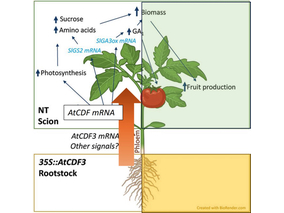
AtCDF3 gene induced greater production of sugars a...

En nuestro post hablamos sobre este interesante tipo de célula del...

New study finds an association between higher temperatures early in li...