Bioreactors are at the heart of the production of monoclonal antibodies, recombinant vaccines, therapeutic proteins, and cell therapies. Inside them, mammalian cells, bacteria, yeast, or more complex organisms produce the molecules that will save or improve the lives of millions of patients. The integrity of every connection in the bioreactor—every clamp, every joint, every valve—determines whether the production process will succeed or be compromised by contamination that could cost weeks of work and millions of euros.
The Bioreactor as a Critical Process System
A production bioreactor for monoclonal antibodies or vaccines is a complex system that integrates multiple functions: cell culture containment, precise control of temperature, pH, dissolved oxygen and CO2, addition of nutrients and gases, sample extraction and, finally, product harvesting.
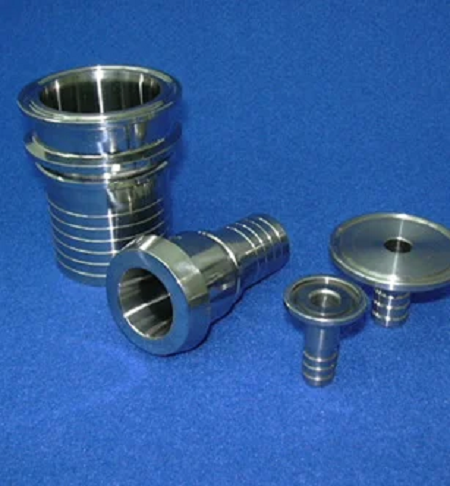
Each of these functions involves connection points to the facility's piping system: clamp fittings with gaskets for detachable connections, diaphragm valves for controlling the flow of nutrients and gases, silicone tubes in peristaltic addition pumps, and pharmaceutical hoses for flexible connections.
The specification of these components must meet the specific requirements of the cell culture process:
Sterility: Cell culture is extremely sensitive to microbial contamination. A single microorganism introduced into the bioreactor can multiply to the point of rendering the process unviable. All connections must be airtight and capable of being sterilized before each use.
Biocompatibility: Components in contact with the culture medium must not affect cell growth or productivity. Extractables from joints and tubing can inhibit cell growth even at very low concentrations.
Control and automation: crop parameters must be precisely controlled and electronically recorded to meet GMP requirements.
Clamp Fittings in Bioreactors: ASME BPE Specification
In bioreactors for biopharmaceutical production, clamp fittings follow the ASME BPE specification as the reference standard. The most stringent requirements apply to connection points in direct contact with the culture medium or the harvested product.
Material:
• AISI 316L stainless steel (UNS S31603)
• Maximum carbon content 0.030% to minimize carbide precipitation in the heat-affected zones of welding
• Chemical composition verified by optical emission analysis (OES)
• EN 10204 type 3.1 material certificate
Surface finish:
• Interior: Ra ≤ 0.5 μm (SF4) with electropolishing as standard for connections in contact with the product
• In more critical applications (mAbs harvesting connections, formulation lines): Ra ≤ 0.38 μm + electropolishing (SF5)
• Exterior: standard mechanical finish (SF1 or SF2)
• Surface finish certificate with Ra value measured by calibrated roughness tester
Dimensions:
• Compliance with ASME BPE dimensional tables for nominal diameter
• Tolerances according to ASME BPE, stricter than DIN 32676
Traceability:
• Heat number of the material
• Manufacturer's lot number
• All documents available for review in audits
Clamp Joints in Bioreactors: Biocompatibility and Extractables
The selection of clamp fittings for bioreactors is perhaps the decision with the greatest impact on the biocompatibility of the system. The cell culture medium is a highly sensitive fluid: small amounts of organic compounds from an unsuitable fitting can inhibit cell growth, reduce process productivity, or affect product quality.
Selection criteria:
USP Class VI Platinum Silicone:
• First choice for most bioreactors
• Low extractable profile, well documented by major manufacturers
• Available biocompatibility data (cytotoxicity according to ISO 10993-5, systemic implantation according to ISO 10993-11)
• Resistance to autoclave sterilization (121°C/20 min or 134°C/7 min), gamma and ETO
• Flexible even at low process temperatures
• Transparent, which facilitates visual inspection of the gasket at each opening
PTFE:
• For bioreactors with fluids containing organic solvents or when the extractables profile of the silicone is not acceptable
• Virtually no extractables
• Less flexibility, requires tighter clamp
• Resistant to higher temperatures (up to 260°C)
Biocompatibility verification:
• For bioreactors for the production of injectable biological products, the biocompatibility of the joints must be documented with tests according to ISO 10993
• In research bioreactors or in the production of non-injectable intermediates, USP Class VI data may be sufficient
Sterilization of Clamp Connections in Bioreactors
Sterilization of piping systems connected to bioreactors is a critical step before each production cycle. Sterilization options for clamp connections in bioreactors include:
Steam In Place (SIP):
• The standard option in stainless steel multipurpose bioreactors
• Saturated steam at 121°C for at least 20 minutes (or equivalent sterile conditions)
• Clamp gaskets must be SIP compatible: pharmaceutical-grade EPDM and platinum silicone withstand multiple SIP cycles without significant degradation
• The piping system must be designed to ensure that steam reaches all points, including branches and areas of potential condensation.
• The clamp clamps must be tightened properly after each SIP cycle to compensate for any eventual relaxation of the seal due to the thermal effect.
Gamma sterilization (for single-use systems):
• Single-use pipe and hose assemblies are sterilized by gamma irradiation (typically 25-50 kGy) before use
• Platinum silicone and SUS-specific thermoplastic elastomers withstand gamma sterilization without significant changes in properties
• The gamma sterilization certificate (minimum absorbed dose, biological indicators) must be included in the batch record
Autoclave sterilization:
• For removable components (gaskets, small hoses) that are sterilized separately
• Platinum silicone and pharmaceutical-grade EPDM gaskets withstand multiple autoclave cycles
Change Management of Components in GMP Bioreactors
In GMP-compliant biopharmaceutical production facilities, any changes to bioreactor components—including clamp joints, silicone tubing, or pharmaceutical hoses—must be managed through the formal change control process.
Changes that typically require change control include:
• Change of supplier of clamp gaskets or silicone tubing
• Change of grade or reference from the same manufacturer
• Material change (from EPDM to silicone, from standard silicone to platinum)
• Change in size or dimensions
• Any changes in the supplier's manufacturing process that may affect the properties of the component
The change control process for bioreactor components includes:
1. Identification and documentation of the proposed change
2. Impact assessment: Does it affect process validation? Does it require new biocompatibility or extractable assays?
3. If the impact is significant: further compatibility tests and, possibly, small-scale production runs to verify that the new component does not affect the cultivation process
4. Documentation update: specifications, maintenance procedures, IQ
5. Formal approval by the quality system
6. Implementation and monitoring
Conclusion
The correct technical specification of clamp fittings and gaskets in bioreactors is a decision that directly impacts process sterility, system biocompatibility, and the quality of the biopharmaceutical product. In an environment where the production of a batch of monoclonal antibodies can be worth several million euros, investing in correctly specified and documented components is always worthwhile. If you need technical advice on specifying components for your bioreactors or on qualifying new suppliers, our team is available.

La mejor actitud que podemos adoptar es la de trat...

The research team observed changes in head circumf...

AtCDF3 gene induced greater production of sugars a...
En nuestro post hablamos sobre este interesante tipo de célula del...
It has been developed this approach based on photopharmacology, a tech...