Public investment in liver transplants not only saves lives and substantially improves patients’ survival and quality of life, but also generates a positive long-term social and economic return. So demonstrates a pioneering study led by researchers from Pompeu Fabra University (UPF), the National Transplant Organization (ONT), and Vall d’Hebron University Hospital. More than four decades after the first liver transplant in Spain in 1984, this is the first study to perform a global assessment of the impact of these interventions, not only from the perspective of patients’ health, but also from the economic and social perspectives.
The study reveals that liver transplant patients currently contribute at least 100 million euros per year to the Spanish economy. This figure exceeds the annual investment in liver transplants, which stands at around 75 million euros. If the costs of post-surgical treatment -lifelong immunosuppressive therapy to prevent the rejection of the transplanted organ- are also taken into account, this investment would total 90 million euros per year. The research is based on official and historical data from the Spanish Registry of Liver Transplantation (RETH), the ONT, and the Spanish Society of Liver Transplantation (SETH), which include transplants conducted between 1984 and 2024.
The system has been profitable since the start of the 21st century
When liver transplants began in the mid-1980s, only a few dozen were carried out each year, while currently the figure stands at about 1,200. Precisely when this figure began to stabilize, in the early 2010s, the costs of the operation and patient treatment and the economic return to society cancelled each other out, and today the balance is clearly positive. This is possible thanks to the economic contributions of patients of working age (active population), although it must not be forgotten that transplanted children will end up doing the same in the longer term and that older people, given the foreseen increase in life expectancy and quality, will be able to make increasing contributions to society beyond the labour market.
Longer life expectancy for patients, especially children
The research also reveals an increase in transplant patients’ life expectancy and quality. While in the 1980s, patients gained an average of 10 years of life, today this figure ranges between 16 and 20 among adults and between 21 and 29 in the case of children, due to significant advances in paediatric surgery. Currently, the Spanish liver transplant system is an international benchmark and the state organ donation rate is one of the highest in the world (52.6 per million inhabitants).
The results of the study have been published in an article in Health Economics Review. At UPF, the principal investigator is Gemma Piella, co-director of the SIMBYOsys group of the BCN MedTech Unit of the Department of Engineering, who led the study together with Gloria de la Rosa (National Transplant Organization), and Concepción Gómez Gavara (linked to Vall d’Hebron University Hospital while the study was being conducted and now, to Hospital Clínic de Barcelona). Other co-authors are Edson Plasencia (article lead author, with the UPF SIMBYOsys group), Gloria Merino Pinto (Centre for Research in Economics and Health -CRES- of the UPF Department of Economics and Business), Roger Sabater Mezquita (CRES-UPF and the Department of Econometrics, Statistics and Applied Economics at the University of Barcelona), Itxarone Bilbao (Vall d’Hebron University Hospital and Department of Surgery at the UAB), and Gerardo Blanco-Fernández (SETH and University Hospital of Badajoz).
Roger Sabater (UPF and UB) and Edson Plasencia (UPF) highlight: “Thanks to gradual technological advances, more and more contemporary surviving recipients of working age have accumulated, whose income exceeds the costs of new transplants and immunosuppressive treatments in each of the last fifteen years, and with an increasingly larger margin. This trend will continue into the future if innovative technology is able to further improve survival and reduce the likelihood of re-transplantation”.
Gloria de la Rosa, an assistant physician at the ONT, adds that this study shows the value of keeping robust national records sustained over time: “The Spanish Registry of Liver Transplantation, together with the data from the ONT concerning donations, waiting lists and transplant activity, allow analysing four decades of the evolution of liver transplantation in Spain from the clinical, organizational and social standpoints. This data is essential to evaluate results, guide planning, and continue improving a model based on the quality, equity and solidarity of donors and their families”.
Regarding future challenges, Gemma Piella (UPF) explains that the number of donors is still below the number of patients awaiting transplants. This has led her to develop a new smart system, LiverColor, which will reduce the margin of error of current methods used to identify which donated livers are suitable for transplantation and prevent valid organs from going to waste. Piella highlights “the potential of biomedical technology to further improve the efficiency of the system”.
Dr. Concepción Gómez Gavara adds: “Innovation in the field of transplantation has traditionally been a particularly complex challenge, as any new technology must demonstrate with the utmost rigor that it can improve current outcomes without compromising patient safety or graft survival. With this vision, we launched a line of work that combines clinical and surgical expertise with technological knowledge and engineering, leading to the development of LiverColor, a more precise, objective, and personalized transplantation model.” Currently, at Hospital Clínic Barcelona, Gómez Gavara continues to drive the development and evolution of the technology, exploring new applications and innovation opportunities to further improve the transplantation process.
Reference article: Plasencia Sánchez, E., Gómez Gavara, C., Merino Pinto, G. et al. The Spanish transplantation model as a benchmark: clinical, societal, and economic impact of liver transplants in Spain (1984–2024). Health Econ Rev (2026). https://doi.org/10.1186/s13561-026-00801-4
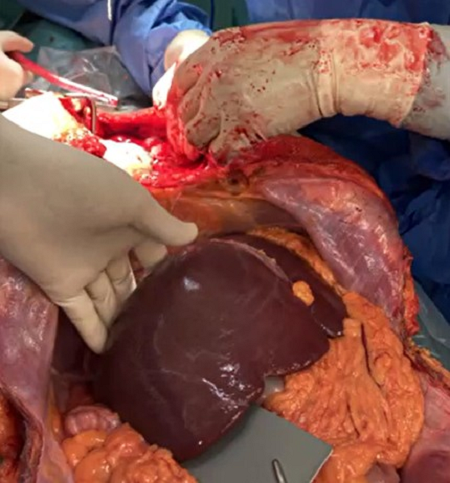
Imagen: Extraction of the donor liver, to subsequently evaluate whether or not the organ is suitable for transplantation (Source: UPF's Livercolor project).

La mejor actitud que podemos adoptar es la de trat...

The research team observed changes in head circumf...
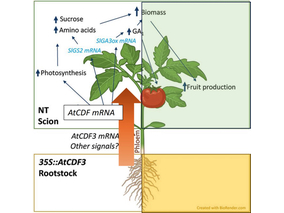
AtCDF3 gene induced greater production of sugars a...
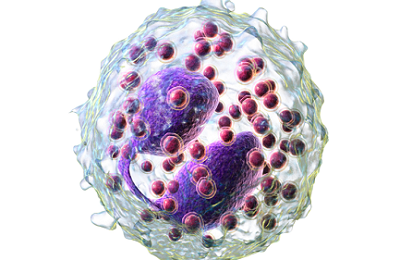
En nuestro post hablamos sobre este interesante tipo de célula del...
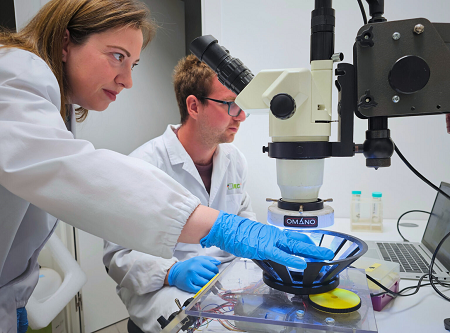
It has been developed this approach based on photopharmacology, a tech...