An international team of scientists has produced the most detailed map to date of enhancers, regions of DNA that control human genes, charting more than 92 million possible interactions between these regulatory elements and the genes they act on across 1458 samples from 369 different cell types and tissues.
The work, published in Nature by the ENCODE consortium, is the latest milestone in a two-decade effort to understand what the letters of the human genome actually do. It was carried out with the participation of researchers at the Centre for Genomic Regulation (CRG) in Barcelona, the only institution in Spain to participate in the international initiative.
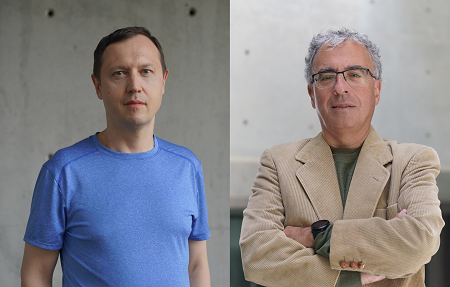
The corresponding author of the study is Jesse Engreitz at Stanford University, with other co-authors at the Broad Institute of MIT, Johns Hopkins, UCSD, UCSF, all in the United States, as well as EMBL in Heidelberg. The CRG’s Roderic Guigó is co-senior author of the paper and Ramil Nurtdinov is co-first author.
While genes make up only a small fraction of human DNA, most of the human genome acts as a high-precision control system that regulates their expression. Among its most important components are enhancers, short stretches of DNA that behave like dimmer switches that finely tune the activity of genes up or down.
The same genes are present in every cell, but enhancers alter how active genes are in a tissue-specific manner, which is part of what contributes to making a skin cell different from a brain cell or a blood cell. The challenge for scientists has been that an enhancer can sit relatively far along the DNA sequence from the gene it controls, making it very hard to tell which switch is wired to which gene.
To build the atlas, the team developed a computer model, called ENCODE-rE2G, trained on many different experiments in which individual enhancers were switched off to see which genes were affected. The model was then tested against rival methods and applied across hundreds of cell types, requiring only a single, widely available type of experimental data to work with: open chromatin.
The new resource matters for understanding disease. The great majority of genetic variants that different studies have linked to common disorders fall not within genes themselves, but in regulatory regions. Until now it has been very difficult to say which gene such a variant actually affects, or in which tissue the disturbance happens. Combined with other tools, the new model was able to predict the likely target gene for a disease-associated variant with an accuracy of around 79 per cent, a substantial improvement on previous approaches.
The study also revealed new biology. Most enhancers act on genes surprisingly close by, genes that every cell relies on tend to be less dependent on distant enhancers, and nearby enhancers sitting near one another can work together to produce an effect greater than the sum of their parts.
Roderic Guigó and Ramil Nurtdinov of the CRG are active members of the ENCODE working group behind this work. They developed EPIraction, a method that compares many cell types at once to identify the enhancer–gene links unique to a given tissue, and contributed to building the shared framework used to test and compare all the models in the study.
ENCODE, or the Encyclopedia of DNA Elements, was launched by the United States’ National Human Genome Research Institute in 2003. At the time, the Human Genome Project had just finished spelling out the three billion letters of human DNA, but reading the sequence is not the same as understanding it.
ENCODE set out to catalogue the functional parts of the human and mouse genomes, which includes genes, and crucially the enhancers that regulate their activity, across hundreds of cell types. Over more than twenty years it has become one of the largest and most influential collaborations in biology.
Through Roderic Guigó at the CRG, Spain has been part of that effort from early on. Guigó took part in the original Human Genome Project and has contributed to ENCODE across its successive phases, as well as to other flagship international projects such as GTEx.
The CRG itself was founded in 2000, the same year the first working draft of the human genome was unveiled to the world, a moment when it was becoming clear that reading the sequence was only the beginning.
“When we first read the human genome, one of the biggest surprises was how few genes it contained, far too few to account for the complexity of a human being,” says Roderic Guigó, co-senior author of the study, researcher at the CRG and professor at UPF.
“We came to understand that the answer lies not in the genes themselves, but in how they are regulated. That is one of the questions the CRG was created to answer, and it is why we are called the Centre for Genomic Regulation. This atlas is a map of exactly that, the control system of the human genome, and it is the map we have been working towards ever since.”
“I’m truly happy to have been part of this and grow as a scientist. It has been a wonderful experience, and I’m proud of what we have achieved together,” adds Nurtdinov.
Professor Guigó has also led GENCODE, the reference catalogue of human genes on which much of ENCODE, and modern genomics, depends. His group’s participation places Barcelona among the international centres that shape the world’s foundational genomic resources, a reflection of how Catalan and Spanish research has established itself at the forefront of large-scale genomics.
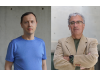
Image: The CRG’s Roderic Guigó (right) is co-senior author of the paper and Ramil Nurtdinov (left) is co-first author.

La mejor actitud que podemos adoptar es la de trat...

The research team observed changes in head circumf...
AtCDF3 gene induced greater production of sugars a...
En nuestro post hablamos sobre este interesante tipo de célula del...
To conduct the study, the researchers analyzed 19 symptoms and comorbi...