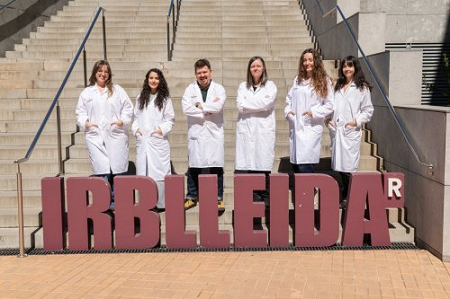
The +Pec Proteomics research group of the Institute for Biomedical Research of Lleida (IRBLleida) and the University of Lleida (UdL) has participated in the development and optimization of the PROSPR method (Protein Organic Solvent PRecipitation), an innovative technique that allows isolating and analyzing extracellular vesicles directly from whole blood samples while preserving their integrity. This advance opens new opportunities to leverage sample collections stored in biobanks and identify biomarkers that have so far been difficult to detect. The methodology could contribute to improving the early diagnosis and monitoring of various diseases, as well as deepening the understanding of the biological mechanisms that cause them.
The study, published in the journal Extracellular Vesicles and Circulating Nucleic Acids, has demonstrated a significant advantage. Analyzing whole blood allows for the capture of biological information that was previously lost. Traditional methods only examined fractions of plasma or blood serum. In contrast, this new technique detects key signals from platelets and mitochondria, the structures that generate cellular energy. This provides a much more complete view of the patient's health status.
"Making use of these stored blood samples optimizes research resources and brings us closer to more precise and earlier diagnoses for patients," explained José Antonio Sánchez Milán, a research fellow in the +Pec Proteomics group.
Extracellular vesicles are small structures that all cells in the body release and that naturally float in bodily fluids-such as blood-acting as messengers that carry proteins, lipids, and genetic material to reveal a patient's health status.
The PROSPR protocol purifies the blood sample without the need for complex and slow procedures, primarily facilitating its adaptation to the hospital clinical laboratory. The head of the +Pec Proteomics group, Xavier Gallart-Palau, points out that "this method maintains the morphology and structure of the vesicles intact, and allows us to obtain a high-quality sample, ready to study at the same time."
In conclusion, the PROSPR method offers a fast and accessible tool for re-evaluating samples stored in biobanks around the world. This technique allows for the highest yield from thousands of previously inactive samples. Thanks to this advancement, the research team will be able to better understand how various pathologies work and facilitate the discovery of new biomarkers for the early diagnosis of diseases.
Reference article: Milán, J. A., Mulet, M., Font-Alberich, M., Torres, M., Castillo, Y., Pico, S., Yuguero, O., Piñol, G., Bellon, F., Gea-Sánchez, M., Sze, S. K., Kalaria, R., Gallart-Palau, X., & Serra, A. (2026). Optimized enrichment of circulating extracellular vesicles from whole blood samples using PROSPR. Extracellular Vesicles and Circulating Nucleic Acids, 7, 1084-1107. https://doi.org/10.20517/evcna.2026.18
Text: Communication and Press, IRBLleida
Image: Investigators of +Pec Proteomics research group

La mejor actitud que podemos adoptar es la de trat...

The research team observed changes in head circumf...

AtCDF3 gene induced greater production of sugars a...
En nuestro post hablamos sobre este interesante tipo de célula del...
Peroxisome proliferator-activated receptors are emerging as a potentia...