An international research team co-led by the Institute of Biomedicine and Biotechnology of Cantabria (IBBTEC-CSIC-University of Cantabria) and CIC bioGUNE, member of BRTA, has identified a novel molecular mechanism that contributes to limiting the progression of several types of cancer.
The findings, published in Nature Communications, reveal that the protein ASPA acts as a natural regulator that prevents the activation of cancer-associated fibroblasts (CAFs), cells within the tumour microenvironment that play a critical role in tumour growth, tissue invasion, and metastasis.
The discovery provides new evidence of the importance of the tumour microenvironment, the complex cellular ecosystem surrounding cancer cells, which directly influences disease progression. Understanding how cancer reprogrammes the healthy cells in its surrounding tissue has become one of the main priorities in oncology research, as these interactions can determine tumour aggressiveness and response to treatment.
Looking beyond cancer cells
Although cancer is commonly associated with the uncontrolled proliferation of malignant cells, tumours are composed of a wide variety of interacting cell types. These include immune cells, blood vessels, and fibroblasts, which are responsible for maintaining the normal structure and function of tissues.
During tumour development, however, many of these cells are reprogrammed by the tumour itself and begin to support its growth. Among them, CAFs are now recognised as one of the most influential components of the tumour microenvironment due to their ability to promote tumour progression, facilitate cancer cell dissemination, and contribute to resistance to certain therapies.
Understanding how this transformation occurs has become a major priority in cancer research and has driven some of the most significant advances in oncology over recent decades, including immunotherapy.
ASPA acts as a natural brake
Against this background, the research team identified ASPA as a key regulator of the behaviour of cancer-associated fibroblasts.
The results show that, as tumours progress, a complex interplay between cancer cells and the surrounding healthy tissue leads to a gradual reduction in ASPA expression. As ASPA levels decline, fibroblasts lose an important natural regulatory mechanism and acquire characteristics that promote tumour growth and the development of more aggressive forms of the disease.
The study further demonstrates that ASPA exerts this regulatory function by suppressing TGFβ signalling, one of the principal pathways responsible for activating cancer-associated fibroblasts.
Using a multidisciplinary approach combining biochemical analyses, cellular models, in vivo studies, and advanced single-cell sequencing technologies, the researchers were able to characterise the role of ASPA across multiple tumour types with high precision.
Potential clinical relevance
One of the study's most significant findings is that the loss of ASPA is associated with more aggressive disease progression across different types of cancer. These results suggest that ASPA could potentially serve as a biomarker to identify patients at greater risk of tumour progression and metastasis.
Although this is a fundamental research study with no immediate clinical application, the findings open new opportunities to investigate ASPA as a potential therapeutic target and to develop improved strategies for cancer diagnosis and treatment.
The study was made possible through extensive international collaboration and the generosity of patients who donated essential biological samples for the research. The work was supported by the Spanish Association Against Cancer (AECC), the Spanish State Research Agency (AEI), the European Research Council (ERC), the "la Caixa" Foundation, and the CRIS Cancer Foundation.
Reference: Ianire Astobiza, Catalina Capó-Serra, Cristina Viera, Javier Rodríguez, Patricia Carnicero, Miguel Juliá, Ainara Martinez, Carmen Pérez-López, María Subijana, Carolina Ortiz-Sanz, Saioa Garcia-Longarte, Isabel Mendizabal, Emily J. Kay, Carla Riera-Domingo, Silvia Rivis, Onintza Carlevaris, Leire Egia-Mendikute, Sara Cascais, Natalia Martín-Martín, Sonia Fernandez-Ruiz, Veronica Torrano, Jana R. Crespo, Mikel Pujana-Vaquerizo, Elisa Espinet, Andreas Trumpp, Noemi Eiro, Francisco J. Vizoso, Ana Vivancos, Joan Seoane, David Gonzalo, Sofia Rey, Aida Santos-Martin, Aitziber Ugalde-Olano, Claudia Manini, Jose I. Lopez, Diana Cabrera, Sebastian M. Van Liempd, Juan M. Falcon-Perez, Roger R. Gomis, Asís Palazon, Christian Frezza, Mireia Castillo-Martin, Sara Zanivan, Massimiliano Mazzone, Miguel Unda, Ana Loizaga-Iriarte, Arkaitz Carracedo and Fernando Calvo. Fibroblastic aspartoacylase suppresses TGFβ-mediated responses and cancer progression. Nature Communications. DOI: 10.1038/s41467-026-73002-6.
About CIC bioGUNE
The Cooperative Research Centre for Biosciences (CIC bioGUNE), a member of the Basque Research & Technology Alliance (BRTA), is located in the Bizkaia Science and Technology Park. It is a biomedical research centre conducting cutting-edge research at the interface of structural, molecular, and cellular biology, with a particular focus on understanding the molecular basis of disease to enable the development of novel diagnostic methods and advanced therapies.
About BRTA
The Basque Research & Technology Alliance (BRTA) brings together four Cooperative Research Centres (CIC bioGUNE, CIC nanoGUNE, CIC biomaGUNE, and CIC energiGUNE) and 13 technology centres (Azterlan, AZTI, Ceit, Cidetec, Gaiker, IDEKO, IKERLAN, Leartiker, LORTEK, NEIKER, Tecnalia, Tekniker, and Vicomtech) with the shared objective of developing advanced technological solutions for the Basque industrial ecosystem.
Supported by the Basque Government, the SPRI Group, and the Provincial Councils of the three Historical Territories of the Basque Country, BRTA promotes collaboration among its member centres, strengthens knowledge generation and transfer to industry, enhances business competitiveness, and increases the international visibility of the Basque scientific and technological ecosystem.
BRTA employs approximately 3,500 professionals, carries out 22% of total R&D investment in the Basque Country, generates annual revenues exceeding €300 million, and files around 100 European and international patents each year.
About IBBTEC
The Institute of Biomedicine and Biotechnology of Cantabria (IBBTEC) is a joint research institute of the University of Cantabria and the Spanish National Research Council (CSIC). The institute conducts both fundamental and applied biological research with the mission of advancing scientific knowledge and promoting the transfer of research outcomes to the productive sector.
The IBBTEC research group that co-led this study is headed by Fernando Calvo and focuses on investigating the role of the tumour microenvironment in the development, dissemination, and therapeutic response of a range of solid tumours.

La mejor actitud que podemos adoptar es la de trat...

The research team observed changes in head circumf...
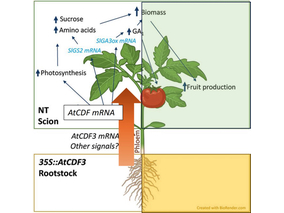
AtCDF3 gene induced greater production of sugars a...
En nuestro post hablamos sobre este interesante tipo de célula del...
The work, co-led by CIC bioGUNE and IBBTEC and published in Nature Com...