Oryzon Genomics, S.A. (ISIN Code: ES0167733015, ORY), a clinical-stage biopharmaceutical company and global leader in epigenetics, today announced that three abstracts featuring iadademstat, its selective LSD1 inhibitor for onco-hematology, have been accepted for presentation at the upcoming 67th American Society of Hematology (ASH) Annual Meeting, to be held December 6-9, 2025, in Orlando, Florida (USA).
The accepted abstracts highlight encouraging clinical activity and safety data from two ongoing clinical studies evaluating iadademstat-based combinations in patients with acute myeloid leukemia (AML): the company-sponsored FRIDA study in FLT3-mutant relapsed/refractory AML in combination with gilteritinib, and an investigator-initiated study sponsored by Oregon Health & Science University (OHSU) in first line unfit AML setting in combination with venetoclax-azacitidine. In addition, a Trial-in-progress (TIP) abstract has been accepted relating to a new randomized study of iadademstat in combination with ASTX727 in advanced myeloproliferative neoplasms (MPNs), sponsored by the National Cancer Institute (NCI) under the Cooperative Research and Development Agreement (CRADA) that Oryzon has in place with the NCI. A TIP abstract is a brief summary that describes the design, objectives, and status of an ongoing clinical trial, without reporting results.
Dr. Ana Limón, Senior Vice President of Clinical Development and Medical Affairs at Oryzon, said: “The emerging data from these AML studies, which demonstrate that adding iadademstat to the current standards of care—venetoclax plus azacitidine in treatment-naïve AML patients, or plus gilteritinib in relapsed/refractory FLT3-mutated AML—enhances efficacy without increasing toxicity, is very encouraging. This finding is particularly noteworthy in the FLT3+ R/R population, as 42% of patients in our cohort had been previously treated with venetoclax, a group known to exhibit poor responses to gilteritinib monotherapy and therefore in urgent need of better therapies. We are also excited to see emergent trials with iadademstat combinations in myeloid malignancies other than AML that are in need of new therapies, including MDS and MPNs, the latter featured in the NCI’s TIP”.
“We are very pleased that these iadademstat abstracts have been selected for presentation at ASH 2025,” said Dr. Carlos Buesa, Chief Executive Officer of Oryzon. "The results to be presented are very promising and underscore iadademstat’s potential as a potent and versatile epigenetic modulator in AML, capable of synergizing with existing standard-of-care regimens to achieve responses in difficult-to-treat populations, with good tolerability.”
Summary of Accepted Abstracts
Abstract Title: Preliminary safety and efficacy data of the FRIDA study: iadademstat and gilteritinib in FLT3-mutated relapsed/refractory acute myeloid leukemia
Presenting Author: Dr. Amir Fathi
Type: Poster Presentation
Session Name: 616. Acute Myeloid Leukemias: Investigational Drug and Cellular Therapies: Poster III
Session Date: December 8, 2025
Presentation Time: 6:00 PM - 8:00 PM EST
Room: OCCC - West Halls B3-B4
Presentation ID: 5197
The Phase Ib FRIDA study (NCT05546580) is evaluating the safety, tolerability and recommended Phase 2 dose (RP2D) of the combination of iadademstat plus gilteritinib in FLT3-mutated relapsed or refractory AML. At the time of abstract submission, 34 patients had been enrolled, with 4 dose level cohorts evaluated in the escalation phase. The combination is tolerable at the tested doses. The study is in the expansion phase at one selected pharmacologically active dose, with a total of 14 patients enrolled in the study at this dose level. At the selected dose for expansion, the combination shows a 67% response rate (8/12 patients) and a 58% complete response rate (CR+CRh+CRi, 7/12 patients) in the 12 evaluable patients. Three patients have undergone HSCT. Updated data will be presented at the congress.
Abstract Title: Preliminary safety and efficacy results of a Phase Ib investigation of the LSD1 inhibitor iadademstat (ORY-1001) in combination with azacitidine and venetoclax in newly-diagnosed AML
Presenting Author: Dr. Curtis Lachowiez
Type: Poster Presentation
Session Name: 616. Acute Myeloid Leukemias: Investigational Drug and Cellular Therapies: Poster I
Session Date: December 6, 2025
Presentation Time: 5:30 PM - 7:30 PM EST
Room: OCCC - West Halls B3-B4
Presentation ID: 1649
This Phase Ib trial (NCT06357182) evaluates iadademstat in combination with azacitidine and venetoclax in patients with newly diagnosed AML. Preliminary data from the first 8 patients enrolled show the triplet combination is safe and active, resulting in high response rates. The overall response rate (ORR) was 100% (n=8), with 88% achieving complete remission (CR), and 12.5% morphologic leukemia-free state (MLFS). After a median follow-up of 9 months, the estimated 6‑month overall survival (OS) was 88%. No dose-limiting toxicities were observed.
Abstract Title: Trial in progress - a randomized study of ASTX727 with or without iadademstat in accelerated/blast-phase myeloproliferative neoplasms
Presenting Author: Dr. Anand Patel
Type: Poster Presentation
Session Name: 634. Myeloproliferative Syndromes: Clinical and Epidemiological: Poster II
Session Date: December 7, 2025
Presentation Time: 6:00 PM - 8:00 PM EST
Room: OCCC - West Halls B3-B4
Presentation ID: 3827
This Phase II study (NCT06661915) is investigating ASTX727 (oral decitabine and cedazuridine) with or without iadademstat in treating patients with accelerated/blast phase myeloproliferative neoplasms (MPN-AP/BP). The study has a dose escalation phase to identify the recommended phase 2 dose (R2PD) of iadademstat + ASTX727, followed by a randomized phase which will investigate the efficacy of iadademstat + ASTX727 compared to ASTX727 monotherapy. The dose escalation phase will follow a 3+3 design. The randomization will be 1:1 with 25 patients treated on each arm during the randomized portion. The primary endpoint will be the rate of acute leukemia response-complete (ALR-C) or better within 4 cycles of therapy. An interim analysis for futility will be performed after 25 patients are enrolled and followed for ALR-C.
This study is sponsored and conducted by the NCI, and recently started to enroll patients.
There is a critical need for new treatments for patients with MPNs, specially for those in accelerated phase (AP) or blast phase (BP), as current therapeutic options yield poor survival outcomes of just 3-5 months in BP and 12-18 months in AP. Available treatments, outside allogeneic hematopoietic cell transplantation, which remains the only potentially curative intervention, rarely induce durable disease modification or clonal clearance. Disease modification, rather than solely symptom relief, is a unique appeal of LSD1 inhibitors in MPN—by targeting both the underlying malignant clone as well as fibrosis and cytokine-driven complications.
The abstracts are available online on ASH website at www.hematology.org.
About Oryzon
Founded in 2000 in Barcelona, Spain, Oryzon (ISIN Code: ES0167733015) is a clinical stage biopharmaceutical company and the European leader in epigenetics, with a strong focus on personalized medicine in CNS disorders and oncology. Oryzon’s team is composed of highly qualified professionals from the pharma industry located in Barcelona, Boston, and San Diego. Oryzon has an advanced clinical portfolio with two LSD1 inhibitors, vafidemstat in CNS (Phase III-ready) and iadademstat in oncology (Phase II). The company has other pipeline assets directed against other epigenetic targets like HDAC-6 where a clinical candidate ORY-4001, has been nominated for its possible development in CMT and ALS. In addition, Oryzon has a strong platform for biomarker identification and target validation for a variety of malignant and neurological diseases. For more information, visit www.oryzon.com
About Iadademstat
Iadademstat (ORY-1001) is a small oral molecule, which acts as a highly selective inhibitor of the epigenetic enzyme LSD1 and has a powerful differentiating effect in hematologic cancers (see Maes et al., Cancer Cell 2018 Mar 12; 33 (3): 495-511.e12.doi: 10.1016 / j.ccell.2018.02.002.). A FiM Phase I/IIa clinical trial with iadademstat in R/R AML patients demonstrated the safety and good tolerability of the drug and preliminary signs of antileukemic activity, including a CRi (see Salamero et al, J Clin Oncol, 2020, 38(36): 4260-4273. doi: 10.1200/JCO.19.03250). Iadademstat has shown encouraging safety and strong clinical activity in combination with azacitidine in a Phase IIa trial in elder 1L AML patients (ALICE trial) (see Salamero et al., ASH 2022 oral presentation & The Lancet Haematology, 2024, 11(7):e487-e498). Iadademstat is currently being evaluated in combination with gilteritinib in the ongoing Phase Ib FRIDA trial in patients with relapsed/refractory AML with FLT3 mutations, and in combination with azacitidine and venetoclax in 1L AML in an investigator-initiated study led by OHSU and in a trial sponsored by the U.S. National Cancer Institute (NCI) under the Cooperative Research and Development Agreement (CRADA) signed between Oryzon and the NCI to collaborate on further clinical development of iadademstat in different types of hematologic and solid cancers. Beyond hematological cancers, the inhibition of LSD1 has been proposed as a valid therapeutic approach in some solid tumors such as small cell lung cancer (SCLC), neuroendocrine tumors (NET), medulloblastoma and others. In a Phase IIa trial in combination with platinum/etoposide in second line ED-SCLC patients (CLEPSIDRA trial), preliminary activity and safety results have been reported (see Navarro et al., ESMO 2018 poster). Iadademstat is in a Phase I/II randomized trial in 1L ED-SCLC in combination with ICI sponsored by NCI and led by the Memorial Sloan Kettering Cancer Center. Oryzon is further expanding the clinical development of iadademstat in oncology through additional CRADA and investigator-initiated studies. In addition, Oryzon is expanding iadademstat’s clinical development into non-oncological hematology indications, with trials in sickle cell disease (enrolling) and essential thrombocythemia (trial in preparation). Iadademstat has orphan drug designation for SCLC in the US and for AML in the US and EU.

La mejor actitud que podemos adoptar es la de trat...

The research team observed changes in head circumf...
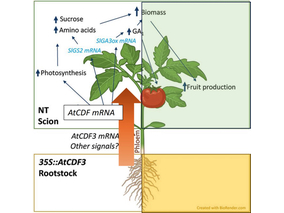
AtCDF3 gene induced greater production of sugars a...

En nuestro post hablamos sobre este interesante tipo de célula del...

Un estudio liderado por la URV, el IRB-CatSud y el CIBEROBN identifica...