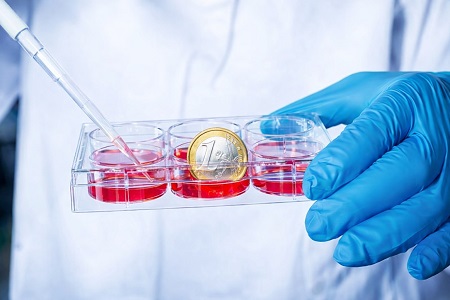
What is recombinant human FGF2 and why it matters in cell culture
Recombinant human FGF2, also known as basic fibroblast growth factor (bFGF), is a widely used growth factor in stem cell and proliferation-driven mammalian cell culture workflows. It plays a central role in promoting cell proliferation, survival and phenotypic stability across a broad range of cell types, including fibroblasts, endothelial cells, stem cells and many industrially relevant mammalian cell lines.
Because of its strong mitogenic activity, recombinant human FGF2 is a key component in both research and pre-industrial cell culture workflows. Its presence can directly influence growth kinetics, culture robustness and overall experimental reproducibility, making it a critical raw material rather than a simple media supplement.
From a manufacturing and process-development perspective, recombinant human FGF2 behaves differently from many other media components.
Its impact on cell performance is defined not only by its nominal concentration, but by how consistently its biological activity is delivered across time and across batches.
This is particularly relevant for FGF-2 because its biological effect is highly activity-dependent and less tolerant to variability than many other media components used in mammalian cell culture.
The biological role of FGF2 in mammalian cell proliferation and maintenance
FGF2 exerts its biological function through binding to fibroblast growth factor receptors (FGFRs), triggering intracellular signaling pathways such as MAPK/ERK and PI3K/AKT. These cascades are essential for:
In mammalian cell culture systems, especially those used for therapeutic protein production or advanced cell-based models, even small variations in FGF2 activity can translate into significant differences in performance. This makes both biological activity and product consistency fundamental selection criteria.
Recombinant human FGF2 as a key cost driver in cell culture media
Impact on R&D versus manufacturing scale
While growth factors are often perceived as minor cost elements during early R&D, their impact increases dramatically as processes move toward scale-up. Recombinant human FGF2 is typically used at low concentrations, but its high unit cost and repeated supplementation make it one of the most influential contributors to media cost over time.
At manufacturing or pre-GMP scale, the choice of FGF2 directly affects:
Growth factors and raw material cost structure in biologics manufacturing
In mammalian biologics manufacturing, raw materials are a major cost driver. Growth factors such as recombinant human FGF2 sit at the intersection of performance and economics. Selecting a high-quality, consistent and scalable source early in development reduces reformulation risks and avoids costly changes later in the product lifecycle.
Why quality matters: recombinant human FGF2 beyond biological activity
Purity, bioactivity and reproducibility
Not all recombinant human FGF2 products are equivalent. Purity levels, residual contaminants and formulation choices can significantly impact biological performance. High-purity FGF2 ensures predictable activity and minimizes the risk of unintended cellular responses.
Lot-to-lot consistency and long-term supply
Consistency between production lots is essential, particularly for laboratories working with standardized protocols or regulated environments. Variability in growth factor performance can compromise reproducibility and delay development timelines.
Why GMP-grade standards matter even in early-stage research
Even when used as a research-grade reagent, recombinant human FGF2 manufactured under GMP-aligned quality systems offers a strategic advantage. It ensures traceability, controlled production processes and robust quality documentation—elements that become indispensable as projects move closer to clinical or commercial manufacturing.
Carrier-free recombinant human FGF2 for advanced and scalable workflows
Carrier-free formulations of recombinant human FGF2 eliminate the presence of stabilizing proteins that may interfere with downstream processes or analytical assays. This makes them particularly suitable for:
Carrier-free FGF2 provides greater formulation flexibility while maintaining high biological activity.
Recombinant human FGF2 from Canvax: high-quality standards aligned with GMP manufacturing
The Canvax recombinant human FGF2 (145 aa, carrier-free) is designed to meet the demands of both research and advanced development environments. Manufactured under high-quality standards aligned with GMP principles, it combines:
This approach allows researchers and process developers to balance performance, reliability and cost efficiency without compromising on quality.
Conclusion: selecting recombinant human FGF2 with science, quality and cost in mind
Recombinant human FGF2 is far more than a standard growth factor—it is a strategic raw material with direct implications for cell culture performance, reproducibility and manufacturing costs. Choosing a high-quality, consistent and GMP-aligned product from the outset helps de-risk development and supports smoother transitions from research to production.
For laboratories seeking a reliable balance between biological performance, quality standards and cost control, recombinant human FGF2 manufactured with a GMP mindset is a decisive advantage.

La mejor actitud que podemos adoptar es la de trat...

El equipo de investigadores observó cambios en el...
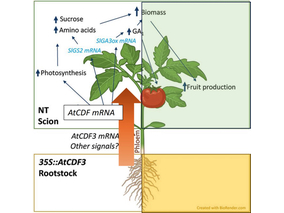
El gen AtCDF3 promueve una mayor producción de az...
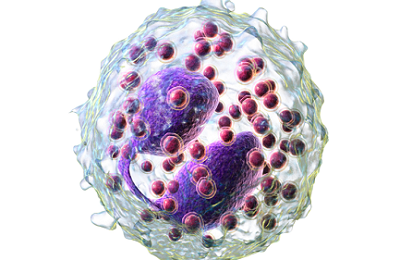
En nuestro post hablamos sobre este interesante tipo de célula del si...

Aunque no se ha encontrado una asociación significativa entre el cons...