Researchers at the Centre for Genomic Regulation (CRG) in Barcelona will develop new methods that combine protein design software and generative AI to engineer safer, more effective drugs.
The anticancer drugs will be delivered by a bacterium commonly found in the human lung, which the team have rendered harmless and repurposed into a ‘living medicine’ that targets lung cancer.
The engineered bacterium will set up a drug factory directly inside the tumour, activating only in disease-stricken parts of the organ and destroying it from within. The precise delivery method will spare the rest of the body from possible side effects.
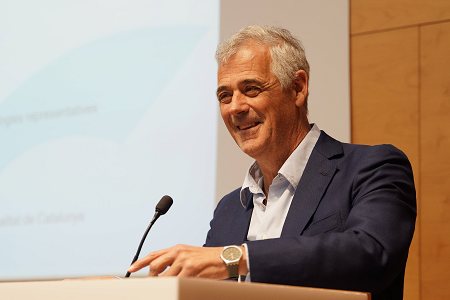
The project, SafeDelivery, will begin effective immediately thanks to an ERC Advanced Grant, among the world’s most prestigious and competitive research awards. The grant, worth €3,323,826 over five years, is led by ICREA Research Professor Dr. Luis Serrano, group leader at the CRG.
“This is the fourth consecutive ERC Advanced Grant our group has been awarded, reflecting more than two decades of work in synthetic biology, artificial intelligence and protein design. We hope to make a serious dent in the cancer with the highest mortality rate in the world, as well as on other diseases which could benefit from the technology developed here,” says Serrano.
Recent years have seen huge developments in anticancer drugs, but though effective, many are too toxic when released throughout the body, causing serious side effects. It’s a particular problem for lung cancer, the second most common cancer, which has few effective treatment options.
Promising treatments for the disease include drugs which direct the immune system to attack tumours. However, this can lead to overreactions known as cytokine storms. Many potential drugs have been set aside for this reason. They cannot be delivered to target the tumour alone.
Dr. Serrano’s solution is to combine classic protein design tools with AI and engineer these drugs so they will only be active in the target tissue or tumour. The computational tools will be combined with a harmless version of Mycoplasma pneumoniae, a lung bacterium that the team has stripped of its ability to cause disease to create a “living medicine”. Different versions of the bacterium have been previously engineered by Serrano’s group to tackle antibiotic-resistant lung infections.
The researchers plan on designing drugs with a molecular safety catch. Using FoldXpro, the protein-design software developed and widely used by Serrano’s group, together with new generative AI tools, the team will design anticancer drugs that remain switched off until they reach the tumour. Once at their destination, the drugs will be activated locally.
The team aims to be able to predict, by design, how strongly a molecule is silenced and how reliably it switches back on in the tumour microenvironment. It is the first time scientists have attempted to create a living, lung-seeking bacterium that both delivers and activates anticancer drugs onsite.
M. pneumoniae is well suited to the task. It has no cell wall, which makes it easier to release therapeutic molecules, and it carries a low risk of mutating new abilities or passing its modified genes to neighbouring microbes. Unlike other “living medicines” which burst open to release their cargo, M. pneumoniae can secrete its therapeutic molecules continuously in a more controlled fashion.
The choice of the bacterium is important for another reason. M. pneumoniae is naturally adapted to the human lung and has been detected in 100% of human lung tumours examined, an association the project now aims to turn into therapeutic advantage. Once inside the tumour, the engineered bacterium can be programmed to release therapeutic proteins and RNA directly into cancer cells inside protective vesicles, reprogramming or destroying tumours from within.
The technology will be tested as a proof of concept in mouse models of lung cancer over the course of the grant, using chemokines, cytokines and nanobodies that are active against tumours but limited by toxicity. The work will draw on the CRG’s core technology units, particularly protein technologies and animal facilities, and on long-standing members of the team including Javier Delgado and Irene Rodríguez.
Though lung cancer is the starting point, the researchers believe their approach could be more general. Conditionally active drugs, delivered and switched on locally, can in principle be applied for fibrosis and infectious disease.
“Lung cancer is our proof of concept, but the principle is general. The engineered drugs could be used on their own or in combination with the bacterium that can be loaded with different payloads and sent, like a Trojan horse, to the centre of a disease and dismantle it from within,” concludes Serrano.

La mejor actitud que podemos adoptar es la de trat...

The research team observed changes in head circumf...
AtCDF3 gene induced greater production of sugars a...
En nuestro post hablamos sobre este interesante tipo de célula del...
A paper published in Alzheimer’s & Dementia: The Journal of the Alzh...