
Oryzon Genomics, S.A. (ISIN Code: ES0167733015, ORY), a clinical-stage biopharmaceutical company leveraging epigenetics to develop therapies in diseases with strong unmet medical need, today reported financial results for the half-year ending June 30, 2024 and provided a corporate update on recent developments.
Dr Carlos Buesa, Oryzon’s Chief Executive Officer said, “Oryzon continued with a strong path in its clinical programs during the second quarter. In CNS, we have completed the full data analysis from our Phase IIb PORTICO trial evaluating vafidemstat as a treatment for Borderline Personality Disorder, with a clear improvement in most of the measures compared to the topline data released in January. We are currently focused on the preparation of our upcoming End-of-Phase II meeting with the FDA to discuss the design of a Phase III. Our Phase IIb trial with vafidemstat in schizophrenia, EVOLUTION, has also continued to enroll patients. We have also continued to expand our CNS IP portfolio, receiving “intention to grant” communications in Japan for two important patent application covering the use of vafidemstat for the treatment of BPD and ADHD, which will significantly strengthen our IP position for vafidemstat.”
Dr Buesa continued, “In oncology, our iadademstat program has continued to make good progress as well. In June, we presented initial data from our ongoing FRIDA Phase Ib trial, which evaluates iadademstat in combination with gilteritinib in relapsed/refractory FLT3-mutant AML patients, at the EHA Conference. Data from the first two cohorts demonstrated that the combination of iadademstat plus gilteritinib was safe and showed strong antileukemic activity. We have completed enrollment of the third cohort and plan to present additional data at ASH in December. In addition, we continue to expand iadademstat’s clinical development through two additional new clinical trials, one under our CRADA with the NCI which will evaluate iadademstat in combination with venetoclax and azacitidine in first-line AML. This study is the same space in the AML indication where we obtained very positive results in the ALICE trial in combination with azacitidine, and could open additional options for our clinical development strategy. The second one is a new investigator-initiated study sponsored by the Medical College Wisconsin in combination with azacitidine in patients with myelodysplastic syndrome.”
Dr Buesa added, “While we have experienced a clear advance in our clinical pipeline, on the financial side, the company has continued its budgetary discipline in an adverse market for public companies. This, and the additonal funds in the amount of aproximately $10M coming from a combination of non-dilutive funds (private and public grants and loans from commercial Spanish banks) and the Convertible Notes program allow us to focus now on the next conversations with the FDA and EMA and our clinical execution. The recently approved IPCEI grant from the EU will provide also additional resources to sustain our R&D in personalized medicine in CNS and oncology.”
First Half and Recent Highlights
Vafidemstat in large multifactorial CNS indications:
Vafidemstat in monogenic CNS indications:
Iadademstat in oncology:
Earlier stage programs:
Financial Update: First Half 2024 Financial Results
Research and development (R&D) expenses were $2.3 million and $4.9 million for the quarter and six months June 30, 2024, compared to $4.3 and $8.6 million for the quarter and six months ended June 30, 2023. As a result of the completion of the PORTICO clinical trial, the company saves $3.7M with respect to the first quarter of 2023.
General and administrative expenses were $1.2 and $2.1 million for the quarter and six months ended June 30, 2024, compared to $1.1 and $2.3 million for the quarter and six months ended June 30, 2023.
Net losses were $1.5 and $2.6 million for the quarter and six months ended June 30, 2024, compared to $1.3 and 2.7million for the quarter and six months ended June 30, 2023. The result is as expected, given the biotechnology business model where companies in the development phase typically have a long-term maturation period for products and do not have recurrent income.
Negative net result was $1.1 million (–$0.02 per share) for the six months ended June 30, 2024, compared to a negative net result of $0.6 million (–$0.01 per share) for the six months ended June 30, 2023.Cash, cash equivalents, and marketable securities totaled $10.1 million as of June 30, 2024.
About Oryzon
Founded in 2000 in Barcelona, Spain, Oryzon (ISIN Code: ES0167733015) is a clinical stage biopharmaceutical company and the European leader in epigenetics, with a strong focus on personalized medicine in CNS disorders and oncology. Oryzon’s team is composed of highly qualified professionals from the pharma industry located in Barcelona, Boston, and San Diego. Oryzon has an advanced clinical portfolio with two LSD1 inhibitors, vafidemstat in CNS and iadademstat in oncology, in several Phase II clinical trials. The company has other pipeline assets directed against other epigenetic targets like HDAC-6 where a clinical candidate ORY-4001, has been nominated for its possible development in CMT and ALS. In addition, Oryzon has a strong platform for biomarker identification and target validation for a variety of malignant and neurological diseases. For more information, visit www.oryzon.com
About Iadademstat
Iadademstat (ORY-1001) is a small oral molecule, which acts as a highly selective inhibitor of the epigenetic enzyme LSD1 and has a powerful differentiating effect in hematologic cancers (see Maes et al., Cancer Cell 2018 Mar 12; 33 (3): 495-511.e12.doi: 10.1016 / j.ccell.2018.02.002.). A FiM Phase I/IIa clinical trial with iadademstat in R/R AML patients demonstrated the safety and good tolerability of the drug and preliminary signs of antileukemic activity, including a CRi (see Salamero et al, J Clin Oncol, 2020, 38(36): 4260-4273. doi: 10.1200/JCO.19.03250). Iadademstat has shown encouraging safety and efficacy data in combination with azacitidine in a Phase IIa trial in elder 1L AML patients (ALICE trial) (see Salamero et al., ASH 2022 oral presentation). Iadademstat is currently being evaluated in combination with gilteritinib in the ongoing Phase Ib FRIDA trial in patients with relapsed/refractory AML with FLT3 mutations. Beyond hematological cancers, the inhibition of LSD1 has been proposed as a valid therapeutic approach in some solid tumors such as small cell lung cancer (SCLC), neuroendocrine tumors (NET), medulloblastoma and others. In a Phase IIa trial in combination with platinum/etoposide in second line ED-SCLC patients (CLEPSIDRA trial), preliminary activity and safety results have been reported (see Navarro et al., ESMO 2018 poster). Iadademstat is being evaluated in a collaborative Phase II basket study with the Fox Chase Cancer Center (FCCC) in combination with paclitaxel in R/R neuroendocrine carcinomas, and the company is preparing a new trial in combination with immune checkpoint inhibitors (ICI) in SCLC. Oryzon has entered into a Cooperative Research and Development Agreement (CRADA) with the U.S. National Cancer Institute (NCI) to collaborate on potential further clinical development of iadademstat in different types of solid and hematological cancers; a first trial in combination with ICI in SCLC has recently received FDA IND approval. In total iadademstat has been dosed so far to more than 130 cancer patients in four clinical trials. Iadademstat has orphan drug designation for SCLC in the US and for AML in the US and EU.
About Vafidemstat
Vafidemstat (ORY-2001) is an oral, CNS-optimized LSD1 inhibitor. The molecule acts on several levels: it reduces cognitive impairment, including memory loss and neuroinflammation, and at the same time has neuroprotective effects. In animal studies vafidemstat not only restores memory but reduces the exacerbated aggressiveness of SAMP8 mice, a model for accelerated aging and Alzheimer’s disease (AD), to normal levels and also reduces social avoidance and enhances sociability in murine models. In addition, vafidemstat exhibits fast, strong, and durable efficacy in several preclinical models of multiple sclerosis (MS). Oryzon has performed two Phase IIa clinical trials in aggressiveness in patients with different psychiatric disorders (REIMAGINE) and in aggressive/agitated patients with moderate or severe AD (REIMAGINE-AD), with positive clinical results reported in both. Additional finalized Phase IIa clinical trials with vafidemstat include the ETHERAL trial in patients with Mild to Moderate AD, where a significant reduction of the inflammatory biomarker YKL40 has been observed after 6 and 12 months of treatment, and the pilot, small-scale SATEEN trial in Relapse-Remitting and Secondary Progressive MS, where anti-inflammatory activity has also been observed. Vafidemstat has also been tested in a Phase II in severe Covid-19 patients (ESCAPE) assessing the capability of the drug to prevent ARDS, one of the most severe complications of the viral infection, where it showed significant anti-inflammatory effects in severe Covid-19 patients. Vafidemstat is being investigated in neuropsychiatric disorders in two double-blind, randomized, placebo-controlled Phase IIb trials: one in schizophrenia, named EVOLUTION (recruitment ongoing), and another one in Borderline Personality disorder (BPD), named PORTICO, finalized and with published topline data. Based on PORTICO’s results, the company has requested an End-of-Phase II meeting with the FDA to discuss options for a registrational Phase III trial in BPD. The company is also deploying a CNS precision medicine approach with vafidemstat in genetically-defined patient subpopulations of certain CNS disorders and is preparing a clinical trial in Kabuki Syndrome patients. The company is also exploring the clinical development of vafidemstat in other neurodevelopmental syndromes.

La mejor actitud que podemos adoptar es la de trat...

The research team observed changes in head circumf...
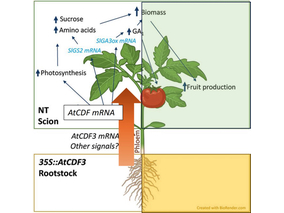
AtCDF3 gene induced greater production of sugars a...

En nuestro post hablamos sobre este interesante tipo de célula del...

New study finds an association between higher temperatures early in li...