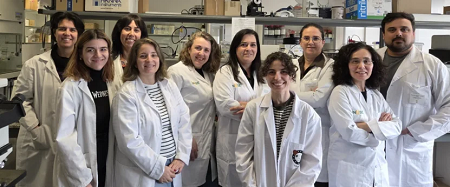
In recent years, research into biomaterials for medical applications that replace conventional materials, such as titanium in implants, has increased. This is the field in which the Bioengineering Unit of the University Institute of Biosanitary Research of the University of Extremadura (INUBE) works , specializing in the manufacture and study of materials with antibacterial properties.
In their latest article, Preventing the harmful biofilm increase on the polylactic-acid/Mg surface by the addition of quercetin , they develop a new solution to prevent infections associated with the formation of “biofilm” on magnesium-reinforced polylactic acid (PLA/Mg) implants.
“We call a biofilm or biolayer the organized community of bacteria that grows attached to surfaces, such as those of medical implants, and embedded in an extracellular matrix that they themselves produce. This mode of growth gives rise to infections that are much more resistant to antibiotics and the immune system than those caused by other bacteria that grow in suspension,” explains the research group involved.
PLA/Mg is a sustainable biomaterial with biocompatible and biodegradable properties, as well as high mechanical functionality conferred by the magnesium. It can be used in various medical applications, such as implants for bone regeneration. However, this compound promotes bacterial biofilm formation, a drawback that research seeks to counteract by incorporating quercetin (Qr), a natural antioxidant produced by many plants and found in fruits and vegetables, for example.
“One of the drawbacks of using magnesium in biomaterials is its high corrosiveness in aqueous environments. This causes an explosive increase in magnesium ions and pH, reducing initial bacterial adhesion but preventing sustained antimicrobial activity,” the researchers point out.
The results demonstrate that the incorporation of quercetin reduces bacterial colonization, modulates the degradation of the implant, and improves the controlled release of active compounds, contributing to the development of safer implants.
Furthermore, the research concludes that the mechanical response depends on the degree of crystallinity of the PLA, with a more stable evolution observed in semicrystalline materials.
In short, the results confirm the advantages and reliability of this new composition, which consolidates the line of research of this working unit of the University of Extremadura, formed by the Biosurfaces and Interfacial Phenomena Group of the Faculty of Sciences and the Microbiology Group of the Faculty of Medicine.
Source: Scientific Culture Dissemination Service
Reference: María Luisa Navarro-Pérez, Juan Manuel Casares-López, María Coronada Fernández-Calderón, Margarita Hierro-Oliva, María Luisa González-Martín, Amparo María Gallardo-Moreno, Verónica Luque-Agudo, Preventing the harmful biofilm increase on the polylactic-acid/Mg surface by the addition of quercetin, International Journal of Biological Macromolecules, Volume 335, Part 2, 2026. https://doi.org/10.1016/j.ijbiomac.2025.149241

La mejor actitud que podemos adoptar es la de trat...

The research team observed changes in head circumf...
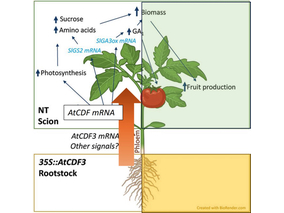
AtCDF3 gene induced greater production of sugars a...
En nuestro post hablamos sobre este interesante tipo de célula del...

New study finds an association between higher temperatures early in li...