A team of researchers from the University of Zaragoza has developed an innovative digital tool that combines physical models and artificial intelligence techniques to improve the monitoring of prostate cancer , the most common type of cancer in men.
Current methods for monitoring prostate cancer rely primarily on measuring levels of a substance called PSA in the blood. However, these methods often fail to detect whether the tumor is growing. To improve this, a research team at the I3A (Aragon Institute for Engineering Research) at the University of Zaragoza has developed a software tool that reconstructs tumor growth over time using an initial MRI scan and PSA data . This tool combines physical models, which represent tumor growth and how PSA passes from the tumor into the bloodstream based on the patient's prostate vascularization, with artificial intelligence techniques that learn to reproduce the tumor growth dynamics for each individual patient.
Thanks to this combination, researchers can adjust tumor growth in a personalized way for each patient, taking into account both blood tests and other body factors represented in a 3D model.
Their work has been published in the journal Nature, NPJ Digital Medicine , in a scientific article entitled "Physics-informed machine learning digital twin for reconstructing prostate cancer tumor growth via PSA tests" . It was carried out by Daniel Camacho-Gómez, Carlos Borau, José Manuel García-Aznar, María José Gómez-Benito, Mark Girolami and María Ángeles Pérez, from the M2BE (Multiscale in Mechanical and Biological Engineering) research group.
This tool has already been tested on real patients for more than two and a half years , and the error results in calculating the tumor size were very low, between 0.8% and 12.28%.
Furthermore, they have discovered that, in some cases, the tumor can grow without a significant increase in PSA levels , which would go undetected with traditional methods. Therefore, the researchers believe that the tool they have created represents a promising option for improving prostate cancer monitoring and moving towards more personalized disease management.
In this regard, they point out that by providing a clearer understanding of tumor growth trends from PSA blood tests, the digital twin can guide physicians in determining the optimal time to perform additional diagnostic actions such as a biopsy.
The focus of this line of research contributes to more personalized care protocols, as it allows the identification of patients with "hidden" tumor growth where PSA levels remain stable despite tumor development.
Access the research article: https://www.nature.com/articles/s41746-025-01890-x
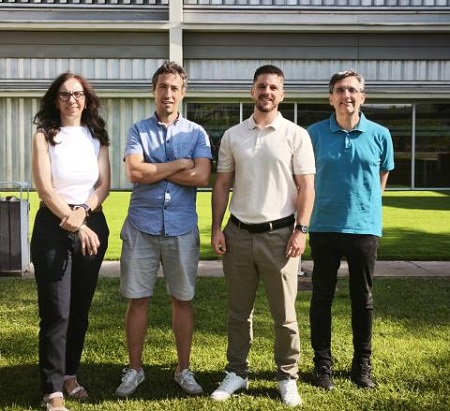
Image: María Ángeles Pérez Ansón, Carlos Borau, Daniel Camacho and José Manuel García-Aznar.

La mejor actitud que podemos adoptar es la de trat...

The research team observed changes in head circumf...
AtCDF3 gene induced greater production of sugars a...

En nuestro post hablamos sobre este interesante tipo de célula del...

New study finds an association between higher temperatures early in li...