A scientific study involving UPF reveals a possible new avenue of research to combat antibiotic-resistant bacteria by limiting their access to magnesium (Mg²⁺). The results open up multiple possibilities to combat antimicrobial resistance, one of the greatest threats to global health, without the need to create new antibiotics. The study was led by the University of California San Diego and enjoyed the participation of Jordi Garcia-Ojalvo, a full professor at the Department of Medicine and Life Sciences (MELIS) at Pompeu Fabra University.
Ribosomes are a component of cells, including bacterial cells, that are essential for them to live. Some of the antibiotics we use to treat bacterial infections specifically target ribosomes, preventing them from functioning as protein synthesizers. A mutant strain (L22) of the bacterium Bacillus subtilis, with alterations in a specific section of its ribosomes, is resistant to antibiotics like erythromycin. However, this natural mutation has not spread to the entire species, and it is not clear why. The group of researchers led by Dr. Gürol M. Süel, of the University of California San Diego, has discovered that this mutation also entails a physiological cost, which puts this strain at a disadvantage compared to others that do not have this mutation, when the bacteria do not have enough Mg²⁺ in the environment. This could hold the key to preventing the spread of antibiotic-resistant bacteria based not on the creation of new antibiotics but on controlling the available Mg²⁺.
The physiological cost suffered by L22* bacteria is due to the fact that mutated ribosomes accumulate more Mg²⁺ than those of non-mutated bacteria. ATP, the molecule that provides cells with energy, also needs Mg²⁺ to fulfil its role. Therefore, if most of the intracellular Mg²⁺ is found in ribosomes, ATP will not be able to obtain it and this will negatively affect the survival of the bacterium. So, although antibiotic resistance might seem to be an advantage for these bacteria, it is actually a disadvantage if they do not dispose of more Mg²⁺ in the environment to make up for this deficiency. This was confirmed by the researchers using computational models that predicted the dynamics of intracellular Mg²⁺ and the levels of active ATP.
In recent decades, research into ribosomes has focused mainly on their structure. However, far less is known about their interactions with inorganic ions such as Mg²⁺. The new knowledge gleaned by this study highlights the importance of investigating how these ions interact with ribosomes and other cell components, as well as the physiological cost-benefit in bacteria with ribosomal mutations, to find new ways to combat the antibiotic crisis.
Image: A model structure of a ribosome with color-coded flexibility indicators; red highlights ribosome regions that become more flexible, while blue depicts more rigid areas
Reference: Chae Moon E, Modi T, D Lee D-Y, Yangaliev D, Garcia-Ojalvo J, Ozkan SB, Gürol MS. Physiological cost of antibiotic resistance: Insights from a ribosome variant in bacteria. https://www.nature.com/articles/d41586-024-03033-w

La mejor actitud que podemos adoptar es la de trat...

The research team observed changes in head circumf...
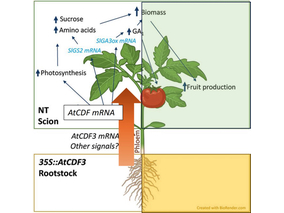
AtCDF3 gene induced greater production of sugars a...
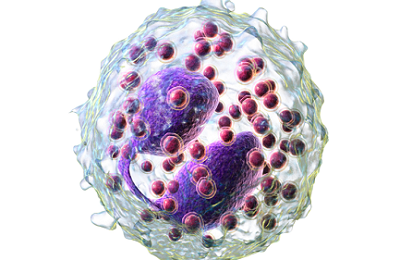
En nuestro post hablamos sobre este interesante tipo de célula del...

New study finds an association between higher temperatures early in li...