Diet could become a key tool for improving the diagnosis of Irritable Bowel Syndrome (IBS), a digestive disorder that affects millions of people worldwide. This is demonstrated by a new study led by researchers from the Aragon Health Research Institute (IIS Aragón) and the Aragon Agri-Food Institute (IA2, a joint UNIZAR-CITA center).
The study identified that people with IBS have different dietary patterns than the general population. Specifically, they tend to consume more carbohydrates and fewer dairy products, while their fruit and vegetable intake shows no significant differences.
The work, whose first author is Dr. Mónica Gros , has been coordinated by researcher Eva Latorre, professor of Cell Biology in the Department of Biochemistry and Molecular and Cell Biology and member of the research group "Immunity, Cancer and Anti-inflammatory Treatments" of the University of Zaragoza.
The study, titled “Dietary intake as a tool to support diagnosis of irritable bowel syndrome ,” is based on an analysis of 109 participants (53 patients with IBS and 56 healthy individuals) and has been published in the international scientific journal Clinical Medicine . Its aim is to improve the identification and management of IBS through the analysis of dietary habits.
The research team has developed an index based on commonly consumed foods, such as rice, bread, yogurt, minced meat, and distilled beverages, which allows for fairly accurate differentiation between IBS patients and healthy individuals. This tool has shown a sensitivity of 85.7% and a specificity of 81.1%, indicating high potential for clinical application.
“We wanted to focus on patients’ eating habits and understand to what extent they can help us improve the diagnosis of irritable bowel syndrome,” explains Mónica Gros.
Irritable bowel syndrome (IBS) is a complex condition with symptoms such as abdominal pain, bloating, and changes in bowel habits, and its diagnosis remains challenging in many cases. In this context, the study's results pave the way for integrating dietary assessment as part of routine clinical practice. Beyond diagnosis, the findings could also help in designing more personalized nutritional recommendations for each patient, thereby improving their quality of life.
The authors emphasize, however, the need to continue validating this tool in larger studies before its definitive incorporation into clinical practice.
Link to the article “Dietary intake as a tool to support diagnosis of irritable bowel syndrome”: https://www.sciencedirect.com/science/article/pii/S0025775326000382
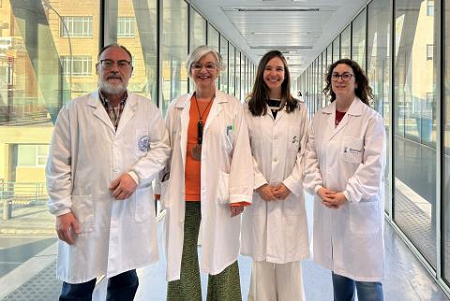
Image: From left to right, José Emilio Mesonero, Belén Gros Bañeres, Mónica Gros Alcalde and Eva Latorre at the Miguel Servet University Hospital.

La mejor actitud que podemos adoptar es la de trat...

The research team observed changes in head circumf...
AtCDF3 gene induced greater production of sugars a...

En nuestro post hablamos sobre este interesante tipo de célula del...

New study finds an association between higher temperatures early in li...