Research by the Barcelona Institute for Biomedical Research (IIBB), part of the Spanish National Research Council (CSIC), and the Institut de Recerca Sant Pau (IR Sant Pau) provides some of the first evidence that psychological therapies act as biological stimuli that induce molecular responses measurable through blood biomarkers.
The preliminary study, involving 22 patients with major depressive disorder at Hospital de Sant Pau, reveals that psychotherapy sessions trigger changes in microRNAs—molecules that regulate gene expression in cells—associated with significant improvements in the participants’ cognitive status. The results, published in Scientific Reports, represent an advance toward monitoring patients’ responses to pharmacological treatments and nonpharmacological therapeutic interventions.
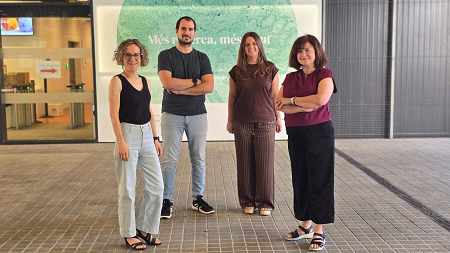
The study, led by Dr. Maria J. Portella (IR Sant Pau) and Dr. Analia Bortolozzi (IIBB-CSIC), with Lluís Miquel-Rio (IIBB-CSIC) and Dr. Muriel Vicent-Gil (Hospital de Sant Pau) as first authors, focused on major depressive disorder (MDD). This condition is characterized not only by its effects on mood, but also by a broad spectrum of cognitive impairments, including difficulties with attention, memory, processing speed, and executive function. These symptoms frequently persist despite treatment and severely affect patients’ quality of life.
The main objective of the study was to investigate the molecular mechanisms underlying two nonpharmacological psychological interventions in patients with MDD: comprehensive cognitive remediation, designed to improve or restore brain functions such as attention or memory; and psychoeducation, which involves explaining the disorder to patients and raising their awareness of it so that they can manage it more adaptively.
The researchers analyzed circulating microRNAs (or miRNAs) in the blood before and after 12 weeks of psychological intervention, consisting of one session per week. MicroRNAs are small RNA molecules that act as master switches in cells, usually silencing the expression of target genes. The patients were assessed six months after the intervention, although microRNA levels were not analyzed at this time point.
Two Different Molecular Signatures
The longitudinal analysis of 38 microRNAs in the plasma of the 22 patients revealed two different profiles.
Patients who underwent cognitive remediation displayed a specific signature comprising seven microRNAs (let-7b-3p, miR-100-5p, miR-129-5p, miR-135a-5p, miR-151a-5p, miR-4516, and miR-451a) that were strongly associated with cognitive processes. “These microRNAs regulate gene networks that are heavily involved in neuroplasticity, axon guidance, and synaptic transmission. The molecular changes induced by this type of therapy were reflected in significant, objective improvements in patients’ cognitive performance,” explains Dr. Maria J. Portella, an IR Sant Pau researcher who is also a member of the Spanish Biomedical Research Network Center for Mental Health (CIBERSAM).
Psychoeducation, meanwhile, induced a wholly different molecular signature characterized by two microRNAs: miR-126-5p and miR-195-5p. “This profile, which is associated with cellular balance and resilience signaling pathways in response to cellular stress, does not reflect direct, objective cognitive improvements, but instead acts more like a systemic buffer against stress,” explains Dr. Analia Bortolozzi (IIBB-CSIC), who is also a member of CIBERSAM.
The study’s preliminary data suggest that the two psychotherapeutic interventions act on different networks and regions of the brain, modifying distinct molecular signatures. MicroRNAs can cross the blood-brain barrier—a selective filter that protects the central nervous system by regulating which substances can pass from the blood into brain tissue—and can be detected in plasma, making them candidate biomarkers for assessing responses to psychological sessions.
“We can not yet determine whether the changes in microRNAs cause the improvement or vice versa, because the available data are limited and further research is required,” the authors explain. The results will therefore need to be validated in larger cohorts before they can be translated into clinical practice. What the study does demonstrate is that “psychological therapies act as specific biological stimuli, inducing distinct, nonoverlapping molecular trajectories in the blood. They also provide clear molecular evidence that psychological therapies have a biological basis that can be measured peripherally,” Dr. Bortolozzi explains.
Toward ‘Precision Psychiatry’
The different results associated with each therapy demonstrate intervention-specific therapeutic targets and “provide an extremely promising foundation for the development of blood biomarkers that could be used to monitor cognitive recovery,” Dr. Portella explains.
“This remarkable advance could pave the way for precision psychiatry in major depressive disorder, in which the selection of therapeutic interventions could, in the future, be personalized based on each patient’s baseline molecular profile, rather than being guided solely by a clinical trial-and-error approach,” the two researchers conclude.
The study was funded by the Carlos III Health Institute, the Fundació La Marató de TV3, and the Government of Catalonia.
Reference Article: Miquel-Rio L, Vicent-Gil M, Jericó-Escolar J, Carrasco-Hernández J, Jubero M, Paz V, Gawron L, Ruiz-Bronchal E, Vera J, Del Mar Bonnín C, Puigdemont D, Alemany C, Cardoner N, de Diego-Adeliño J, Bortolozzi A, Portella MJ. Peripheral miRNA profiling identifies therapy-specific biological trajectories in the treatment of cognitive dysfunction in depression: an exploratory mechanistic study. Sci Rep 2026. https://doi.org/10.1038/s41598-026-55039-1.

La mejor actitud que podemos adoptar es la de trat...

The research team observed changes in head circumf...
AtCDF3 gene induced greater production of sugars a...
En nuestro post hablamos sobre este interesante tipo de célula del...

The international conference The Barcelona Debates on the Human Microb...