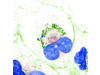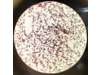
Traditionally, science has defined senescence as something similar to a state of irreversible cellular aging: cells stop dividing, change their appearance, becoming larger and flatter, and begin to express distinctive molecular markers that allow their senescent state to be identified (such as the β-galactosidase protein). They do not die, but their metabolism is rewired so that the cell is no longer able to divide or carry out its usual activity, which is why sometimes they are called “zombie cells“. This is especially interesting in the field of oncology for the development of therapeutic strategies against cancer, where the main problem is uncontrolled cell proliferation that can be halted by inducing senescence.
However, a new study by a research team from IDIBELL and ICO shows that senescence, when induced with certain drugs, is not always definitive. In tumours such as pleural mesothelioma, cancer cells treated with certain senescence-inducing drugs may appear senescent but, once treatment is withdrawn, they regain their proliferative capacity and drive tumour growth again. The results of the study were recently published in Cell Death & Disease.
Senescence and its use in cancer therapy
Senescence is a state that is activated by stress or irreparable DNA damage, conditions that force the cell to stop activity and freeze to prevent it from acquiring and accumulating more mutations and ultimately becoming malignant. Therefore, it is fundamentally a protective mechanism against cancer. This would explain the interest in novel therapeutic strategies against cancer that would begin by administering drugs that induce a senescent state in cancer cells, forcing them to stop their proliferation, and then attacking them with senolytics (drugs that selectively eliminate senescent cells). Essentially, it’s about freezing the proliferation of cancer cells to make them easier to eliminate.
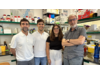
This works well in the treatment of certain types of tumours, such as breast tumours, with which this strategy of using drugs like palbociblib or abemaciclib that induce senescence is already being used in the clinic. However, the team of Dr. Cristina Muñoz Pinedo and Dr. Ernest Nadal, co-leaders of the Preclinical and Experimental Research in Thoracic Tumors (PRETT) group at IDIBELL and ICO, has shown that drug-induced senescence is not always definitive. Trying to replicate the strategy used with palbociclib in breast cancer, this time, in pleural mesothelioma, a rare and very aggressive type of tumour of the lung pleura, they have seen that the apparently senescent tumour cells were not completely senescent: they could recover their ability to proliferate and, moreover, the senolytics did not affect them.
“Pseudosenescence” in pleural mesothelioma
Pleural mesothelioma is a rare and very aggressive cancer, with a strong environmental component, since it is associated with occupational exposure to asbestos. Treatment options are limited and survival rates are low, so most patients receive palliative therapy. “It is a tumour in which we have made little recent progress, so it is very necessary to investigate it to better understand it and find possible useful therapeutic avenues in this cancer,” explains Dr. Ernest Nadal, also scientific director of the Catalan Institute of Oncology (ICO).
In this case, the results from studying the effect of palbociclib on pleural mesothelioma, was unexpected. “Although all tumour cells had the visual and biochemical features of senescence after treatment, senescence was not complete,” Dr. Nadal continues. The cells entered a state of “pseudosenescence“, being able to recover the proliferative capacity when the drug was withdrawn and being resistant to senolytics. “”This suggests that, in therapies like this, cells may appear senescent and unproliferative, essentially half dead, but in reality they can grow back, so it is necessary to deliver a “second blow” to ensure that tumour cells die,” adds Dr. Cristina Muñoz.
Again, the diversity of cancer
These findings underline, in short, that senescence is not a uniform state. “Rather, it is a spectrum of stability that depends on the drug used to induce it and the type of tumour,” says Iswarya Sreeram, first author of the study and a PhD student at IDIBELL. “That means we can’t rely entirely on molecular markers to identify a senescent state in treated tumour cells, but it’s vital to make sure they can’t regain their proliferative capacity to better characterise the nature and efficacy of drug-induced senescence in any given tumour model .”
“Although we’ve encountered unexpected results, basic science research like ours in pleural mesothelioma is necessary. Clinical studies are essential, but you also must do preclinical to know where to go, and question if what we know is true,” concludes Dr. Muñoz.

La mejor actitud que podemos adoptar es la de trat...

The research team observed changes in head circumf...
AtCDF3 gene induced greater production of sugars a...
En nuestro post hablamos sobre este interesante tipo de célula del...
The finding is the first direct observation of how the most abundant p...