Every year, hundreds of millions of tonnes of petrochemical-based plastics are produced, much of which ends up in the environment or is incinerated. This exacerbates greenhouse gas emissions and the environmental crisis caused by plastic pollution. Now, a study led by the University of Barcelona has produced a biodegradable bioplastic of high industrial value — polyhydroxybutyrate or PHB — from unprocessed potato starch in a single 24-hour step, a strategic breakthrough that could help reduce dependence on oil and the volume of persistent plastic waste.
The study thus establishes that the bacterium Bacillus subtilis is a robust platform of great industrial interest for producing PHB — a biodegradable biopolymer derived from renewable sources — from potato starch, an abundant and low-cost agricultural by-product.
The paper, published in the journal Bioresource Technology, is led by Pere Picart, a professor at the UB’s Faculty of Pharmacy and Food Sciences, with significant contributions from Mercedes Berlanga, from the same faculty and the UB’s Biodiversity Research Institute (IRBio).
Biodegradable bioplastics made from renewable resources
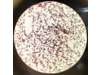
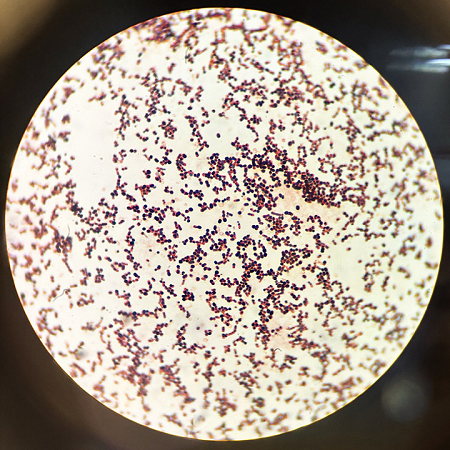
In this study, the team worked with the bacterium Bacillus subtilis, a safe microorganism widely used in industrial biotechnology to produce enzymes and chemicals.
“Commercial production of PHB requires microbial hosts that are non-pathogenic, genetically tractable, fast-growing, metabolically robust and capable of utilising a variety of carbon sources,” the authors explain.
Until now, the potential of Bacillus subtilis to produce polyhydroxybutyrate (PHB) had remained largely unexplored, and systematic metabolic engineering strategies to enable high accumulation of this polymer in the bacterium were still lacking.
Using CRISPR-Cas9-based genetic engineering techniques, the team has redesigned the metabolism of B. subtilis to enhance biopolymer production. “Previous studies showed that the bacterium’s capacity to produce PHB was limited, with accumulations below 13% of dry cell weight,” the team notes. “These low yields required further optimization of pathway expression and polymer granule formation to fully exploit B. subtilis.”
Genetic modification of the bacterium ‘Bacillus subtilis’ opens up a route of great industrial interest for producing a sustainable and cost-effective plastic — PHB — from potato starch in a single step.
Genetic engineering to increase PHB production
The team has genetically modified B. subtilis to create a safe, Gram-positive microbial platform for the efficient and sustainable production of PHB from unprocessed starch. Genomic integration and constitutive expression of phaA, combined with controlled expression of the phaRBC operon, has enabled efficient polymer accumulation from multiple carbon sources. Furthermore, the incorporation of the amyQ gene, which encodes an α-amylase, facilitated the direct conversion of unprocessed potato starch into PHB in a single-step process over 24 hours.
Using this combination, 11.3 g/L of biomass and 5.8 g/L of PHB were obtained in flask-scale cultures, with a polymer purity comparable to commercial standards, reaching 51.8% PHB of dry cell weight.
More sustainable and cost-effective bioplastics
Unlike conventional petroleum-based plastics, PHB is a renewable biopolymer that helps to partially close the carbon cycle and minimize the accumulation of persistent waste in terrestrial and marine ecosystems. Various environmental analyses and life-cycle studies indicate that bio-based bioplastics, such as PHB, can have a lower carbon footprint and a reduced climate impact compared to many petrochemical plastics, particularly when waste-derived raw materials are used.
“Technologies such as this represent a real opportunity to turn an environmental problem into a valuable resource, contributing to a more circular and decarbonized economy,” concludes the research team.
References: Shahayeva, M.; Ferrando, J.; Navarro, J.; Berlanga, M.; Picart, P. (2026). «One-step polyhydroxybutyrate production from potato starch by engineered Bacillus subtilis». Bioresource Technology, May 2026. DOI: 10.1016/j.biortech.2026.134933.

La mejor actitud que podemos adoptar es la de trat...

The research team observed changes in head circumf...
AtCDF3 gene induced greater production of sugars a...
En nuestro post hablamos sobre este interesante tipo de célula del...
The finding is the first direct observation of how the most abundant p...