Changing CDMO late in development may sometimes be necessary. Capacity may no longer fit the program. Timelines may have shifted. The original partner may not offer GMP manufacturing, integrated analytics, fill-finish or the flexibility needed for the next stage. In other cases, the issue is less obvious. Communication becomes slow, technical discussions lose depth, or every change seems to require another transfer, another vendor, another delay.
On paper, moving to a new CDMO can look like a practical decision. In practice, it is one of the most sensitive moments in Biologics Production.
The risk is not only the transfer itself
Technology transfer is usually treated as a defined activity. Documents are exchanged, process descriptions are reviewed, analytical methods are assessed, materials are shipped and responsibilities are assigned. All of that matters. But the real challenge is often what sits between the documents.
A process is more than a batch record. It includes practical knowledge, historical decisions, minor deviations, operator observations, analytical behavior, raw material sensitivities and the reasons why certain choices were made. Some of this information is written down. Some is not. In biologics manufacturing, that missing context can affect timelines, yield, purity, comparability and release.
This is especially relevant for biological products such as recombinant Proteins, enzymes, plasmid DNA or complex microbial products. These molecules are sensitive to small changes in process conditions, equipment configuration, scale, hold times, purification strategy and analytical interpretation. A transfer that looks complete may still leave critical questions unanswered.
That is why late-stage CDMO selection should not focus only on whether a partner can receive a process. It should focus on whether the partner can understand it, challenge it where needed and keep it moving.
Why late-stage programs are less forgiving
Early development allows more room for adjustment. Later stages do not. By Phase II, Phase III or commercial preparation, many decisions are already connected to regulatory expectations, comparability packages, process characterization work and supply planning.
A late change in CDMO can affect several areas at once:
None of these risks are unusual. Experienced teams expect them. The problem is when they are discovered too late.
The hidden cost of too many handoffs
Many biologics programs grow through a network of specialized providers. One partner supports cell line development. Another develops the upstream process. A different team manages downstream purification. Analytical work may sit elsewhere. GMP manufacturing may be transferred again. Fill-finish may be another step entirely.
This model can work, but each handoff creates a new point of interpretation. Each transfer requires time, alignment and trust. Each external interface adds a layer between the sponsor and the people making technical decisions.
For late-stage clients, that fragmentation can become expensive. Not only in direct cost, but in lost time, repeated discussions, duplicated work and reduced control over the program.
This is why integrated CDMO services matter more as a program advances. When process development, biologics manufacturing, analytics, quality control and fill-finish are connected under one system, fewer assumptions are lost between stages. The same scientific logic can remain visible from development into GMP manufacturing and final product.
What to ask before changing CDMO late in development
A late-stage CDMO decision should go beyond capacity and price. Those are important, but they are not enough. Before moving a program, sponsors should ask practical questions that reveal how the partner will behave when the project becomes complex.
These questions help separate a transactional provider from a partner that can take ownership of the next stage.
Continuity should be part of the strategy
For many late-stage biotech teams, the best CDMO is not necessarily the largest. It is the one that offers the right combination of scientific depth, GMP capability, responsiveness and continuity.
At 53Biologics, we support biologics programs with integrated capabilities across development, manufacturing, analytics, quality control and fill-finish. Our work covers different biological products, including recombinant Proteins, microbial products and plasmid DNA, with a practical way of working built around the needs of each program.
The goal is not simply to take over a process. It is to understand where the program stands, identify the risks that could slow it down and build a route that protects progress as it moves toward GMP manufacturing and beyond.
When plans change, the most valuable CDMO is the one already thinking about the next step.
Final Thoughts
Changing CDMO late in development is not always a warning sign. Sometimes it is the right decision. But it should be managed as a strategic move, not an administrative transfer.
The right partner can help protect process knowledge, reduce handoffs, align analytics and manufacturing, and keep the program moving with fewer disruptions. For biologics teams preparing for clinical or commercial milestones, that continuity can make a real difference.
If your biologic program is approaching a critical transition, 53Biologics can help you assess the path forward and build a manufacturing strategy designed to keep progress intact.
About 53Biologics:
53Biologics is the end-to-end biologics CDMO built to keep progress moving. We combine scientific expertise, integrated in-house capabilities and a close, hands-on way of working to help biotech teams make confident decisions, adapt as programs evolve and stay with one partner from early development through commercialization. With process development, manufacturing, analytics and fill-finish connected under one system, we reduce handoffs, protect continuity and help clients grow without disruption. We were made for this.
For more information or to speak with one of our experts email us at info@53biologics.com

La mejor actitud que podemos adoptar es la de trat...

The research team observed changes in head circumf...
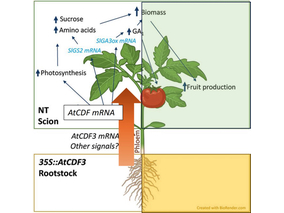
AtCDF3 gene induced greater production of sugars a...
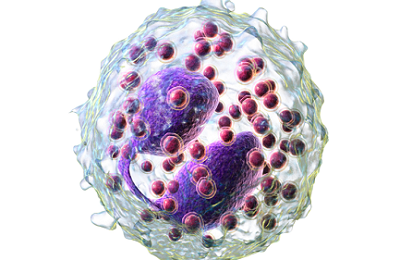
En nuestro post hablamos sobre este interesante tipo de célula del...

New study finds an association between higher temperatures early in li...