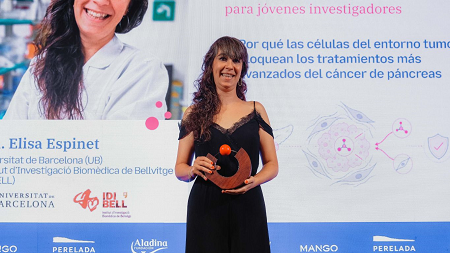
The researcher Elisa Espinet has been distinguished with one of the XXXII FERO Grants for young researchers, promoted by FERO Cancer with the support of the Bosch Aymerich Foundation (FBA), to develop a project focused on understanding the mechanisms that determine the response and resistance to new therapies in pancreatic cancer. Espinet is head of the Pancreatic Cancer research group at the Bellvitge Biomedical Research Institute (IDIBELL) and a professor at the Faculty of Medicine and Health Sciences of the University of Barcelona-Bellvitge Campus.
The project, entitled “Stromal determinants of response and resistance to Pan-KRAS inhibition in PDAC”, will analyse how the tumour stroma – the set of cells and structures surrounding the tumour – influences the efficacy of Pan-KRAS inhibitors in pancreatic ductal adenocarcinoma (PDAC), the most common and aggressive form of pancreatic cancer.
Alterations in the KRAS gene are present in the vast majority of pancreatic tumours and are one of the main therapeutic targets in cancer research. However, not all patients respond in the same way to treatments directed against this pathway. The work led by Elisa Espinet will seek to identify the factors in the tumour microenvironment that favour or limit the efficacy of these therapies, with the aim of contributing to the development of more precise and effective treatments.
“Understanding why some tumors respond to KRAS-directed therapies while others develop resistance is critical to improving treatment options for pancreatic cancer patients. This help will allow us to delve into the role played by the tumour environment in these processes“, explains Elisa Espinet.
The Bellvitge Biomedical Research Institute (IDIBELL) and the University of Barcelona (UB) highlight that the award of this grant recognises the innovative nature of research that addresses one of the main challenges of current oncology. “The project led by Elisa Espinet represents an innovative approach to one of the tumours with the worst prognosis and the greatest need for new therapeutic solutions. This recognition highlights the excellence of our researchers and the importance of continuing to promote cutting-edge research to generate advances with a real impact on patients,” says Dr. Gabriel Capellá, director of IDIBELL.
“The young professor and researcher has shown that cutting-edge and collaborative research is key to facing the challenges of biomedicine and cutting-edge therapeutics,” says the UB’s Vice-Rector for Research, Jordi Garcia-Fernàndez.
The FERO Fellowships for young researchers aim to promote the development of new generations of scientists and support projects with high transformative potential in oncology. Through this program, FERO Cancer contributes to strengthening the biomedical research ecosystem and accelerating the transfer of knowledge from the laboratory to clinical practice.
About FERO Cancer
FERO Cancer is a private and independent foundation dedicated to financing translational cancer research of excellence in Spain, which allows patients to benefit more quickly from scientific advances in cancer. This model—based on scientific rigor and direct impact on the patient—makes it a unique player in the cancer research ecosystem.
In its 25 years of history, the FERO Foundation has invested more than 30 million euros in cancer research through its three fundamental pillars: scholarships, FERO Academy and institutional alliances. To date, it has awarded a total of 77 scholarships, and each year, more than 4,000 patients benefit from advanced cancer screening programs supported by FERO.
About the Bellvitge Biomedical Research Institute (IDIBELL)
The Bellvitge Biomedical Research Institute (IDIBELL) is a research centre created in 2004 specialising in cancer, neuroscience, translational medicine and regenerative medicine. It has a team of more than 1,500 professionals who, from the 73 research groups, generate more than 1,400 scientific articles per year. IDIBELL is owned by the Bellvitge University Hospital and the Viladecans Hospital of the Catalan Institute of Health, the Catalan Institute of Oncology, the University of Barcelona and the City Council of L’Hospitalet de Llobregat.
IDIBELL is a member of the Campus of International Excellence of the University of Barcelona HUBc and is part of the CERCA institution of the Generalitat de Catalunya. In 2009 it became one of the first five Spanish research centres accredited as a health research institute by the Carlos III Health Institute. In addition, it is part of the “HR Excellence in Research” program of the European Union and is a member of EATRIS and REGIC. Since 2018, IDIBELL has been an Accredited Centre of the AECC Scientific Foundation (FCAECC).
About the University of Barcelona
Founded in 1450, the University of Barcelona is the leading public university in Catalonia and one of the most prestigious institutions of higher education in Spain. It is the only university in Spain that is part of the League of European Research Universities (LERU), which brings together the twenty-four most important university research centres on the continent, and according to the QS World University Rankings and the Times Higher Education World University Rankings is among the 160 best universities in the world.
The UB has a wide range of training courses: 74 bachelor’s degrees, 174 official university master’s degrees and 47 doctoral programmes (2024-2025 academic year). It has more than 41,000 undergraduate students and 15,000 undergraduate and postgraduate students, as well as 12,606 foreign students of 145 nationalities.
As a public institution, the UB, focused on academic excellence, is committed to continuing to provide the next generations of citizens – professionals, researchers, entrepreneurs, leaders – with the ability to work at the highest level anywhere in the world.

La mejor actitud que podemos adoptar es la de trat...

The research team observed changes in head circumf...
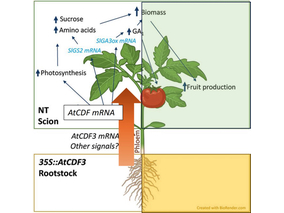
AtCDF3 gene induced greater production of sugars a...
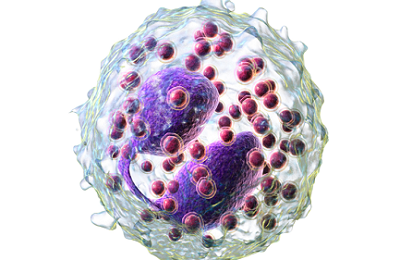
En nuestro post hablamos sobre este interesante tipo de célula del...

Gate2Brain signs a strategic partnership with Shilpa Biocare, includin...