A study led by the Clínic‑IDIBAPS has shown that people with severe mental disorders present a higher risk of developing dementia at all ages and also a higher risk of stroke, especially in the young and middle stages of life. The work, based on data from almost 700,000 people in Catalonia, reinforces the need for a more comprehensive approach to health that includes both its mental and physical dimensions.
The research, publiseh at European Neuropsychopharmacology journal, was carried out based on the PADRIS‑PRESTO cohort, which integrates data from the Catalan public health system, and it compared the prevalence of dementia and stroke among people with severe mental health disorders, such as schizophrenia, bipolar disorder, or major depression, and the population without any psychiatric diagnosis.
The results show that the prevalence of dementia is significantly higher in the group with severe mental disorders in all age groups. Furthermore, the risk of stroke is also higher, above all in young and middle-aged adults, although these differences tend to reduce over the years.
“This study confirms that severe mental disorders not only affect mental health, but are also closely related to other neurological and cardiovascular diseases,” explains Eduard Vieta, head of the Psychiatry and Psychology Service of the Hospital Clínic and leader of the IDIBAPS Bipolar and depressive disorders group. “This is forcing us to rethink the patient care model towards a more comprehensive vision”.
The study has been jointly led by Eduard Vieta, Diego Hidalgo‑Mazzei and Gerard Anmella, with Michele De Prisco and Vincenzo Oliva as first-named author, and it has also enjoyed the participation of a large part of the research team from the IDIBAPS multidisciplinary Translational research programme for brain disorders.
According to Michele De Prisco, a researcher from the IDIBAPS research group: "Our results suggest that severe mental disorders should be considered risk factors for dementia and stroke, especially at ages when these pathologies are not usually expected". This fact highlights the need to bring prevention and clinical surveillance programmes forward among this population.
This study opens the door to improving the early detection of neurological and cardiovascular complications in people with severe mental disorders, with the ultimate goal of reducing morbidity and improving the quality of life of these patients.
Study of reference
Michele De Prisco, Vincenzo Oliva, Raquel Sanchez-Valle, Eduard Parellada, Carme Junque, Maria J. Marti, Analia Bortolozzi, Jordi Alberch, Gloria Garrabou, Maria V. Sanchez-Vives, Albert Giralt, Barbara Segura, Albert Lladó, Yaroslau Compta, Joaquim Radua, Eduard Vieta, Diego Hidalgo-Mazzei, Gerard Anmella,
Age-stratified associations between severe mental illness, dementia, and ischemic stroke: findings from the PADRIS-PRESTO cohort,
European Neuropsychopharmacology,
Volume 110,
2026,
112850,
ISSN 0924-977X,
https://doi.org/10.1016/j.euroneuro.2026.112850.
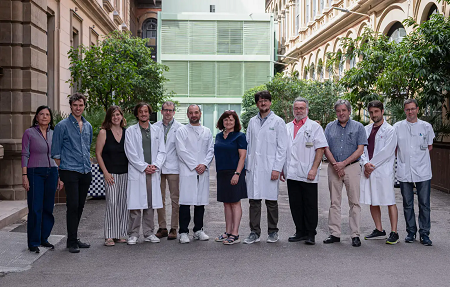
Image: Part of the research team of the multidisciplinary translational research program on brain disorders at IDIBAPS

La mejor actitud que podemos adoptar es la de trat...

The research team observed changes in head circumf...
AtCDF3 gene induced greater production of sugars a...
En nuestro post hablamos sobre este interesante tipo de célula del...

New study finds an association between higher temperatures early in li...