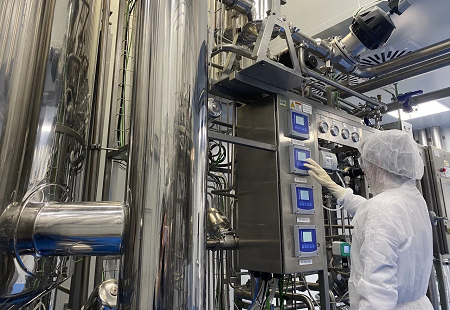
Scaling manufacturing is one of the most misunderstood transitions in biologics development. Many teams assume that if a process works at small scale, it will behave similarly at larger volumes. In reality, scale up in manufacturing is not a linear expansion, it is a transformation. At 53Biologics, they support companies navigating this transition daily, helping them scale manufacturing without compromising product quality or GMP expectations.
Scale Up in Manufacturing Is a Biological Problem, Not Just an Engineering One
A common misconception is that scaling manufacturing is primarily an engineering exercise. While equipment and facility design are critical, the real complexity lies in biology.
Cells do not behave the same way at different scales. Oxygen transfer, nutrient gradients, and metabolic responses shift as volumes increase. What appears stable in a 2L bioreactor may become unpredictable at 200L or beyond.
This is why effective scale up in manufacturing requires building predictive understanding, not just replicating conditions. At 53Biologics, their Process Development Services focus on identifying scale-dependent variables early, allowing us to anticipate how the system will behave before entering GMP manufacturing.
The Hidden Risk: “Invisible” Process Drift
One of the least discussed risks during scale up is what we call invisible drift. This occurs when the process appears to be performing correctly, yields are acceptable, and quality specifications are met, but underlying variability is increasing.
This variability may not trigger immediate batch failure, but it creates long-term instability, especially during GMP manufacturing campaigns.
Examples include:
A strong CDMO does not only look at pass/fail criteria. It analyzes trends and builds process robustness before variability becomes a regulatory issue.
Scale Up in Manufacturing Requires Redefining Control, Not Copying It
Another critical insight is that control strategies must evolve during scale up. Simply applying the same control parameters from small scale is often ineffective.
At larger scale, processes require:
This shift from replication to adaptation is where many programs fail. At 53Biologics, their approach to scale up in manufacturing involves redefining control strategies based on real process behavior, not assumptions.
You can explore how they integrate this approach into their Biologics Production capabilities.
Compliance Is Built During Scale Up, Not Added Later
A frequent mistake in biologics development is treating compliance as a final step. In reality, GMP compliance is shaped during scale up.
Decisions made during development, such as raw material selection, process parameters, and analytical methods, directly impact regulatory readiness.
According to international GMP frameworks, including those from the World Health Organization (WHO), consistency and traceability must be demonstrated across scales, not just at final production.
At 53Biologics, their GMP Manufacturing Services are tightly connected with development activities, ensuring that scale up decisions align with compliance requirements from the beginning.
The Role of a CDMO in De-Risking Scale Up in Manufacturing
At the decision stage, companies often evaluate whether to scale internally or partner with a CDMO. The key difference is not just infrastructure, it is experience.
A CDMO brings:
More importantly, a CDMO understands that scale up is not a one-time step, but an iterative process that requires continuous adjustment.
At 53Biologics, they act as a strategic partner, helping clients navigate uncertainty rather than simply executing predefined protocols.
A Practical Framework to Scale Manufacturing Without Losing Control
To successfully scale manufacturing while maintaining quality and compliance, companies should focus on five non-obvious principles:
By: Patricia De La Madrid
About 53Biologics:
53Biologics is a Spanish CDMO specialized in decoding biologics production, from DNA to proteins. The company provide services from preclinical development to GMP manufacturing, supporting their clients in getting their biological products to market as quickly as possible.

La mejor actitud que podemos adoptar es la de trat...

The research team observed changes in head circumf...
AtCDF3 gene induced greater production of sugars a...
En nuestro post hablamos sobre este interesante tipo de célula del...

New study finds an association between higher temperatures early in li...