The rapid growth of artificial intelligence has also reached the field of mental health. A growing number of people are turning to AI-based tools for support in their everyday lives, including for potential mental health problems. This may entail risks associated with inaccuracies in the information provided or the reinforcement of dysfunctional behaviours or thought patterns, given artificial intelligence's tendency to generate responses aligned with users' expectations. Against this backdrop, the European research project MENTBEST, coordinated in Spain by the Hospital del Mar Research Institute, has developed Mentina, a new mobile health application designed to help prevent depression.
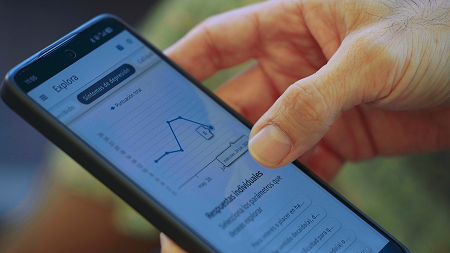
Unlike interactions with artificial intelligence tools, which have not been clinically validated and whose content cannot be guaranteed to have been developed by experts, Mentina has been created by a team of expert psychologists and psychiatrists, and its content is based on evidence-based psychological interventions. The new app goes beyond simply monitoring depressive symptoms. "It enables users' daily activity to be monitored through specific questions and provides recommendations tailored to their needs, while also seeking to promote the self-management of mental health," explains Dr Bridget Hogg, psychologist and coordinator of the MENTBEST project. The app includes self-assessment and self-awareness mechanisms that may play an important role in preventing depression, while safeguarding the confidentiality of those who use it.
Mentina is also the first mental health app to seek certification as a medical device, ensuring that the most rigorous ethical and clinical standards have been followed throughout its development. Its use is not, under any circumstances, intended to replace any treatment that users are currently receiving or may need to receive.
Linked to a clinical trial
Mentina is an initiative promoted by the MENTBEST project and the German Depression Aid and Suicide Prevention Foundation (Stiftung Deutsche Depressionshilfe ) and developed by the Danish company Monsenso. To help validate the app, a clinical trial involving 660 volunteers from across Europe has been launched. Participants will use the application for one year. The multicentre trial will conclude at the end of 2027 and will compare the progress of people using the full application with that of participants receiving a version containing only basic support guidelines.
"The study involving the Mentina app is part of a broader commitment to transforming modern healthcare through digital solutions that support the emergence of a healthcare model built around prevention," explains Dr Benedikt Amann, MENTBEST coordinator in Spain and Director of the Research Unit at Hospital del Mar's Centre Fòrum. He adds: "Research in the field of community health is moving towards more personalised and participatory medicine, empowering patients themselves in order to provide better and more effective responses."
Albert Gil, one of the participants in the study of the application, describes Mentina as "a pocket companion that helps me cope with difficult moments and learn more about depression".
The clinical trial is open to people over the age of 18 who have basic knowledge of how to use a smartphone, have been diagnosed with depression at some point in their lives and are currently experiencing mild or moderate symptoms of depression or anxiety. People with bipolar disorder, psychotic-spectrum disorders, schizophrenia or substance abuse problems are not eligible to participate. Those interested in taking part should email mentina@researchmar.net.
The MENTBEST project
MENTBEST is a European mental health research project funded by the European Union's Horizon Europe research and innovation programme. It proposes the use of evidence-based community interventions and innovative technologies to prevent and mitigate the mental health challenges associated with the rapid and profound changes taking place across Europe.
The project is being implemented in Spain and four other European countries: Albania, Estonia, Greece and Ireland. The Hospital del Mar Research Institute team is leading its implementation in Spain, specifically in Sant Coloma de Gramenet, where the project has been under way since mid-2024.
The initiative is based on a programme of activities, training courses and social interventions involving organisations and associations throughout the municipality, aimed at preventing suicide and depression. Almost 300 healthcare professionals, teachers and other professionals have received training. Workshops have also been delivered in secondary schools and vocational training centres, as well as for families of people experiencing mental health problems. Further activities and awareness campaigns have been organised for the general public.

La mejor actitud que podemos adoptar es la de trat...

The research team observed changes in head circumf...
AtCDF3 gene induced greater production of sugars a...
En nuestro post hablamos sobre este interesante tipo de célula del...
Patients with conditions such as Alzheimer’s disease, frontotemporal...