Researchers from the Institute for Advanced Chemistry of Catalonia (IQAC) of the Spanish National Research Council (CSIC), in collaboration with the University of Aveiro (Portugal), have developed a new family of cationic surfactants derived from arginine. These compounds stand out for their high antimicrobial efficacy, their ability to eradicate resistant biofilms, and their properties as corrosion inhibitors.
“The goal of our project was to design multifunctional molecules that could provide an effective solution without compromising environmental safety,” explain the lead researchers,
A sustainable alternative to conventional products
Unlike traditional cationic surfactants —based on quaternary ammonium and commonly found in disinfectants and everyday cleaning products, but with low biodegradability and high aquatic toxicity— these new compounds offer a much more favorable environmental profile. Arginine, an essential amino acid naturally present in the body, provides the foundation for this innovation. Growing concern about the persistence of traditional surfactants has led several European countries to propose stricter regulations, highlighting the urgency of sustainable alternatives like this one.
The arginine-based surfactants have been synthesized from renewable raw materials using environmentally friendly processes. Their antimicrobial properties, environmental impact, and corrosion protection capacity have been thoroughly evaluated. Their structure allows tuning of biological and environmental properties, thereby optimizing both efficacy and sustainability.
Results show that these surfactants are biodegradable under aerobic conditions, with biodegradation rates exceeding 60% in some compounds. They also display considerably lower aquatic toxicity compared to quaternary ammonium surfactants, making them safer options for use in sensitive environments.
From a microbiological perspective, these surfactants exhibit strong antimicrobial activity against a wide spectrum of microorganisms, including resistant strains such as methicillin-resistant Staphylococcus aureus (MRSA) and fungi like Candida albicans. They are also capable of eradicating biofilms at low concentrations, a key property in environments such as water treatment systems or medical surfaces.
In the field of material protection, these compounds act as corrosion inhibitors for carbon steel, achieving efficiencies of up to 80% at concentrations far lower than those required by traditional surfactants.
Although the results are promising, the current challenge is to optimize synthetic routes to reduce production costs and facilitate large-scale adoption. If industrial feasibility is confirmed, these new surfactants could transform the way we disinfect hospitals, treat water, or protect materials, contributing to a more sustainable future.
This work is part of the PID2022-136354NB-I00 project, funded by the Ministry of Science, Innovation and Universities (MCIU) and the Spanish State Research Agency (AEI) [10.13039/501100011033], and co-funded by the European Regional Development Fund (ERDF). The results have been published in open access in the scientific journals Journal of Hazardous Materials and Colloids and Surfaces B: Biointerfaces.
Teresa García, Ana de la Fuente, Lourdes Pérez, Elena Bautista, Sergio Vázquez, Olga Kaczerewska, Roberto Martins, João Tedim. Ecological assessment and corrosion inhibition potential of novel double-chain arginine-based cationic surfactants. https://doi.org/10.1016/j.jhazmat.2025.139611.
Zakaria Hafidi, Maria Teresa García, Sergio Vazquez, Marta Martinavarro-Mateos, Anderson Ramos, Lourdes Pérez. Antimicrobial and biofilm-eradicating properties of simple double-chain arginine-based surfactants. https://doi.org/10.1016/j.colsurfb.2025.114762.
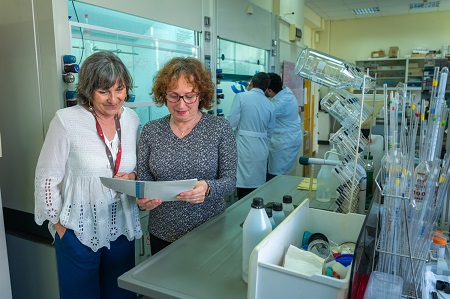
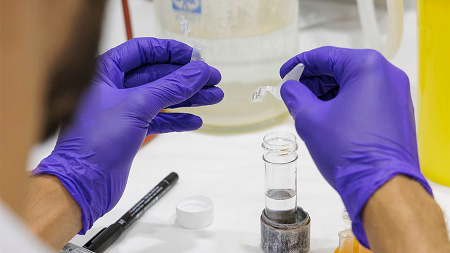
Image: Lourdes Pérez and María Teresa García, researchers from IQAC-CSIC. Source: César Hernández

La mejor actitud que podemos adoptar es la de trat...

The research team observed changes in head circumf...
AtCDF3 gene induced greater production of sugars a...
En nuestro post hablamos sobre este interesante tipo de célula del...
A Phase I clinical trial shows that the oncolytic virus VCN-01 can tra...