Oryzon Genomics, S.A. (ISIN Code: ES0167733015, ORY), a clinical-stage biopharmaceutical company and a global leader in epigenetics, today reported financial results for the twelve months ended December 31, 2025 and provided a corporate update on recent developments.
“After securing over $60 million in the first half of 2025, marking a clear financial turnaround for Oryzon, we ended the year with a solid cash position of $33.3 million (€28.4 million),” said Dr. Carlos Buesa, Oryzon’s Chief Executive Officer. “This financial strength allows us to sharpen our focus on key regulatory catalysts across both of our programs: oncology and CNS.”
“In oncology-hematology, iadademstat continues to receive strong external validation, with seven ongoing trials, six of which are sponsored by the NCI or leading U.S. institutions, including the most recent study sponsored by Yale University,” Dr. Buesa added. “In first-line AML, the triple combination has shown a 100% overall response rate to date, with no dose-limiting toxicities, highlighting a highly competitive profile among emerging triplet regimens. The trial continues to enroll rapidly, and we plan to present data from 15-16 patients at the European Hematology Association Annual Congress (EHA) in June. This would represent approximately 75% of the planned enrollment, providing a very meaningful interim assessment of efficacy and safety. Encouraging results are also emerging in MDS and MPN.”
“In sickle cell disease, we are advancing iadademstat into what we believe represents a new paradigm for the pharmaceutical industry — medium-priced therapies addressing large patient populations. The first two cohorts of the RESTORE trial have been enrolled, and we expect to report meaningful data later this year.”
“In CNS, we have further strengthened our medical and regulatory capabilities with the appointment of renowned CMO Dr. Rolando Gutierrez, who brings extensive experience from the psychiatric field to lead vafidemstat through late-stage development and regulatory interactions, particularly with the U.S. Food and Drug Administration (FDA),” continued Dr. Buesa. “Discussions with the Agency are expected to continue in the coming months, and the Company anticipates a resubmission of the Phase III protocol before year-end, in line with standard regulatory timelines. At the same time, we continue to advance our programs in schizophrenia and ASD.”
Fourth Quarter and Recent Highlights
Iadademstat:
Vafidemstat:
Earlier stage programs:
Financial Update: Fourth quarter 2025 Financial Results
Research and development (R&D) expenses were $5.2 million and $14.8 million for the quarter and twelve months ended December 31, 2025, compared to $2.1 and $8.7 million for the quarter and twelve months ended December 31, 2024.
General and administrative expenses were $1.7 and $5.6 million for the quarter and twelve months ended December 31, 2025, compared to $0.9 and $3.7 million for the quarter and twelve months ended December 31, 2024.
Net losses were $2.1 and $6.7 million for the quarter and twelve months ended December 31, 2025, compared to net losses of $1.1 and $4.6 million for the quarter and twelve months ended December 31, 2024. The result is as expected, given the biotechnology business model where companies in the development phase typically have a long-term maturation period for products and do not have recurrent income.
Negative net result was $3.1 million (–$0.04 per share) for the twelve months ended December 31, 2025, compared to a negative net result of $3.7 million (–$0.06 per share) for the twelve months ended December 31, 2024.
Cash, cash equivalents, and marketable securities totaled $33.3 million as of December 31, 2025.
About Oryzon
Founded in 2000 and headquartered in Barcelona, Spain, Oryzon (ISIN: ES0167733015) is a clinical-stage biopharmaceutical company and a European leader in epigenetics, with a strong focus on personalized medicine for central nervous system (CNS) disorders and oncology. Oryzon’s team comprises highly experienced pharmaceutical professionals based in Barcelona, Boston, and New Jersey. The Company has an advanced clinical portfolio built around two LSD1 inhibitors: vafidemstat, its lead CNS program, which is Phase III–ready; and iadademstat, its oncology/hematology program, with several ongoing Phase I and II studies and outstanding preliminary results in first-line acute myeloid leukemia, including a 100% overall response rate (ORR) presented at ASH 2025. In addition, Oryzon is advancing a broader epigenetics pipeline targeting other mechanisms, including HDAC6, for which a clinical candidate, ORY-4001, has been nominated for potential development in Charcot–Marie–Tooth disease (CMT) and amyotrophic lateral sclerosis (ALS). The Company also operates a robust platform for biomarker identification and target validation across a range of malignant and neurological diseases. For more information, visit www.oryzon.com
About Iadademstat
Iadademstat (ORY-1001) is a small oral molecule, which acts as a highly selective inhibitor of the epigenetic enzyme LSD1 and has a powerful differentiating effect in hematologic cancers (see Maes et al., Cancer Cell 2018 Mar 12; 33 (3): 495-511.e12.doi: 10.1016 / j.ccell.2018.02.002.). A FiM Phase I/IIa clinical trial with iadademstat in R/R AML patients demonstrated the safety and good tolerability of the drug and preliminary signs of antileukemic activity, including a CRi (see Salamero et al, J Clin Oncol, 2020, 38(36): 4260-4273. doi: 10.1200/JCO.19.03250). Iadademstat has shown encouraging safety and strong clinical activity in combination with azacitidine in a Phase IIa trial in elder 1L AML patients (ALICE trial) (see Salamero et al., ASH 2022 oral presentation & The Lancet Haematology, 2024, 11(7):e487-e498). Iadademstat is currently being evaluated in combination with azacitidine and venetoclax in 1L AML in an investigator-initiated study (IIS) led by OHSU and in combination with gilteritinib in the company-sponsored Phase Ib FRIDA trial in relapsed/refractory FLT3-mutant AML, with highly encouraging preliminary safety and efficacy data recently reported at ASH-2025 for both trials: 100% ORR and 90% strict CR in 1L AML, and 67% CCR (at the dose under expansion) in R/R AML. Additional studies in hemato-oncology include an IIS in MDS, and trials in myeloproliferative neoplasms and 1L AML both sponsored and conducted by the U.S. National Cancer Institute (NCI) under a Cooperative Research and Development Agreement (CRADA) signed between Oryzon and the NCI. Beyond hematological cancers, the inhibition of LSD1 has been proposed as a valid therapeutic approach in some solid tumors such as small cell lung cancer (SCLC), neuroendocrine tumors (NET), medulloblastoma and others. In a Phase IIa trial in combination with platinum/etoposide in second line ED-SCLC patients (CLEPSIDRA trial), preliminary activity and safety results have been reported (see Navarro et al., ESMO 2018 poster). Iadademstat is in two trials in ED-SCLC: a Phase I/II randomized trial in 1L in combination with ICI sponsored by NCI and led by the Memorial Sloan Kettering Cancer Center, and an IIS trial in 1L/2L in combination with ICI and radiotherapy. In addition, Oryzon has expanded iadademstat’s clinical development into non-oncological hematology indications, with trials in sickle cell disease (approved by EMA, enrolling) and essential thrombocythemia (approved by EMA). Iadademstat has orphan drug designation for SCLC in the US and for AML in the US and EU.
About Vafidemstat
Vafidemstat (ORY-2001) is an oral, CNS-optimized LSD1 inhibitor. The molecule acts on several levels: it reduces cognitive impairment, including memory loss and neuroinflammation, and at the same time has neuroprotective effects. In animal studies vafidemstat not only restores memory but reduces the exacerbated aggressiveness of SAMP8 mice, a model for accelerated aging and Alzheimer’s disease (AD), to normal levels and also reduces social avoidance and enhances sociability in murine models. In addition, vafidemstat exhibits fast, strong, and durable efficacy in several preclinical models of multiple sclerosis (MS). Oryzon has performed two Phase IIa clinical trials in aggressiveness in patients with different psychiatric disorders (REIMAGINE, see Ferrer et al, Psychiatry & Clin Neurosci, 2025, doi.org/10.1111/pcn.13800) and in aggressive/agitated patients with moderate or severe AD (REIMAGINE-AD), with positive clinical results reported in both. Additional finalized Phase IIa clinical trials with vafidemstat include the ETHERAL trial in patients with Mild to Moderate AD, where a significant reduction of the inflammatory biomarker YKL40 was observed after 6 and 12 months of treatment, and the pilot, small-scale SATEEN trial in Relapse-Remitting and Secondary Progressive MS, where anti-inflammatory activity was also observed. Vafidemstat has also been tested in a Phase II in severe Covid-19 patients (ESCAPE) assessing the capability of the drug to prevent ARDS, one of the most severe complications of the viral infection, where it showed significant anti-inflammatory effects in severe Covid-19 patients. Following completion of the global, randomized, double blind Phase IIb PORTICO trial in Borderline Personality Disorder (BPD), with final data presented at ECNP-2024, vafidemstat is advancing as a Phase III-ready asset for agitation/aggression in BPD (PhIII in preparation). Vafidemstat is also being investigated in a double-blind, randomized, placebo-controlled Phase IIb trial in negative symptoms of schizophrenia (EVOLUTION trial, recruitment ongoing). The company is also deploying a CNS precision medicine approach with vafidemstat in genetically defined patient subpopulations of certain CNS disorders, as well as in neurodevelopmental syndromes, and is preparing a clinical trial in aggression in autistic conditions like Phelan-McDermid syndrome.

La mejor actitud que podemos adoptar es la de trat...

The research team observed changes in head circumf...
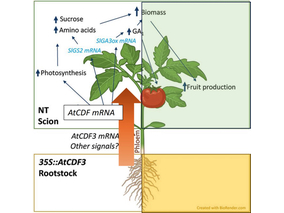
AtCDF3 gene induced greater production of sugars a...

En nuestro post hablamos sobre este interesante tipo de célula del...

El Hospital Universitario de Bellvitge y el Instituto de Investigació...