Researchers from ibs.GRANADA have developed EPIMETRICThe first liquid biopsy-based algorithm capable of diagnosing and classifying chronic obstructive pulmonary disease (COPD) through a blood test. This advance represents a significant step toward more accurate and less invasive tools for addressing a disease that affects millions of people worldwide and remains underdiagnosed.
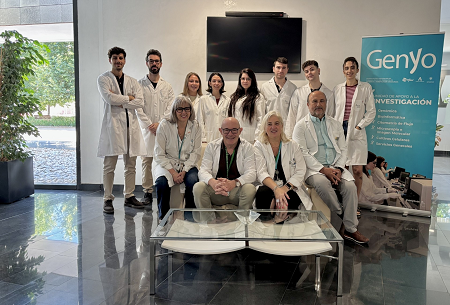
The research has been led by Dr. María José Serrano, attached to the Pathological Anatomy Unit of the Virgen de las Nieves University Hospital in Granada, and developed by the research groups A06 Clinical Oncology and Liquid Biopsy y A04-Digital and Computational Pathology, Immunopathology and Cancer from ibs.GRANADA. Researchers from the Genomics and Oncological Research Center (GENyO) also participated in the study, reinforcing the multidisciplinary nature of this work, as well as Doctors Bernardino Alcázar-Navarrete and Pedro J. Romero, specialists in pulmonology and leading figures in the study of COPD.
COPD is a chronic respiratory disease that makes breathing difficult and is one of the leading causes of illness and death worldwide. Its diagnosis is usually based on functional tests such as spirometry, which have limitations and contribute to many cases going undetected.
With the aim of finding new diagnostic tools, the research team turned to liquid biopsy, a technique that allows the study of molecules present in the blood. Specifically, they analyzed methylation patterns of circulating cell-free DNA (cfDNA), chemical signals that reflect biological changes associated with certain diseases.
To develop EPIMETRIC, the researchers studied blood samples from 128 participants (64 COPD patients and 64 healthy people) recruited between 2021 and 2023 in different Andalusian hospitals.
The analysis identified more than 300 genes related to both the presence and severity of the disease. Based on this information, the team developed an artificial intelligence model capable of differentiating COPD patients from healthy individuals and, furthermore, classifying various clinical subgroups of the disease with high accuracy within the analyzed cohort.
As María José Serrano explains, “one of the main advances of this work is EPIMETRIC’s ability not only to diagnose COPD using liquid biopsy, but also to classify patients molecularly according to the severity and clinical characteristics of the disease. The biological heterogeneity of COPD currently represents one of the major clinical challenges, since patients with similar manifestations can present different pathological mechanisms and therapeutic responses. In this context, the integration of cfDNA epigenetic profiles and artificial intelligence opens new opportunities to advance towards precision medicine based on a more objective and biologically grounded classification of patients.”
In addition to developing the algorithm, the study identified biological processes closely related to COPD, including chronic inflammation mechanisms, alterations in lung tissue structure, and pathways associated with smoking and nicotine dependence. These findings reinforce the usefulness of the identified epigenetic signature and its potential to improve patient classification.
The researchers emphasize that, although the results are promising, EPIMETRIC will need to be validated in larger, independent studies before it can be incorporated into routine clinical practice.
This work reinforces the potential of liquid biopsy, epigenetics, and artificial intelligence as emerging tools to improve diagnosis and precision medicine in complex respiratory diseases such as COPD.
The results have been published in the scientific journal Archives of Bronconeumology (DOI: 10.1016/j.arbres.2026.03.016). Furthermore, the EPIMETRIC algorithm has been registered with Safe Creative for the protection of its intellectual property.
The study was funded by the Ministry of Health, Presidency and Emergencies of the Andalusian Regional Government (PIP-0192-2020) and GlaxoSmithKline Spain.
Bibliographic reference:
Garcia-Diaz, A., Denninghoff, V., Fresno, C., Molina-Vallejo, MP, López-Hidalgo, JL, Lorente, JA, Barturen-Briñas, G., Carnero-Montoro, E., Alarcon-Riquelme, M., Perez, D. de M., Cruz-Rueda, JJ, Romero-Palacios, PJ, Alcázar-Navarrete, B., & Serrano, MJ (2026). EPIMETRIC: A cfDNA Methylation-Based Algorithm for COPD Diagnosis and Stratification. Bronconeumology Archives. https://doi.org/10.1016/j.arbres.2026.03.016
About the groups:
El grupo A06 Clinical Oncology and Liquid Biopsy ibs.GRANADA has extensive experience in developing liquid biopsy tools and molecular biomarkers for the diagnosis and monitoring of complex diseases. Its research activity combines basic and clinical research with the aim of translating scientific advances into clinical practice, driving new precision medicine strategies based on the analysis of minimally invasive biological samples.
More information about the group
El grupo A04 Digital and Computational Pathology, Immunopathology and Cancer The ibs.GRANADA research group conducts translational research aimed at improving the diagnosis and prognosis of complex diseases by identifying new biomarkers and applying advanced data analysis tools. Its main lines of research include the study of molecular markers in cancer, immunopathology, and the development of models based on artificial intelligence, deep learning, and computational pathology to identify biological patterns with potential clinical applications. Its research activity combines clinical and pathological knowledge with advanced digital technologies to drive new precision medicine strategies.
More information about the group

La mejor actitud que podemos adoptar es la de trat...

The research team observed changes in head circumf...
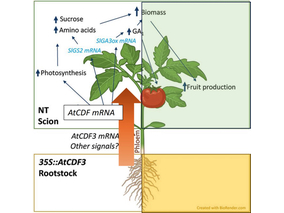
AtCDF3 gene induced greater production of sugars a...
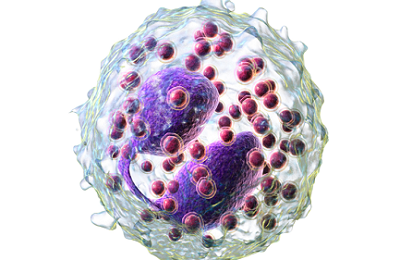
En nuestro post hablamos sobre este interesante tipo de célula del...

La conclusión principal de este trabajo es que una interacción socia...