To ensure food supply, farmers often rely on Plant Protection Products (PPPs), which help defend plants from harmful insects and diseases. However, the misuse of chemical PPPs can harm the environment and affect plants, animals, and humans. Thus, there's increasing focus on finding safer and more sustainable alternatives, such as biopesticides.
Biopesticides are products made from natural sources -- like plants, animals, or microorganisms -- and tend to be less harmful than traditional chemical pesticides. Fungi, in particular, are a rich source of potential biopesticides because they produce a variety of biologically active compounds. A special group of fungi called endophytic fungi live inside healthy plant tissues without causing disease. These fungi are known to produce many interesting substances which can be useful in both medicine and agriculture.
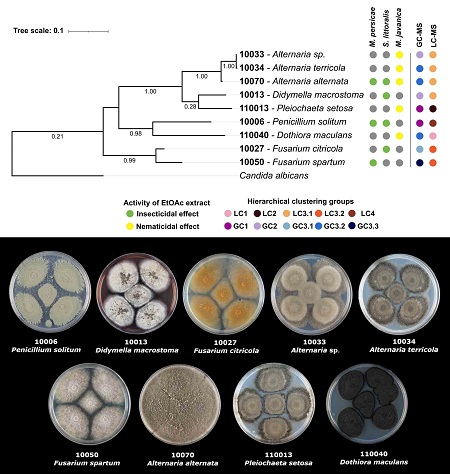
This study explored endophytic fungi isolated from wild populations of Arabidopsis thaliana -- a small plant widely used in scientific research -- growing in Spain. The researchers extracted compounds from these fungi and tested their effects on three common agricultural pests: a plant-parasitic nematode (Meloidogyne javanica), a sap-sucking insect (Myzus persicae), and a leaf-eating caterpillar (Spodoptera littoralis).
Out of 13 fungal extracts tested, nine showed strong activity against at least one of the pests. The most active extracts came from fungi belonging to six genera, including Alternaria, Penicillium, and Fusarium. Several extracts were highly effective in reducing the number of nematodes that hatched, while others significantly interfered with insect feeding or settling behavior.
Chemical analysis revealed a wide range of unique secondary metabolites in the active extracts, suggesting that these endophytes produce a diverse set of natural compounds, regardless of the fungal species.
In summary, this research highlights the untapped potential of endophytic fungi as natural sources of pest-fighting compounds. Using a model plant like Arabidopsis thaliana provides a valuable framework to better understand how these fungi interact with their host and under what conditions they produce these beneficial substances. These insights could eventually lead to the development of new, eco-friendly tools for crop protection.
Original Paper: Díaz-González, S., Andrés, M.F., González-Sanz, C., Sacristán, S., González-Coloma, A. 2025. Nematicidal and antifeedant activity of ethyl acetate extracts from culture filtrates of Arabidopsis thaliana fungal endophytes. 15, 11332. DOI: 10.1038/s41598-025-94939-6
La mejor actitud que podemos adoptar es la de trat...

The research team observed changes in head circumf...
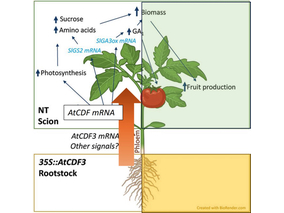
AtCDF3 gene induced greater production of sugars a...
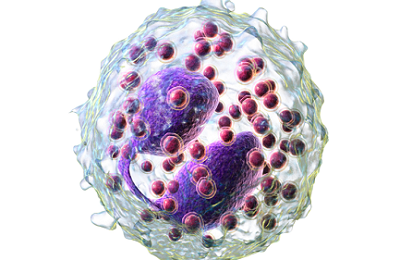
En nuestro post hablamos sobre este interesante tipo de célula del...

New study finds an association between higher temperatures early in li...