The Vall d’Hebron Institute of Research (VHIR) will coordinate PHOENIX, a European project funded with €8.5 million by the Cancer Mission, within the Horizon Europe research and innovation programme of the European Union, which will drive the first clinical trial in a paediatric population with the experimental drug ibrilatazar (ABTL0812) from AbilityPharma. The study will assess its potential in children and adolescents with relapsed or treatment-resistant neuroblastoma and other aggressive solid tumours, with the aim of developing more effective and less toxic therapies for childhood cancer.
Paediatric solid tumours, such as neuroblastoma, sarcoma or certain extracranial tumours, remain one of the leading causes of cancer-related mortality in childhood and adolescence. Although current treatments have improved survival, they remain highly aggressive and leave significant physical and emotional sequelae. Each year, more than 6,000 children are diagnosed with solid tumours in Europe, and approximately 1,000 are high-risk cases with very limited or no treatment options.
“Children and adolescents with cancer need therapies adapted to their biology and age, which are effective but also less toxic”, explains Dr. Lucas Moreno, head of the Paediatric Oncology and Haematology Service at Vall d’Hebron University Hospital and co-head of the Childhood Cancer and Blood Disorders group at VHIR. “With this study, we are seeking alternatives that not only prolong life but also improve the quality of life of our patients and their families”, he adds.
The drug under study, ibrilatazar (ABTL0812), has been developed by the Catalan biotechnology company AbilityPharma. This will be the first time this medicine is studied in paediatric patients, after having shown excellent tolerability and signs of efficacy in adults in phase 2 clinical trials in pancreatic, lung and endometrial cancer. It has also shown good results in preclinical studies using neuroblastoma models.
A clinical trial for patients with no other therapeutic options
PHOENIX aims to translate these results into clinical benefit for paediatric patients. To this end, the project will carry out the first phase I/II clinical trial with ibrilatazar in children with relapsed or refractory neuroblastoma and other aggressive solid tumours. The trial will be based on the results of the ongoing ETNA study, which will determine the drug dose to initiate the trial.
In the study, which is expected to start next year, around 50 patients aged between 6 months and 18 years with relapsed solid tumours or tumours unresponsive to treatment will participate, for whom no other therapeutic options exist.
The study will evaluate ibrilatazar in combination with chemotherapy or immunotherapy, as previous studies have shown that it can enhance the effect of these treatments without adding toxicity. The main objectives will be to establish the recommended dose of the drug and to assess safety and antitumour activity.
“This trial is the result of many years of rigorous laboratory research”, highlights Dr. Miquel Segura, co-head of the Childhood Cancer and Blood Disorders group at VHIR and coordinator of the project. “Our team had the opportunity to collaborate in characterising the mechanism of action of ibrilatazar in cellular and animal models before reaching this clinical stage. Moving from the laboratory to the patient is a long and demanding process that is only achieved through scientific excellence, collaboration and commitment. Seeing that effort now translated into a real option for children and adolescents with cancer is a great satisfaction and a source of hope.”
Study of predictive biomarkers and patient experience
In addition to studying the safety and efficacy of the drug, potential predictive biomarkers will be investigated in parallel to anticipate patient outcomes, response to treatment and the occurrence of adverse effects. Liquid biopsy, based on the analysis of circulating DNA in blood, will also be integrated to identify biomarkers associated with treatment response and toxicity in a non-invasive way.
In addition to objective parameters, patient- and family-reported outcomes will be analysed to ensure that the treatment aligns with their priorities. This will include aspects such as improvements in quality of life or acceptability of the new drug.
The project will also take into account inequalities in access to healthcare. In this regard, barriers that may hinder patient participation in clinical trials and access to innovative treatments such as ibrilatazar will be considered, in order to promote equal access for all patients.
A new therapeutic approach to reduce side effects
Ibrilatazar acts differently from traditional chemotherapy. Instead of damaging DNA, it induces selective death of tumour cells by activating natural cellular defence mechanisms, preserving healthy cells and thereby reducing side effects.
Its action combines two processes occurring in cells: induction of endoplasmic reticulum stress and inhibition of the PI3K/Akt/mTOR pathway. When combined, these mechanisms induce autophagy activation, a system through which cells eliminate damaged components.
This process promotes the selective death of tumour cells, as these have a higher baseline level of endoplasmic reticulum stress due to the extreme conditions in which they exist, such as lack of nutrients and oxygen. This makes them more vulnerable to the drug’s action, while healthy cells are able to adapt to the processes induced by treatment.
“This mechanism opens a different therapeutic pathway with potential application in several types of tumours, including paediatric ones. Collaborating with VHIR in this academic trial is an opportunity to advance towards safer cancer therapies for children and adolescents”, adds Dr. Carles Domènech, CEO and co-founder of AbilityPharma. AbilityPharma, based in Parc Tecnològic del Vallès, is dedicated to the development of innovative oncology drugs based on autophagy induction, a strategy that promotes the selective elimination of tumour cells. Its main compound, ibrilatazar (ABTL0812), is in clinical development for several types of adult cancer and now also for paediatric populations. The company receives financial support from the European Commission, the Spanish Ministry of Science and Innovation, the Centre for the Development of Industrial Technology (CDTI), the Official Credit Institute (ICO), ENISA and ACCIÓ (Government of Catalonia). AbilityPharma collaborates with VHIR in this project by providing the drug product, adapting the formulation for paediatric use and offering specialised regulatory support.
To facilitate administration in paediatric patients, a specific oral suspension formulation will be developed instead of the capsule formulation used in adults, with the aim of improving acceptability, safety and treatment adherence.
A European project with broad international collaboration
The PHOENIX project is a multicentre initiative across 13 institutions in six European countries. Coordinated by VHIR and Vall d’Hebron University Hospital, it involves AbilityPharma, the Autonomous University of Barcelona (UAB), CRIS Cancer Foundation, the Biomedical Research Foundation of Hospital Niño Jesús (FIBHNJS), the European Clinical Research Infrastructure Network (ECRIN) (with the Foundation for Biomedical Research of Málaga in Biomedicine and Health, the Foundation for Biomedical Research of La Paz University Hospital and Masaryk University in Czechia), SHINE 2Europe, Global Health Connector, Gustave Roussy Institute and Curie Institute in Paris, Children’s Health Ireland, the University Children’s Hospital of Brno in Czechia, and the Rijskhospitalet - Hovedstaden Region in Denmark.
Within the European Mission Cancer call, three projects have been funded: PHOENIX (coordinated by Vall d’Hebron), EPIC-DIPG (coordinated by the Sant Joan de Déu Research Institute), and THEODORA (coordinated by the Gustave Roussy Institute). The three initiatives will collaborate to promote citizen engagement and disseminate the results of studies in childhood cancer.
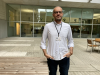
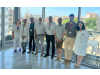
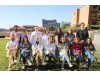
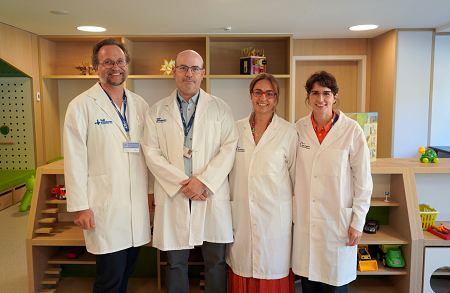
Image: Vall d'Hebron team at the PHOENIX Project: Dr. Lucas Moreno, Dr. Miquel Segura, Dr. María José Pérez and Dr. Aroa Soriano.
This project has received funding from the European Union’s Horizon Europe research and innovation programme under grant agreement No 101289276.
Funded by the European Union. Views and opinions expressed are however those of the author(s) only and do not necessarily reflect those of the European Union or the European Health and Digital Executive Agency (HaDEA). Neither the European Union nor the granting authority can be held responsible for them.

La mejor actitud que podemos adoptar es la de trat...

The research team observed changes in head circumf...
AtCDF3 gene induced greater production of sugars a...
En nuestro post hablamos sobre este interesante tipo de célula del...

New study finds an association between higher temperatures early in li...