A study led by professionals from Clínic-IDIBAPS and Yale University has discovered a mechanism by which the brain is able to anticipate the arrival of food before intake, based on sensory perception, such as sight or smell.
The study, published in the Nature Metabolism journal, is led by Alícia Garcia and Marc Claret, from the IDIBAPS Neuronal control of metabolism research group and by Marc Schneeberger, from the Yale School of Medicine.
Traditionally, the control of food intake has been considered a mainly reactive process, regulated by signals that appear once the nutrients have already reached the body. However, recent studies have shown that the brain can also activate anticipatory responses with the visual or olfactory detection of food. This new study identifies one of the molecular mechanisms that underpin this anticipatory sensory phenomenon.
To do this, the research team studied the role of POMC neurons in the hypothalamus, which are involved in the regulation of energy and glucose, in animal models. First of all, they saw that, when faced with the sensory perception of food, these neurons responded by mobilising their glycogen reserves, a key source of energy for their functioning. However, by using gene editing techniques, they eliminated glycogen from these neurons, which then stopped responding to sensory stimuli in food, such as smell or appearance.
This alteration translated into changes in eating behaviour, as well as a deficient hormonal response before ingestion, including less anticipatory insulin secretion. This led the animals to develop metabolic alterations compatible with a prediabetic state that, over time or with high-calorie diets, evolved towards obesity and diabetes.
Alícia Garcia, researcher at IDIBAPS and first author of the article, states: "We have identified glycogen as an essential element for neurons to perceive food and activate anticipatory responses." And she adds: "This function was unknown until now, and it opens up a new way of understanding how the brain regulates metabolism".
"Poor sensory perception of food can contribute to the development of metabolic diseases, even before visible changes in diet or body weight occur," says Marc Claret, head of the research group at IDIBAPS and one of the project leaders. In the long term, these results could help to design preventive strategies for diabetes and obesity, focused not only on what we eat, but also on how the brain perceives food before eating it.
Reference study: Gómez-Valadés, A.G., Meseguer, D., Varela, L. et al. Glycogen drives the sensory activation of POMC neurons. Nat Metab (2026). https://doi.org/10.1038/s42255-026-01535-7
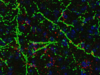
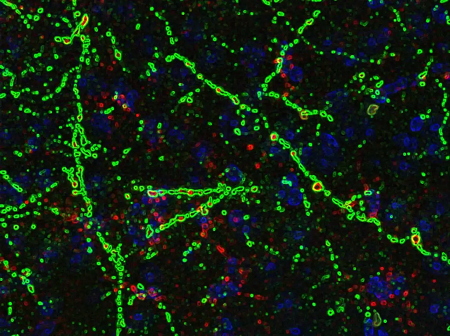
Image: In red, glycogen reserves in POMC neurons of the hypothalamus

La mejor actitud que podemos adoptar es la de trat...

The research team observed changes in head circumf...
AtCDF3 gene induced greater production of sugars a...
En nuestro post hablamos sobre este interesante tipo de célula del...
Una revisión internacional, publicada en la revista Molecular Cancer,...