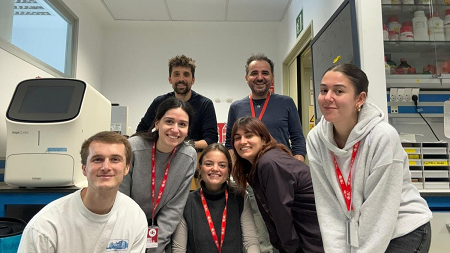
The development of cancer is not a process immediately triggered by the appearance of an oncogenic mutation. There is increasing evidence of the existence of an intermediate phase, previously poorly defined, in which already mutated cells remain in a latent state, “accumulating the potential needed to grow, like a biological time bomb”, explains Dr. Antonio Gentilella, principal investigator at IDIBELL and associate professor at the Faculty of Pharmacy and Food Sciences of the University of Barcelona.
The Cancer Metabolism research group at IDIBELL, based on the Bellvitge Health Campus and led by Dr. Gentilella, has recently published a study in PNAS analysing this period in detail and providing its molecular basis. The conclusion is revealing: by unraveling the molecular mechanisms, the team identified a hidden, previously unknown mechanism that temporally separates the acquisition of the cancer-initiating mutation from the appearance of a clinically detectable tumour. This mechanism is the MYC-LARP1-mTOR molecular axis.
From mutation to tumour, through latency
For decades, the dominant model in cancer biology has argued that mutations in key genes (oncogenes) directly drive tumour formation. However, “there is growing evidence that these driver mutations, as well as those that accumulate later, may be present in apparently healthy tissues for years -even decades- without a clinically detectable tumour appearing,” says Dr. Gentilella.
The IDIBELL study explains this phenomenon. Researchers demonstrated that the oncogenic mutation (in this case, affecting the MYC oncogene, involved in 60% of cancers) “primes” the cell for growth, but is not sufficient on its own to generate a tumour mass. For a tumour to emerge, a second step is required: the cell must have access to metabolic resources that allow it to produce biomass -that is, to grow and divide in a sustained manner. “This finding redefines the origin of tumours as not only a genetic process, but also a metabolic and biosynthetic one”, notes Dr. Gentilella.
The MYC-LARP1-mTOR axis: the switch that determines when tumour growth begins
The research team identified a key molecular mechanism, the MYC-LARP1-mTOR axis, connecting these processes, as they have observed in colorectal cancer models.
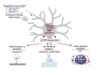
On the one hand, the MYC oncogene activates a program that sets in motion the cellular machinery necessary for protein production and growth. On the other, the LARP1 protein keeps this program ready but inactive, waiting for a signal. This signal arrives when the environment provides the necessary conditions for growth, allowing the program to be executed through mTOR. Only then does tumour expansion begin. Thus, overall, the MYC-LARP1-mTOR axis acts as a biological switch that temporally separates the preparation and execution of tumour growth.
The work has been carried out in colorectal cancer models. However, its scope could be much greater, since “MYC is altered in more than 60% of human cancers, suggesting that the MYC-LARP1-mTOR axis is likely involved in multiple tumour types,” Gentillella details. “We have preliminary experimental evidence that this model also applies to other tumours”, he adds.
A window of opportunity to intercept cancer before it appears
Overall, this study proposes a new way of conceptualizing cancer onset as a two-step process. Rather than being the direct consequence of one or more mutations, cancer would emerge after a silent period in which the transformed cells remain waiting for a favourable environment. This opens a very valuable window of opportunity before tumour expansion, suggesting a potential timeframe of intervention to intercept cancer before it develops.
In this context, LARP1 emerges as a key molecular target, as it functionally connects MYC – which prepares the machinery for expansion – and mTOR – which gives the approval signal for expansion. “It is still too early to talk about direct clinical applications, but everything points to the idea that altering LARP1 interferes with this reservoir of latent cells and the cancer initiation process,” says Dr. Gentilella. The team continues to work along these lines, initial results in animal models show that LARP1 is essential for tumour formation. These findings provide a unique tool for studying tumour latency and developing strategies to prevent cancer from manifesting.
This advance is part of the Bellvitge Health Campus ecosystem, which promotes a comprehensive model of cancer care and research aligned with European strategies to transform the approach to the disease by 2030. Understanding this latent state -previously invisible- not only reshapes how we understand cancer origin, but also raises questions about when the disease truly begins and how it might be intercepted before it develops.

La mejor actitud que podemos adoptar es la de trat...

The research team observed changes in head circumf...
AtCDF3 gene induced greater production of sugars a...
En nuestro post hablamos sobre este interesante tipo de célula del...
Una revisión internacional, publicada en la revista Molecular Cancer,...