Research has revealed that intermittent fasting, specifically the popular 16:8 method, where you fast for 16 hours and eat during the remaining 8 hours, is an effective strategy for maintaining weight loss in the medium term. The study shows that these benefits persist a year later, regardless of whether the 8-hour eating window is earlier in the day (between 9 a.m. and 5 p.m., known as early fasting) or later (between 1 p.m. and 9 p.m., known as late fasting), compared to people who maintain their usual eating routine for 12 hours or more.
The results show that both the early and late fasting groups maintained significantly greater weight loss after 12 months. Furthermore, the early fasting group experienced a greater reduction in fat mass. According to the researchers, these findings suggest that this type of nutritional intervention is not only viable and effective in the short term, but also demonstrates sustainable effects over time.
Body composition assessment one year later
The study, recently published in the prestigious journal Clinical Nutrition, The study, published in the official journal of the European Society for Clinical Nutrition and Metabolism, involved 99 overweight or obese adults, half of whom were women. For the first 12 weeks, participants were divided into four groups and received a Mediterranean diet education program: a control group that maintained their usual eating window (equal to or greater than 12 hours), an early fasting group (8-hour window starting before 10:00 AM), a late fasting group (8-hour window starting after 13:00 PM), and a self-selected group where participants chose their own 8-hour eating window. Changes in weight, fat mass, and fat-free mass were measured before and after the 12-week intervention, as well as one year after the study's completion. This study is part of a larger project whose main results were published in the prestigious journal. Nature Medicinewhere it was observed that participants who did TRE, regardless of the time of intake, lost on average 3-4 kilos more than the group that only received nutritional recommendations.
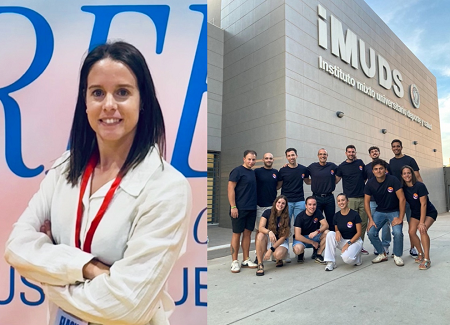
Dr. Alba Camacho Cardeñosa, a postdoctoral researcher at ibs.GRANADA in the Endocrinology and Nutrition Department of the San Cecilio University Clinical Hospital and the Joint University Institute of Sport and Health (iMUDS) at the University of Granada (UGR), and first author of the study, explains that “until now, although we knew that intermittent fasting promotes modest weight loss in the short term, it was unclear whether its effects were sustained over time. By evaluating the participants 12 months after the intervention ended, we demonstrated that the changes in body weight persist.” Furthermore, the researchers highlight that “a very positive finding is that one in three people decided to continue practicing intermittent fasting on their own during that year of follow-up, suggesting that it is a relatively easy habit to integrate into daily life.”
A flexible strategy against obesity
The study has been led by researchers from ibs.GRANADA belonging to the PROFITH CTS-977 research group of the UGR, led by Professor Jonatan Ruiz Ruiz, in collaboration with the San Cecilio University Clinical Hospital and the Virgen de las Nieves University Hospital of Granada, the Public University of Navarra, the CIBER of Obesity (CIBEROBN) and the CIBER of Frailty and Healthy Aging (CIBERFES).
Researchers emphasize that a mere 12-week intermittent fasting intervention can represent an effective medium-term strategy for weight management in overweight or obese adults. With both early and late fasting schedules proving effective, the findings offer valuable flexibility, allowing patients to choose the timing that best suits their lifestyle, thereby improving adherence and treatment success for obesity.
About the IBS group. GRANADA
El grupo MP20- Biomarkers of Metabolic and Bone Diseases The research team at ibs.GRANADA (Instructors: Prof. M. Muñoz Torres and Prof. J. Ruiz Ruiz) investigates biomarkers and new therapeutic targets for metabolic, bone, and cardiovascular diseases. They combine bioinformatics and clinical techniques to develop diagnostic tools and evaluate treatments. Among their findings, they highlight the role of intermittent fasting as a treatment for obesity and its comorbidities, and the use of bone markers in predicting cardiovascular risk. Their multidisciplinary and collaborative approach fosters high-impact research with clinical applications.
More information: https://www.ibsgranada.es/grupos-de-investigacion/mp20-biomarcadores-de-enfermedades-metabolicas-y-oseas/
Bibliographic reference: Camacho-Cardenosa, A., Merchán-Ramírez, E., Clavero-Jimeno, A., De-la-O, A., Romero-Noguera, JM, Martín-Rodríguez, JL, Muñoz-Torres, M., Labayen, I., Ruiz, JR, & Dote-Montero, M. (2026). Effects of an early, late, and self-selected time-restricted eating intervention on weight loss maintenance in adults with overweight or obesity: A 12-month follow-up of a randomized controlled trial. Clinical Nutrition, https://doi.org/10.1016/j.clnu.2026.106706

La mejor actitud que podemos adoptar es la de trat...

The research team observed changes in head circumf...
AtCDF3 gene induced greater production of sugars a...
En nuestro post hablamos sobre este interesante tipo de célula del...
Una revisión internacional, publicada en la revista Molecular Cancer,...