The AI revolution in Pharmaceutical R&D is transitioning from experimental curiosity to operational necessity. This transformation is supported by quantifiable operational improvements: AI-enabled discovery workflows have shown the potential to reduce early discovery timelines by up to 40% and costs by approximately 30% for complex targets [1].
The strategic role of CROs in AI-powered drug development

Key Value Propositions: Speed, Cost Reduction, and Risk Mitigation[2]
|
Value Dimension |
Traditional Approach |
AI-Enabled Approach |
Quantified Impact |
|
Discovery timeline |
4–6 years to candidate nomination |
2–3 years with AI-integrated workflows |
40–50% reduction |
|
Preclinical costs |
Sequential experimentation, high attrition |
Virtual screening + predictive ADMET |
~30% cost reduction |
|
Patient recruitment |
6–12 months typical enrollment |
AI-matched cohort identification |
20%+ faster enrolment |
|
Protocol amendments |
Reactive, frequent |
Predictive, simulation-optimized |
Fewer amendments |
|
Trial success rate |
~10% Phase III success |
Improved patient stratification |
Higher probability of success |
|
Integrated CRO-CDMO ROI |
Fragmented, sequential |
AI-enabled, continuous |
Up to 113x ROI, 40%+ admin burden reduction, ~3-year timeline compression |
AI in Drug discovery and molecular designs
1.1 AlphaFold’s impact on Structural biology
The 2020–2021 emergence of AlphaFold from DeepMind, validated by the 2024 Nobel Prize in Chemistry awarded to John Jumper and Demis Hassabis, represented significant development in structural biology comparable to the development of X-ray crystallography a century before [3].
Key Achievement: At CASP14, AlphaFold achieved median backbone accuracy of 0.96 Å (RMSD95)—so close to experimental precision that it effectively rendered the single-chain prediction problem solved.
1.2 Preclinical lead optimization
Modern platforms can evaluate millions to billions of compounds computationally, selecting only the most promising candidates for physical testing, reducing laboratory and material expenses, including lower reagent and assay costs, reduced infrastructure requirements, and faster hit identification timelines.
.

Absorption, Distribution, Metabolism, Excretion, and Toxicity (ADMET) prediction has similarly advanced through machine learning models trained on large, diverse datasets. These models predict critical properties —including intestinal absorption, blood-brain barrier penetration, metabolic stability, and cardiotoxicity risk—with sufficient accuracy to guide compound prioritization. While not replacing experimental validation, they enable more efficient resource allocation by deprioritizing compounds with predicted liabilities before synthesis [4].
|
ADMET Endpoint |
Traditional Approach |
AI-Enabled Approach |
Validation Status |
|
Human liver microsome stability |
Experimental, 2–4 weeks |
Predictive model, <1 hour |
Well-validated, ~80% accuracy |
|
CYP450 inhibition panel |
Experimental, 3–6 weeks |
Predictive model, <1 hour |
Moderate validation, use for triage |
|
hERG cardiac safety |
Experimental, 4–8 weeks |
Predictive model, <1 hour |
Regulatory accepted for screening |
|
Hepatotoxicity |
Animal studies, months |
Multi-model ensemble, <1 day |
Emerging, used for risk flagging |
|
Brain penetration |
In vivo PK studies |
Predictive model, <1 hour |
Moderate validation for CNS programs |
1.3 Preclinical & Clinical Trial optimization
AI-driven clinical trial optimization is transforming drug development through intelligent protocol design. A multidimensional approach improves the trial process across different steps [5].
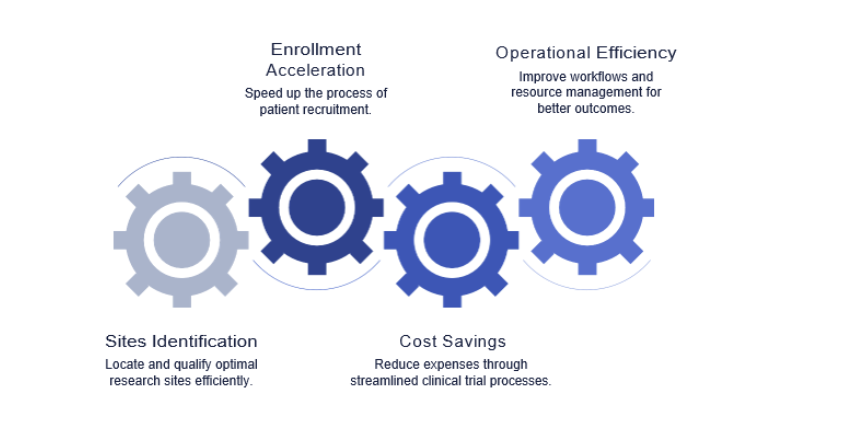
Furthermore, AI-enhanced risk-based monitoring replaces retrospective reviews with real-time, proactive risk management by utilizing machine learning to predict risk scores and recognize patterns across multimodal data, ensuring trial integrity while drastically reducing manual labor and configuration periods [6].
.

2. AI for Data analysis and regulatory-grade interpretation
AI-enabled real-time data processing utilizes machine learning and OCR (Optical character recognition) technologies to automate quality checks, extract information from clinical notes, and ensure CDISC (Clinical Data Interchange Standards Consortium) standards compliance, maintaining data integrity according to ICH E6(R3) guidelines [8> [9>. Advanced analytics provide critical decision support by integrating multimodal datasets, including imaging, genomics, and digital biomarkers from wearables. Techniques such as convolutional neural networks for tumor assessment and graph neural networks for patients’ stratification allow AI to identify patterns invisible to traditional analysis [7].
Furthermore, predictive modeling facilitates early safety signal detection and efficacy forecasting. These models, often utilizing Bayesian methods for dynamic updates, support risk-informed portfolio decisions. FDA’s 2025 draft guidance establishes a seven-step risk-based approach to validate the credibility of these AI-driven questions of interest and their specific contexts of use [9].
To push a study across the finish line, your AI-generated data needs to do more than just perform —it needs to stand up to the most rigorous scrutiny, bridging the gap between “black box” innovation and regulatory certainty by embedding ALCOA+ (Attributable, Legible, Contemporaneous, Original, Accurate + Complete, Consistent, endring, Available) principles directly into the code.
For a CRO, this means going beyond simple logs; it is about creating a living, time-stamped biography for every data point through strict versioning and metadata attribution that aligns with the EMA-FDA Joint Guiding Principles [10]. These approaches eliminate the “it worked on my machine” problem by using containerized execution environments and precise random seed orchestration, ensuring that every algorithmic transformation is 100% re-constructible. By treating reproducibility as a mathematical requirement rather than an afterthought, it transforms complex AI workflows into transparent, audit-ready assets that regulators can trust.
.
|
Data Modality |
AI Technique |
Application |
|
Imaging |
Convolutional neural networks |
Tumor response assessment, safety signal detection |
|
Genomics/Proteomics |
Graph neural networks |
Biomarker discovery, patient stratification |
|
Temporal Sequences |
Transformers |
Digital endpoint derivation, safety monitoring |
|
Text (Notes/Reports) |
Natural language processing |
Adverse event extraction, eligibility assessment |
|
Integrated Multimodal |
Fusion architectures |
Comprehensive patient characterization |
Explainable AI and human-in-the-loop protocols ensure model interpretability and accountability. Techniques like SHAP values quantify feature contributions, allowing stakeholders to verify scientific plausibility and maintain human oversight.
3. AI in Patient Selection, recruitment, and engagement
Ensuring appropriate patients´ identification is an essential part of any healthcare business, and this process should be straightforward and efficient. We are moving towards a more sophisticated approach to recruitment, leveraging AI-driven precision stratification to identify the precise cohorts required for each trial. By integrating directly with Electronic Health Records (EHRs) and anchoring search in biomarker-grounded discovery, we can move from “guessing” to “knowing” who fits.
Natural Language Processing (NLP) has the capacity to access the wealth of unstructured clinical notes often missed by standard databases. SMART on FHIR middleware resolves the issue of siloed hospital systems. This is not just a question of employing superior teaching methods; it is a matter of implementing a recruitment strategy that is based on high-fidelity. By focusing on the most responsive demographics, we would assist sponsors in transitioning to smaller, more impactful sample sizes. This approach has the potential to reduce both the timeframe and clinical expenditure [11].

Decentralized clinical trials (DCTs) are supported by artificial intelligence (AI) through remote patients´ identification, digital endpoint validation, and automated safety monitoring. It is estimated that the adoption of DCT will grow at a rate of between 15% and 20% per year until 2026. AI-enabled tools, such as remote consent and telemedicine, will ensure that GCP compliance is maintained during remote assessments. Wearable devices facilitate the collection of real-world physiological data, which is then transformed into clinically meaningful endpoints by AI.
Machine learning is an effective solution for dealing with signal noise and individual variation in data types, such as continuous glucose monitoring and cardiac activity. It enables real-time anomaly detection, which can identify adverse events weeks before traditional monitoring methods [12].
|
DCT Component |
AI Enablement |
Regulatory Consideration |
|
Remote consent |
Natural language processing for comprehension assessment |
Valid informed consent requirements |
|
Digital endpoints |
Machine learning for signal processing and validation |
Endpoint qualification pathway |
|
Telemedicine |
NLP for clinical documentation, automated coding |
GCP compliance for remote assessments |
|
Direct-to-patient logistics. |
Predictive optimization of supply chain |
Temperature monitoring, chain of custody |
|
Home health visits |
Scheduling optimization, quality monitoring |
Training and competency requirements |
The enhancement of diversity and inclusion is addressed by using AI to identify underrepresented populations and optimize site selection for demographic variety. However, to prevent the perpetuation of historical inequities, developers must implement algorithmic fairness and bias mitigation strategies.
4. Regulatory considerations for AI in Drug development
The FDA’s regulatory landscape for Artificial Intelligence is anchored by the January 2025 draft guidance, which establishes a comprehensive framework for AI/ML in drug development. This guidance applies specifically to AI used to generate data for regulatory decision-making regarding safety, effectiveness, or quality, while excluding discovery-phase tools or operational efficiencies without patient impact. Central to this framework is a seven-step risk-based credibility assessment that maps model risk as a product of model influence and decision consequence.
High-risk applications, such as AI-determined dosing, necessitate extensive prospective testing and lifecycle monitoring. Furthermore, the FDA emphasizes Predetermined Change Control Plans (PCCP) to manage model modifications and address potential performance degradation, or “concept drift,” without requiring repeated regulatory reviews for every anticipated update [9].


La mejor actitud que podemos adoptar es la de trat...

The research team observed changes in head circumf...
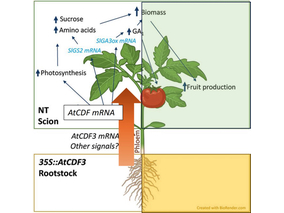
AtCDF3 gene induced greater production of sugars a...
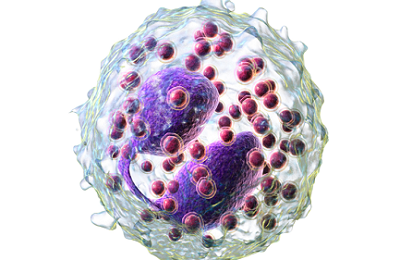
En nuestro post hablamos sobre este interesante tipo de célula del...
The direct analysis of human heart tissue from transplant recipients w...