An international study co-led by the Institut d’Investigació Biomèdica de Girona Dr. Josep Trueta (IDIBGI) and KU Leuven (Belgium) reveals that people with type 1 diabetes currently have a higher Body Mass Index (BMI) than they did three decades ago. The research, published in the scientific journal eClinicalMedicine, shows an increase in patients’ average body weight, while blood sugar control (measured by HbA1c) has remained stable over time.
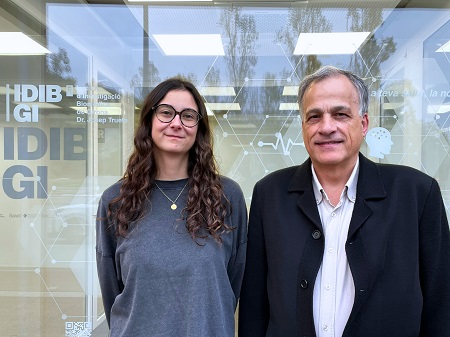
The study was co-led by KU Leuven and IDIBGI, with the participation of IDIBGI and CIBERObn researcher and Hospital Trueta endocrinologist Dr. José Manuel Fernández-Real. The research team also included predoctoral researcher Laura Gallardo-Nuell, first author of the article together with Dr. Amar van Laar from KU Leuven, and Dr. Yenny Leal, postdoctoral researcher at IDIBGI. The senior author of the publication is Dr. Bart Schueren, also from KU Leuven.
The review, carried out within the framework of the European project SOPHIA (Stratification of Obesity Phenotypes to Optimize Future Obesity Therapy), analysed 148 randomised clinical trials published between 1993 and 2025, including data from more than 56,000 people with type 1 diabetes. The results show a clear upward trend in body weight: average BMI increased from 25 kg/m² in the 1990s to 26.9 kg/m² in the last decade. This evolution mirrors trends observed in the general population and in people with type 2 diabetes.
However, the two types of diabetes show different trends in terms of blood sugar control, measured through HbA1c, an indicator that reflects average glucose levels over recent months. While HbA1c levels in people with type 2 diabetes have progressively improved over time—thanks to advances in treatments and metabolic management—in people with type 1 diabetes, HbA1c has remained stable over the past three decades. This stability, combined with the observed weight gain, raises a new question: why do people with type 1 diabetes gain weight without improving glycaemic control, and what consequences might this have for their health?
“We reviewed more than thirty years of international clinical trials and found that this trend is consistent across all the regions analysed worldwide,” adds Laura Gallardo-Nuell. “The results raise new questions about the causes of this weight gain and are key to guiding future studies and prevention policies, as well as to understanding how type 1 diabetes is evolving in the context of the global obesity epidemic.”
“This trend indicates that obesity is also an increasingly common reality among people with type 1 diabetes, and that it will need to be considered an additional risk factor for cardiovascular and metabolic complications,” explains Dr. José Manuel Fernández-Real, head of the Nutrition, Eumetabolism and Health research group at IDIBGI and CIBERObn, head of the Endocrinology Section at Hospital Trueta, full professor and dean of the Faculty of Medicine at the University of Girona, and ICREA Academia researcher.
The study highlights the need for further research using real-world data to better understand how weight and glycaemic control evolve in people with type 1 diabetes, as well as their relationship with insulin treatment.
The SOPHIA project also involved the Vascular Health research group at IDIBGI and IDIAP Jordi Gol, with the participation of group leader Dr. Rafael Ramos and researcher Dr. Jordi Blanch. The project is funded by the Innovative Health Initiative, in collaboration with the European Commission and with the support of the European Union’s Horizon 2020 research and innovation programme.
Reference article: van Laar, Amar; Gallardo-Nuell, Laura; Lucio, Sofia; Visser, Margaretha; Mertens, Ann; Vangoitsenhoven, Roman; Gillard, Pieter; Al Ozairi, Ebaa; Le Roux, Carel; Rosen, Jonathan; Pozo, Carmen; Leal, Yenny; Fernández-Real, José Manuel; Mathieu, Chantal; Steenackers, Nele; Schueren, Bart. (2025). Trends in baseline HbA1c and body-mass index in randomised trials of people with type 1 diabetes from 1993 to 2025: an IMI2 SOPHIA systematic review and meta-analysis. eClinicalMedicine. 89. 103589. 10.1016/j.eclinm.2025.103589.

La mejor actitud que podemos adoptar es la de trat...

The research team observed changes in head circumf...

AtCDF3 gene induced greater production of sugars a...

En nuestro post hablamos sobre este interesante tipo de célula del...
The direct analysis of human heart tissue from transplant recipients w...