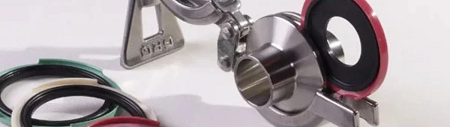
What are Clamp Joints?
Clamp gaskets—also called tri-clamp gaskets or sanitary gaskets —are sealing elements specifically designed to connect to clamp fittings and clamps. Their toroidal or flat geometry ensures that, when the clamp is tightened, the gasket is compressed evenly between two ferrules, creating a watertight seal that meets the most stringent sanitary regulations, such as FDA 21 CFR, 3-A Sanitary Standards, and EHEDG.
Unlike conventional gaskets, clamp gaskets are designed to withstand CIP (Cleaning In Place) and SIP (Sterilization In Place) cycles, as well as high temperatures and pressures without deforming or contaminating the product.
Most Common Materials in Clamp Joints
The choice of clamp gasket material depends on the fluid being transported, the working temperatures, and the cleaning agents used:
• EPDM (Ethylene Propylene Diene Monomer): ideal for water, steam, and aqueous solutions. Excellent resistance to dilute acids and bases.
• Silicone: the most popular choice in pharmaceuticals and food. Harmless, flexible, resistant to temperatures from -60°C to +200°C, and FDA approved. Perfect for applications where transparency or color is relevant for identification.
• PTFE (Teflon): Superior chemical resistance. Recommended for aggressive solvents, concentrated acids, and applications where maximum purity is required.
• Buna-N (Nitrile): High resistance to oils and greases. Suitable for the oil and lubricant industries.
• Viton (FKM): for very aggressive fluids, high temperatures and environments with hydrocarbons.
Industrial Applications of Clamp Joints
Clamp joints are used in a wide variety of sectors:
• Pharmaceutical industry: in production lines for medicines, APIs and biopharmaceuticals where cross-contamination is unacceptable.
• Food and beverage industry: in dairy production plants, beverages, sauces and any process that requires extreme hygiene.
• Biotechnology: in bioreactors, filtration systems and culture media transfer lines.
• Cosmetics: in formulations of creams, lotions and personal hygiene products.
• Fine chemical industry: when high purity is required in the processes.
How to Choose the Correct Clamp Joint
To select the correct clamp joint, keep in mind:
1. Chemical compatibility with the processed fluid
2. Operating temperature range (minimum and maximum)
3. System operating pressure
4. Applicable regulations (FDA, USP Class VI, EC 1935/2004)
5. Size and diameter of the clamp fitting to which it will be attached (standard measurements DIN 32676 or ASME BPE)
6. Frequency and type of cleaning and sterilization cycles
Maintenance and Service Life of Clamp Joints
Clamp joints, although robust components, require periodic inspection. The mechanical action of opening and closing, along with thermal cycling and the action of cleaning agents, can cause deformation, cracking, or loss of elasticity. It is recommended to inspect the joints each time the connection is opened and replace them preventively according to the maintenance protocol for each installation. Investing in certified quality clamp joints reduces the risk of unplanned downtime and ensures process integrity.
Conclusion
Clamp joints are a seemingly small component, but of enormous importance in any hygienic process system. Choosing the right material and maintaining them properly makes the difference between a safe and efficient production line and a potential source of contamination and losses. If you need advice on selecting the ideal clamp joints for your application, our technical team is at your service.

La mejor actitud que podemos adoptar es la de trat...

The research team observed changes in head circumf...

AtCDF3 gene induced greater production of sugars a...

En nuestro post hablamos sobre este interesante tipo de célula del...

The direct analysis of human heart tissue from transplant recipients w...