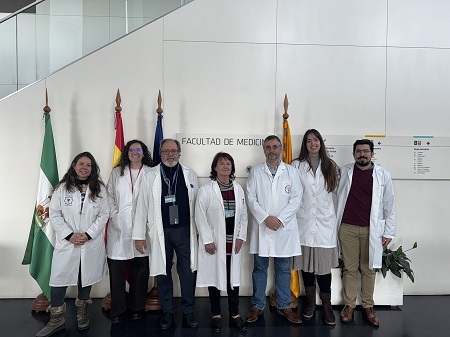
A scientific team comprised of researchers from the University of Granada and the Institute of Biosanitary Research, in collaboration with the Cellbitec Foundation, has identified natural compounds in the seeds of an eggplant variety, S0506, obtained by crossbreeding other species, with a remarkable capacity to inhibit the growth of colon cancer cells. The research, recently published in the journal Food BioscienceThe study reveals that these extracts, rich in flavonoids and polyphenols, inhibit tumor proliferation and even act on cancer stem cells, with a low toxicity profile for healthy cells. The promising results, obtained in cell cultures and animals, open a new avenue for the development of future complementary therapies for the treatment of these tumors.
Promising mechanism of action
The work, developed by the CTS-107 and A01 groups of the Biomedical Research Center of the University of Granada and the ibs. GRANADA (led by José Carlos Prados and Consolación Melguizo), the AGR-145 Group of the Institute of Nutrition and Food Technology and the Joint University Institute of Sport and Health (led by Jesús M. Porres), and the Cellbitec Foundation of Almería (represented by Francisco Bermúdez), has focused on an extract obtained from mature and defatted seeds of the eggplant variety S0506 (Solanum melongena L.), contributed to the study by the biotechnology group Beyond Seeds. Using advanced analytical techniques, the researchers were able to identify a significant concentration of bioactive molecules such as kaempferol, quercetin, and protodiosin. Exposure of human and murine colorectal cancer cell lines to this extract demonstrated a potent antiproliferative effect, even at very low concentrations.
Laboratory studies have allowed researchers to decipher part of how these compounds work. Their effectiveness is based on the activation of pathways that lead to apoptosis (programmed cell death) and autophagy (the process of cell death), as well as on the alteration of the cytoskeleton of tumor cells. A crucial aspect of the finding is that the extracts also affect tumor stem cells, which are considered responsible for drug resistance and relapses. Furthermore, the trials have shown little to no toxic effect on normal cells.
Positive results in animal models
The research has progressed to a preclinical phase, using animals with induced tumors. Treatment with eggplant seed extracts has significantly reduced tumor volume. Furthermore, other experimental models have shown a notable decrease in angiogenesis, the process of forming new blood vessels that tumors need to grow and feed. This anti-angiogenic effect reinforces the compound's therapeutic potential.
Colon cancer is one of the most common cancers worldwide, making the search for new therapeutic alternatives a priority in biomedical research. This project is part of a public-private collaboration agreement between the University of Granada and the Cellbitec Foundation, within the latter's lines of work to promote innovative and healthy vegetables. The results justify continuing the research with more complex studies at the molecular and pharmacological levels, aimed at determining safety, optimal dosages, and potential future applications.

La mejor actitud que podemos adoptar es la de trat...

The research team observed changes in head circumf...
AtCDF3 gene induced greater production of sugars a...
En nuestro post hablamos sobre este interesante tipo de célula del...

New study finds an association between higher temperatures early in li...