Critical analysis of digitalization and architectural immunity in high-containment pharmaceutical environments under the scope of the 6Ms and Pharma 4.0.
The pharmaceutical and biotechnological engineering ecosystem is deeply immersed in an unprecedented wave of digital transformation. Concepts such as Smart Cleanrooms, digital twins, Artificial Intelligence (AI)-driven predictive contamination algorithms, and advanced IoT (Internet of Things) instrumentation dominate the headlines of technical literature and international symposios. The promise is magnetic: absolute control, predictive optimization, and full automation of regulatory compliance.
However, a rigorous analysis of the operational reality on the plant floor reveals a concerning trend. There is a latent risk of adopting a hyper-technological perspective where real-time monitoring is mistaken for actual risk prevention. As a fundamental axiom of fluid engineering and containment design, we must remember that “data alone will not clean the cleanroom.” Technology brilliantly collects, processes, and notifies, but it is the integrity of the physical foundations that establishes process immunity.
The Pharma 4.0 and GAMP 5 Paradigm: Technology as an Ally, Not a Patch
The ISPE (International Society for Pharmaceutical Engineering) itself, when structuring its strategic framework for the factory of the future (ISPE Pharma 4.0), firmly emphasizes that complex analytical systems and digital maturity only provide real value when built upon an already natively controlled and robust process. Automating an inefficient process or a deficient physical design merely results in an inefficient process automated at high speed.
Under the methodological guidance of GAMP 5 (Second Edition), computerized Environmental Monitoring Systems (EMS) must undergo a Quality Risk Management (QRM) process based on the ICH Q9(R1) guideline. An advanced computerized system will monitor the presence of viable and non-viable particles with pinpoint accuracy, but it lacks the intrinsic physical capacity to correct a reversed airflow vector or a HEPA filtration bypass caused by a faulty seal.
Root Cause Analysis Under the 6Ms Approach of EU GMP Annex 1
The revision of EU GMP Annex 1 enforces the mandatory design and implementation of a holistic Contamination Control Strategy (CCS). For this strategy to be truly effective, validation committees and plant engineers traditionally turn to the Ishikawa diagram structured around the 6Ms of quality control.
When analyzing how responsibilities are distributed between physical infrastructure and data acquisition systems in a cleanroom, the priority map is firmly established:
The 6Ms Priority Matrix
| Dimension | Physical Engineering (Prevention) | Software & AI (Control) |
|---|---|---|
| Manpower | Segregated personnel flows, ergonomic airlock design, dynamic gowning rooms, and aseptic discipline. | Access logging and computer vision monitoring of critical movements in Grade A. |
| Machine / Infrastructure | Stable pressure cascades, panel architecture with continuous finishes, coved corners (sanitary curves), absence of dead zones, and absolute airtightness. | Predictive alerts for ventilation motor efficiency loss and differential pressure monitoring. |
| Material | Aseptic transfer systems (pass-boxes with integrated VHP decontamination cycles), chemical resistance of the panel against aggressive disinfectants. | Traceability of disinfectant batches, raw materials, and contact time control. |
| Method | Validated cleaning protocols, strict unidirectional flows with no crossing of clean/dirty lines. | Digitalization of manufacturing batch records (eBRs) and interactive Standard Operating Procedures (SOPs). |
| Milieu (Environment) | HVAC system design: optimal air change rates, airflow patterns validated by physical smoke studies. | Continuous particle counters, real-time temperature, and relative humidity sensors. |
| Measurement | Physical probe calibration, strategic location of isokinetic sampling points based on real risk analysis. | Secure data acquisition (21 CFR Part 11 compliant), data trending algorithms, and dashboard visualization. |
As demonstrated by the breakdown of the 6Ms, Measurement and smart monitoring operate on the final layer of the process. If the Machine (Infrastructure) or Milieu (HVAC) layers exhibit structural weaknesses, the measurement software will limit itself to recording the operational disaster with absolute fidelity and in real time.
Validation in the “In-Operation” State vs. The Illusion of Simulation
A frequent error in cleanroom projects is certifying facilities solely in the As-Built state (facility constructed and empty) or At-Rest state (facility with equipment installed but without personnel). Meeting particle limits during these static phases is relatively straightforward.
The true challenge of critical engineering manifests itself in the Operational state. When operators enter the scene, thermal dynamics shift, air turbulence is disrupted, and the generation of viable particles multiplies exponentially. This is precisely where a robust architectural design proves its worth: perfectly integrated sanitary coves that facilitate rapid sanitization, flush-mounted light fixtures, and low-level air returns that effectively sweep contaminating particles toward the HEPA filtration system, preventing them from settling in critical areas.
Conclusions: Digitalization and the Pharma 4.0 ecosystem must not be used as a compensation mechanism to cover gaps in detailed engineering. A smart cleanroom is only truly smart if its physical structure is optimal, airtight, secure, and resilient by design. Software monitoring solutions must be implemented to refine, audit, and predict trends on a flawless physical and industrial infrastructure foundation.
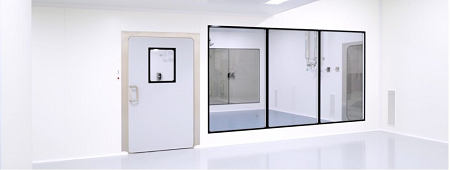
Image: Albian’s robust physical design: the indispensable foundation to guarantee containment and purity in a Smart Cleanroom.

La mejor actitud que podemos adoptar es la de trat...

The research team observed changes in head circumf...
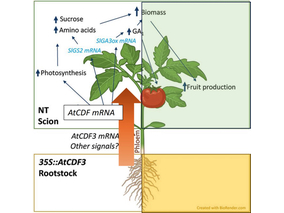
AtCDF3 gene induced greater production of sugars a...
En nuestro post hablamos sobre este interesante tipo de célula del...

Acute myeloid leukemia (AML) does more than infiltrate the lungs: it a...