A study led by the Computational Immunogenomics Group at the Vall d’Hebron Institute of Oncology (VHIO), in collaboration with the Hartwig Medical Foundation, shows that large-scale genomic datasets can predict which patients are unlikely to respond to specific cancer treatments. Based on the analysis of more than 7,000 metastatic tumors, the study demonstrates that identifying these non-response biomarkers could help avoid ineffective therapies and their associated toxicities, optimize treatment decisions, and facilitate earlier access to more promising therapeutic alternatives. The findings have been published in ESMO Real World Data and Digital Oncology.
This study was supported by Fundación FERO, the “la Caixa” Foundation, and the Hartwig Medical Foundation, whose continued support enables the research carried out by VHIO’s Computational Immunogenomics Group.
Biomarkers of treatment non-response
Over the past decades, precision medicine has transformed cancer treatment by identifying biomarkers that enable clinicians to select patients most likely to benefit from targeted therapies and immunotherapies. One of the remaining challenges is identifying patients who are unlikely to benefit from treatment, thereby avoiding unnecessary therapies, minimizing toxicity, and accelerating access to more appropriate therapeutic options.
In this context, a study conducted by Dr. Joseph Usset and led by Dr. Francisco Martínez-Jiménez, Head of the Computational Immunogenomics Group at VHIO and Head of Data Mining at the Hartwig Medical Foundation, advances this field by identifying biomarkers of treatment non-response—that is, biomarkers capable of predicting which patients are unlikely to benefit from specific therapies.
Published in ESMO Real World Data and Digital Oncology, the study analyzed whole-genome and transcriptome sequencing data from more than 7,000 metastatic tumors included in one of the world’s largest cancer genomics databases. The researchers systematically evaluated more than 2,600 candidate biomarkers across 56 therapeutic cohorts, identifying genomic and transcriptomic features strongly associated with non-response to therapy..
Among the key findings, the study shows that melanoma patients harboring specific genetic alterations that enable tumors to evade immune surveillance are unlikely to benefit from immunotherapy. In addition, among patients with metastatic colorectal cancer, the KRAS G12D mutation was associated with a probability of response to chemotherapy below 5%.
“Identifying patients who will not benefit from a treatment is just as important as identifying those who will,” says Edwin Cuppen, Chief Scientific Officer of the Hartwig Medical Foundation and co-senior author of the study. “These non-response biomarkers have direct clinical value: they could spare patients needles toxicity while enabling earlier referral to clinical trials or alternative therapeutic strategies with a greater likelihood of success.”
The study also highlights the importance of continuously expanding large-scale clinical and genomic databases. The researchers demonstrate that reliably proving a biomarker is associated with a response rate below 5% requires dozens of non-responding cases and, for rare biomarkers, patient cohorts approaching one thousand individuals—a scale that most current datasets have yet to achieve.
“This work shows both what we are already able to accomplish and what will become possible as data accumulates,” says Dr. Francisco Martínez-Jiménez. “Systematic re-analysis of large, harmonized real-world datasets is not just scientifically valuable, it is the path to making genomic medicine sustainable and equitable.”
Reference: Usset J., de Ligt, S. Roerink, P. Roepman, E. Cuppen & F. Martínez-Jiménez. Systematic identification of genomic nonresponse biomarkers to cancer therapies. ESMO Real World Data and Digital Oncology, Volume 13, 2026, 100721, ISSN 2949-8201
https://doi.org/10.1016/j.esmorw.2026.100721

La mejor actitud que podemos adoptar es la de trat...

The research team observed changes in head circumf...
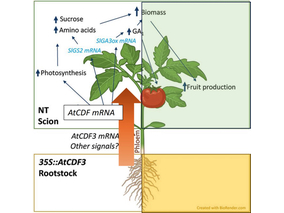
AtCDF3 gene induced greater production of sugars a...
En nuestro post hablamos sobre este interesante tipo de célula del...
Acute myeloid leukemia (AML) does more than infiltrate the lungs: it a...