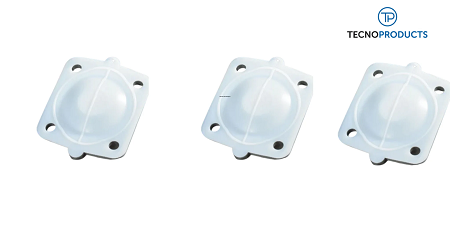
Once the biological product is harvested from the bioreactor, the purification process begins: the transformation of a complex culture medium into a high-purity active ingredient suitable for formulation as a drug. Tangential flow filtration (TFF) and chromatography are the cornerstones of this purification, and the process components—membrane valves, clamp fittings, gaskets, and tubing—play a critical role in their efficiency and reproducibility.
Tangential Flow Filtration (TFF): The System and its Critical Components
Tangential flow filtration (TFF) or cross-flow filtration is the most widely used membrane separation process in bioprocessing for the concentration, diafiltration, and clarification of biological products. Unlike conventional frontal filtration, in TFF the fluid flows tangentially to the filtration membrane, keeping the membrane surface clean and allowing for longer operating times.
TFF systems include critical process components:
Peristaltic recirculation pump: propels the retenate through the filtration cassette tangentially. Large-diameter platinum silicone tubing (typically 3/8″ to 1″ ID) is standard. The recirculation flow rate is a critical process parameter (CPP) that affects transmembrane pressure (TMP) and filtration efficiency.
Regulating diaphragm valves: control transmembrane pressure (TMP) and permeate flow rate. Pneumatic diaphragm valves with positioners allow for automatic TMP control, a critical parameter in TFF.
Clamp fittings and gaskets: All connection points in the TFF system use clamp fittings (DIN 32676 or ASME BPE) with platinum silicone or pharmaceutical-grade EPDM gaskets. Traceability of each gasket is essential for system qualification.
Pressure and flow sensors: with clamp connection for easy removal and calibration. Silicone sensor gaskets are included in the inventory of qualified components.
Purification Chromatography: Clamp Connections on Columns and Skids
Protein chromatography—protein A for mAbs, ion exchange, size exclusion—is the highest-resolution purification process in bioprocessing. Chromatography skids are complex systems that integrate columns, pumps, valves, UV sensors, and fraction collectors.
In production chromatography skids, clamp connections are ubiquitous:
Column connections: Production chromatography columns have DIN 32676 or ASME BPE clamp connections at their inlet and outlet. The gaskets on these connections must be made of platinum silicone (for compatibility with the protein product and buffers commonly used in chromatography) and must be qualified.
Online instrumentation: UV detectors, conductivity meters, and inline pH sensors on chromatography skids are connected using clamp fittings. Their sealing gaskets must be included in the inventory of qualified components.
Distribution and selection valves: Modern chromatography skids include multi-position valves for buffer distribution and fraction collection. These valves are connected to the main circuit using clamp fittings.
Transfer hoses: For product transfer between the loading tank and the column, and between the column and the collection tank, pharmaceutical silicone hoses with integrated clamp terminals are used.
Cleaning Validation in TFF Systems and Chromatography
TFF systems and chromatography skids are multi-product or multi-batch equipment used in many biopharmaceutical facilities. In both cases, cleaning validation is a critical GMP requirement to demonstrate that there is no cross-contamination between batches or between products.
Clamp connections and gaskets are the points of greatest attention in the cleanliness validation of these systems for several reasons:
Significant contact surface: Although small, the clamp joints represent a significant proportion of the total elastomeric material surface area of the system. Cleaning validation sampling protocols should include swabbing of the joints and ferrules.
Potential retention zones: Although the design of well-specified clamp joints does not create dead zones, a deteriorated joint (deformed, cracked) can create micropores or irregularities where the product can become trapped.
Compatibility with CIP cleaning agents: Typical agents used in cleaning TFF and chromatography systems (0.1–0.5 M NaOH, water, high-concentration NaCl solutions, acetic acid) must be compatible with the clamp gasket material. Platinum silicone and pharmaceutical-grade EPDM are compatible with most of these agents.
Acceptance criteria: The acceptance limits of the cleaning validation (typically based on the MACO principle — Maximum Allowable Carryover) must be defined considering the total contact area of the system, including the clamp joints.
Single-Use TFF: Disposable Hoses and Assemblies in Purification
The adoption of single-use TFF systems is growing in biopharmaceutical facilities, especially for smaller-scale or multipurpose processes. Disposable filtration cassettes are complemented by pre-assembled and pre-sterilized single-use tubing and hose assemblies.
Single-use components in TFF systems include:
Disposable filtration cassette: the membrane element itself, available in single-use formats from major manufacturers (Sartorius Stedim, Merck Millipore, Cytiva).
Disposable tubing set: pre-assembled platinum silicone or C-Flex tubing with connectors that fit cassette ports and skid pumps. The set comes pre-sterilized by gamma.
Peristaltic pumps with single-use tubing: In fully disposable TFF systems, the skid peristaltic pumps use single-use silicone or Pharmed tubing.
Interface connectors: adapters between the single-use system and the skid's fixed infrastructure (clamp-to-SUS or similar). The selection of materials for these adapters and their clamp joints must be included in the system's E&L study.
Single-use system management:
• Verification of the integrity of the disposable assembly before use (pressure or air bubble test)
• Record the batch number of the set in the batch record
• Management of post-use waste according to the facility's environmental procedure
Automation and Control in TFF Production Systems
TFF systems for biopharmaceutical production are fully automated. Pneumatic diaphragm valves with positioners are the control element for the transmembrane pressure (TMP) and permeate flow regulation loops, which are the critical process parameters (CPPs) of the TFF system.
TFF automation requirements in the GMP context:
TMP control: The transmembrane pressure (the difference between the pressure on the retentate side and the permeate side) must be controlled within the specified range to maintain permeate flow rate and membrane selectivity. The retentate and permeate regulating diaphragm valves are the TMP control elements.
Continuous recording of CPP: cassette inlet pressure, cassette outlet pressure, permeate pressure, recirculation flow rate, and permeate flow rate must be recorded continuously throughout the filtration operation. Electronic records must comply with the requirements of Annex 11 EU GMP.
Alarms and action limits: The system must generate alarms when any CPP exceeds the specified limits. Excessive TMP can damage the cassette membrane or affect product quality.
Safety interlocks: To protect the cassette membrane, the system must include interlocks that stop operation or open relief valves if the TMP exceeds an absolute maximum limit.
Conclusion
Filtration and purification systems in bioprocessing are where the biological product takes its final form. The integrity of each clamp connection, the biocompatibility of each gasket, and the reliability of each diaphragm valve in these systems determine the purity and quality of the biopharmaceutical that will reach the patient. If you are designing or qualifying a TFF or chromatography system and need advice on component selection or qualification documentation, our technical team is at your service.

La mejor actitud que podemos adoptar es la de trat...

The research team observed changes in head circumf...
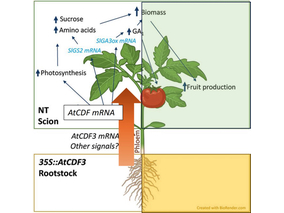
AtCDF3 gene induced greater production of sugars a...
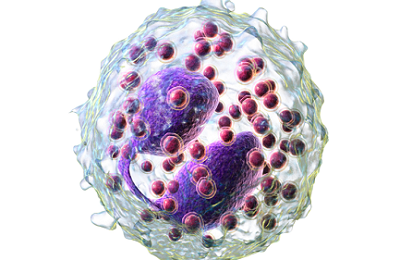
En nuestro post hablamos sobre este interesante tipo de célula del...

The direct analysis of human heart tissue from transplant recipients w...