Integrate Disease-Relevant iPSC Models Seamlessly Into Your Workflow
Accelerate your drug discovery and disease modelling with ready-to-use iPSC-derived neural cells from iXCells Biotechnologies.
These models provide direct access to patient-relevant human cell types, including cortical neurons, dopaminergic neurons, astrocytes, and motor neurons, from donors carrying disease-specific genetic mutations or sporadic conditions. Designed for speed, reproducibility, and scientific precision, these iPSC models help you bridge the gap between patient genetics and functional cellular phenotypes.
Drive Translational Research with Diseased Donor iPSC Models
iXCells diseased donor iPSC-derived models provide human, disease-relevant cellular systems for high-precision research:
Which Diseased Donor iPSC Model Fits Your Research Needs?
Selecting the right disease-relevant model is essential for generating meaningful, translatable data. Our guide helps you navigate the iXCells portfolio of diseased donor iPSC-derived neural cells, highlighting the relevant mutations, phenotypes, and recommended applications for each model.
A curated selection of iPSC-derived models from patients with Alzheimer’s, ALS, and Parkinson’s disease enables you to match the appropriate cell type and genotype to your specific research objectives, whether you are investigating pathogenic mechanisms, testing therapeutic candidates, or developing advanced 3D systems.
Alzheimer's Disease Models
| Name | Reference | Description |
|---|---|---|
| Human Astrocytes (iPSC-derived, PSEN2 N141I, HET) | 40HU-008-PSEN2-N141I-HET | PSEN2 N141I is a heterozygous mutation associated with familial Alzheimer’s disease (fAD). PSEN2 encodes presenilin-2, a catalytic component of the γ-secretase complex responsible for cleaving amyloid-β precursor protein (APP) into amyloid-β peptides. Accumulation of these peptides is a key neuropathological hallmark of Alzheimer’s disease. |
Amyotrophic Lateral Sclerosis (ALS) Models
| Name | Reference | Description |
|---|---|---|
| Human Motor Neurons (iPSC-derived, ALS Patient, Sporadic) | 40HU-006 | ALS is a progressive neurodegenerative disease caused by the dysfunction and death of motor neurons. About 15% of ALS cases are inherited, while the remaining are sporadic. ALS exhibits high genetic heterogeneity, with more than 30 causative genes accounting for 60% of familial and 10% of sporadic cases. |
| Human Neural Stem Cells (iPSC-derived, ALS) | 40HU-007 | Stem cell therapy aims to replace or regenerate damaged motor neurons. ALS patient-derived NSCs provide a platform to investigate mechanisms of degeneration and evaluate regenerative strategies. |
| Human Motor Neurons (iPSC-derived, SOD1 A4V, HOM) | 40HU-101 | The SOD1 gene was the first identified ALS gene and is currently the second most common genetic cause of the disease. The A4V mutation is among the most aggressive forms, with an average survival of less than two years after early symptoms. |
| Human Neural Stem Cells (iPSC-derived, SOD1 A4V, HOM) | 40HU-111 | These NSCs carry the SOD1 A4V mutation, a highly pathogenic variant associated with rapid ALS progression. They enable modelling of early cellular dysfunction and evaluation of targeted therapeutics. |
| Human Motor Neurons (iPSC-derived, TDP-43 M337V): HET / HOM / ISO |
40HU-105-HET 40HU-105-HOM 40HU-105-ISO |
The M337V mutation (methionine to valine substitution) is associated with aberrant TDP-43 aggregation and amyloid-like oligomer formation. As ~97% of ALS patients show TDP-43 pathology, these models recapitulate a key disease mechanism. |
| Human Motor Neurons (iPSC-derived, TDP-43 N352S): HET / HOM / ISO |
40HU-102-HET 40HU-102-HOM 40HU-102-ISO |
The N352S mutation is linked to both familial and sporadic ALS. It induces abnormal aggregation and cytoplasmic mislocalization of TDP-43 in motor neurons, contributing to progressive neurodegeneration. |
| Human Motor Neurons (iPSC-derived, TDP-43 Q331K): HET / HOM / ISO |
40HU-103-HET 40HU-103-HOM 40HU-103-ISO |
The Q331K mutation drives pathogenic TDP-43 mislocalization and aggregation. These iPSC-derived MNs provide a robust platform for evaluating therapeutics targeting TDP-43–associated pathways. |
Parkinson´s Disease (PD) Models
| Name | Reference | Description |
|---|---|---|
| Human Astrocytes (iPSC-derived, Parkinson’s Disease Patient, Sporadic) | 40HU-021 | In Parkinson’s Disease, astrocytes can become dysfunctional and contribute to neurotoxicity via impaired glutamate metabolism or the release of inflammatory cytokines. Restoring healthy astrocyte function and enhancing their beneficial effects is a promising therapeutic approach. |
| Human Dopaminergic Neurons (iPSC-derived, CHCHD2 mutation, R145Q): ISO / HOM |
40HU-002-CHCHD2-R145Q-ISO 40HU-002-CHCHD2-R145Q-HOM |
CHCHD2 is a mitochondrial protein located in the intermembrane space, critical for maintaining mitochondrial homeostasis and function. The R145Q mutant variant has been shown to cause Parkinson’s Disease phenotypes in iPSC-derived dopaminergic neurons. |
Pair Your Disease Models with Reliable Healthy Donor iPSCs
Complement your disease-specific iPSC studies with high-quality healthy donor lines, offering a clean biological baseline for comparative analysis. These ready-to-use controls ensure consistency, improve interpretability, and strengthen confidence in your experimental outcomes.
Enhance Your Workflow with Recommended Accessory Products
Pair your selected iPSC models with high-quality tools for reproducible and physiologically relevant results:
Why Choose Tebubio & iXCells
Start Building Predictive, Human-Relevant In-Vitro Models Today
From disease modelling to high-content screening and drug discovery, Tebubio and the iPSCore™ platform provide the human-relevant reliability your research demands.
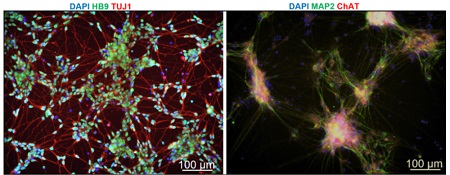
Image: Immunofluorescence staining showing HB9 and ChAT positive cells on days 2 and 7 in culture, respectively.

La mejor actitud que podemos adoptar es la de trat...

The research team observed changes in head circumf...
AtCDF3 gene induced greater production of sugars a...
En nuestro post hablamos sobre este interesante tipo de célula del...
Un estudio del Instituto de Neurociencias (CSIC-UMH) muestra en modelo...